Most people come to this subject through an exposé — a book about a company that hid a trial result — and then find they cannot evaluate the charge, because they do not know what an honestly run trial would have looked like. That is the specific trap here, and it is why order matters more than usual. The critical literature only works once you know the methodology it is criticising.
So this path builds in the sequence the field itself did: first why controlled comparison is necessary at all, then the commercial machinery around a drug, then how a study is actually designed, then the documented ways the published evidence gets distorted, and finally the statistical arguments that decide what a result means. It is about how evidence is made and judged. It is not about any particular medicine, and nothing in it bears on a treatment decision.
Why controlled trials exist at all
Testing treatments is the cleanest possible entry point: short, deliberately plain, and assuming no statistics. It explains what makes a test of a treatment fair and why clinical experience alone is systematically misleading.
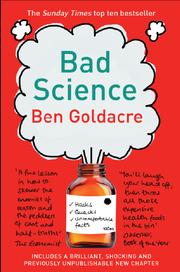
Bad Science comes second and installs the reflexes the rest of the path assumes — regression to the mean, placebo effects, surrogate endpoints, the standard statistical sleights. Goldacre teaches these through worked examples rather than formulas.
The Emperor of All Maladies is third, and it earns its place by showing the methodology being invented under pressure. Much of the history of cancer treatment is the history of oncologists learning to run trials at all, moving from uncontrolled radical surgery to randomised cooperative-group studies.
How a drug gets made and sold
The billion-dollar molecule is an embedded account of a biotech startup trying to design a drug from first principles. It covers the preclinical stretch that every later book takes for granted, which is why it opens this stage rather than closing it.
Empire of Pain is the strongest single case study of what happens after approval: the Sackler family, OxyContin, and the manufacture of demand for a drug that had cleared its trials. Bottle of Lies then closes the loop most accounts skip — generic manufacturing, data fraud in overseas plants, and the limits of inspection. A valid trial result is only worth as much as the factory that follows it.
Designing a study
Designing Clinical Research is the standard first methods text, covering how a research question turns into a study design across both observational and experimental work. Read it before the trials-specific volume, because the framing decisions it teaches come earlier in the process than trial mechanics do.
Fundamentals of clinical trials is the canonical textbook — phases, randomisation schemes, sample-size calculation, monitoring, adherence, reporting. It is the reference practitioners actually reach for, and it is much easier going once Hulley has softened the ground.
Where the evidence base breaks
Bad Pharma, published as Bad Pharma: How Medicine Is Broken, and How We Can Fix It, makes the systematic case that missing results, ghostwriting and biased design corrupt the published literature. Read it only after the design stage. Its force depends entirely on knowing what a well-run trial should have reported, and its individual claims are worth checking against the textbook rather than taken on trust.
Ending Medical Reversal is the constructive counterpart, written by working physicians. It documents practices adopted on weak evidence and later overturned by better trials, and argues for a higher bar before adoption. Prasad and Cifu and Goldacre do not agree about how much of the problem is fraud and how much is ordinary scientific error — that disagreement is real and worth sitting with.
The methodology at depth
Clinical trials takes you past the introductory texts into estimation, adaptive designs and dose-finding, with the reasoning behind each choice laid out. Statistical issues in drug development is the right last book: Senn works through the genuine disputes — baseline adjustment, multiplicity, equivalence testing, meta-analysis — and is unusually clear about which questions remain open. You finish able to evaluate an argument rather than pick a side.
Follow the full path in order and the exposés become readable as evidence rather than as accusation.
Follow the full ordered path here: How to Learn Drug Development and Clinical Trials from Books, in Order.