Two things make this subject easy to read in the wrong order. The first is that the vocabulary is load-bearing — social model, medical model, access intimacy, crip — and books that assume it will lose you if you meet them first. The second is that the movement has a live internal argument about its own history, and if you read only the celebratory account or only the critique, you get a distorted picture.
So: primers, then first-person writing, then the movement history, then the critique of that history, then theory. That order gives you the terms before the arguments and both sides before the academy.
One caveat worth stating once. Most of these books are American, and disability law, benefits and services are entirely jurisdiction-specific. Nothing here is legal advice about your rights where you live.
Start with the primers
Demystifying Disability is the right first book — Emily Ladau wrote it as a plain-language guide for people who are worried about saying the wrong thing, and it covers language, etiquette and the social model in about two hours of reading. It is deliberately introductory. Read it and move on.
Sitting Pretty is the essay collection to read next. Rebekah Taussig writes about a paralysed body in ordinary situations — dating, teaching, a bad apartment, a stranger praying over her in a parking lot — and the effect is to make the abstract point of the primer concrete.
First-person, then the movement
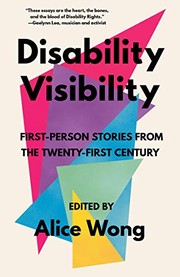
Disability Visibility is Alice Wong's anthology of first-person essays, and it does something no single memoir can: it puts many kinds of disability side by side, including the ones rarely represented. Read it before the history, because the history is largely about who got represented and who did not.
Being Heumann is Judith Heumann's memoir, and it doubles as the inside account of the 504 sit-in and the campaigning that led to the Americans with Disabilities Act. No Pity is the journalistic history of the same movement. It is the standard account and it is also from 1993, written by a non-disabled reporter, and its framing has dated — read it as a primary document of how the movement presented itself at its moment of victory, not as the current consensus.
A disability history of the United States pulls the frame back much further, arguing that disability has shaped American citizenship, immigration and labour policy from the colonial period on. It is short and it reorganises everything before it.
The turn to disability justice
What Can a Body Do? shifts the question from rights to design — Sara Hendren looks at built objects and asks who they assume as a user, which is the most practical book here.
Care Work is where the internal argument becomes explicit. Leah Lakshmi Piepzna-Samarasinha argues that the mainstream rights movement centred white, wealthier disabled people and that disability justice grew out of what it left out. That is a real disagreement with the movement history you just read, and this path deliberately does not adjudicate it. Both accounts are describing the same events from different positions.
Golem Girl is Riva Lehrer's memoir as a visual artist born with spina bifida, and Year of the Tiger returns to Alice Wong writing in her own voice rather than editing others.
The academic tier
Leave these for last. Extraordinary bodies is Rosemarie Garland Thomson's foundational work on how American culture has represented disabled bodies, and Disability theory is Tobin Siebers making the case for disability as a body of critical theory in its own right. Both assume the vocabulary from the earlier books. Read in that order they are demanding but not opaque; read first they are a wall.
Related subjects sit under blindness and low vision if you want to go deeper in one direction.
Follow the full ordered path here: Disability Rights and Disabled Life: The Books to Read First.