Say this plainly before anything else: asthma is a medical condition that requires medical management. Books can help you understand what is happening in your airways, why the two inhalers do different things, and what to raise at your next review. They cannot diagnose you, adjust your medication, or replace a written asthma action plan from a clinician. If your symptoms are worsening or your reliever inhaler is needed more often than usual, that is a conversation with a doctor, not a reading project.
With that said, informed patients do better in consultations, and asthma is a condition where understanding the mechanism genuinely changes behaviour. Most people who use a preventer inhaler inconsistently do so because nobody explained that it treats inflammation you cannot feel. A good book fixes that in an afternoon.
One caveat on this list: these are established patient-education titles rather than new publications. Asthma treatment guidance has moved considerably — the roles of combination inhalers, biologic therapies for severe asthma, and the current thinking on reliever-only use have all shifted. Use these books for the mechanism and the daily management principles, and treat any specific drug recommendation as something to check against current guidance with your clinician.
Start with the plain overview
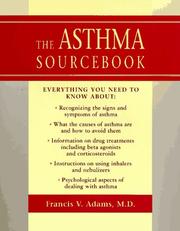
The asthma sourcebook by Francis Adams is the sensible first read: what asthma is at the level of the airway, how it is diagnosed with spirometry and peak flow, what triggers do, and how the main medication classes work. Adams is a pulmonologist writing for a general reader, and he is good at explaining why a preventer and a reliever are not interchangeable.
Add the clinical depth
The Complete Guide to Asthma by Jonathan Brostoff and Linda Gamlin goes further into immunology and the allergic mechanisms behind much adult and childhood asthma, plus the practical detail of trigger identification and environmental control. It is denser than the sourcebook and worth the effort if allergy is part of your picture. Take its complementary and dietary sections with caution — the evidence base for many such interventions in asthma is weak or absent, and the book predates a lot of subsequent research.
Use a question-led format for review appointments
100 Questions and Answers About Asthma by Claudia Plottel is structured exactly as the title suggests, and that format is useful in a way the narrative books are not: you can find the specific thing you are worried about in thirty seconds. It works well as the book you skim before an appointment to sharpen what you want to ask.
For younger readers and for parents
Breathe Easy! by Jean Ford is written for a teenage audience and is the right book to hand an adolescent who has stopped taking a preventer seriously. And Children with asthma by Thomas Plaut is the classic parent-facing manual: recognising deterioration early, using peak flow at home, managing inhalers and spacers with a small child, and handling school and exercise. Plaut is particularly good on the zone system that underpins most written action plans.
What to do alongside the reading
Ask for a written asthma action plan if you do not have one, check your inhaler technique with a pharmacist or nurse — a large share of poor control is technique rather than dose — and keep a symptom and trigger record you can bring to appointments. Follow the full path for the background, and let the clinical decisions stay clinical.
Follow the full ordered path here: Best Books on Asthma, in Reading Order.
Ready to learn something deeply?
Build a reading path — free