Concept art is one of the most misunderstood skills in visual art. People see the finished creature or environment and assume the artist has a rare gift, when in fact professionals are relying on a stack of unglamorous fundamentals: drawing, construction, perspective, color, and visual storytelling. The reason a good reading order matters is that beginners try to paint spectacular final images before they can draw a convincing box, and they stall.
The sequence below builds the base first, then design thinking, then the storytelling and world-building that make concept art more than pretty rendering.
Build the drawing base
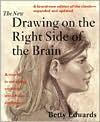
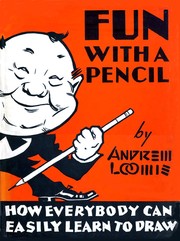
Start with Betty Edwards's The New Drawing on the Right Side of the Brain to fix your seeing, then loosen up with Andrew Loomis's Fun With a Pencil, a charming, confidence-building introduction to constructing figures and heads from simple shapes. Lock in spatial fundamentals with Ernest Norling's Perspective Made Easy, which does exactly what its title promises.
Learn construction and appeal
Design begins with believable form and movement. Richard Williams's The animator's survival kit teaches how forms move and carry weight, essential for characters that feel alive even in a still. Michael Hampton's Figure drawing gives you a system for constructing and posing the body from imagination, the core skill of character design.
Add storytelling, color, and reference
Now make images that communicate. The design-focused Character Design Quarterly collects working professionals' processes and shows how appeal and silhouette are engineered, not guessed. Marcos Mateu-Mestre's Framed Ink Drawing And Composition For Visual Storytellers teaches staging and composition for narrative impact. For color and light, James Gurney's Color and light and Imaginative Realism are the definitive guides to making invented scenes read as real.
Design creatures and whole worlds
Finally, push into imaginative design. Terryl Whitlatch's The wildlife of Star Wars is a master class in grounding fantastical creatures in real anatomy and biology. Jesse Schell's The art of game design widens the lens to how characters and worlds serve interactive experiences, invaluable if you aim for games. And Sketching from the Imagination collects working artists' idea-generation processes, a fitting capstone showing where all these fundamentals lead.
Follow the full reading path to move from copying shapes to designing characters and worlds of your own.
Follow the full reading path →
Ready to learn something deeply?
Build a reading path — free