Urban sketching trips people up in a way studio drawing does not: you are working fast, in public, with no eraser and a scene that will not hold still. The two things that make it hard are nerve and speed, and no amount of perfect technique helps if you never open the sketchbook on a busy street. So the reading order here is built to lower the barrier first, then add the skills that make on-location work convincing.
Move from mindset and confidence, to the perspective that keeps buildings from tipping over, to color and storytelling, and you build a practice you will actually keep.
Loosen up and get seeing
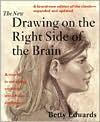
Ground yourself with Betty Edwards's The New Drawing on the Right Side of the Brain if accurate seeing still feels shaky. Then shift into the sketching mindset with France Belleville-Van Stone's Sketch!, which is all about building a daily drawing habit and letting go of perfectionism, exactly the psychology urban sketching demands.
Learn the perspective that holds a scene together
Buildings expose bad perspective instantly. Stephanie Bower's The Urban Sketching Handbook: Understanding Perspective is the ideal on-location guide, teaching you to judge angles by eye and keep a streetscape coherent without formal construction. Reinforce the fundamentals with Gabriel Campanario's The urban sketching handbook, the movement's founding volume, full of approaches from sketchers around the world.
Add color and looseness
Color brings a location sketch alive. Thomas Thorspecken's Urban sketching pairs reportage-style drawing with practical scene-capture advice. For watercolor, the medium most urban sketchers gravitate to, start playfully with Thom Hachtman's Watercolor for the Artistically Undiscovered, then get serious with Shari Blaukopf's The Urban Sketching Handbook: Working with Color and Patricia Seligman's Sketching in Watercolor, which teach fast, confident washes suited to working outdoors.
Compose and keep the habit
Finally, think like a storyteller. Marcos Mateu-Mestre's Framed Ink Drawing And Composition For Visual Storytellers sharpens how you frame and stage a scene for impact. And to sustain the practice for years, Danny Gregory's An illustrated life and The creative license are the great motivators, arguing that a sketchbook habit changes how you see the world, not just how you draw it.
Follow the full reading path to go from a nervous first street sketch to a filled sketchbook and a daily habit.
Follow the full reading path →
Ready to learn something deeply?
Build a reading path — free