People trying to heal from complex trauma often start with the most specific book they can find and feel worse — because without the bigger picture, the specifics can be overwhelming or self-blaming. Complex PTSD develops from prolonged, often early adversity, and it lives in the body and in patterns of relating more than in discrete memories. The reading order here builds understanding and safety first, then moves to the specific work, so recovery has a foundation to stand on.
This is tender material. Read at a pace that keeps you grounded, and treat these books as companions to healing rather than a program to power through.
Stage 1: understand how trauma lives in the body
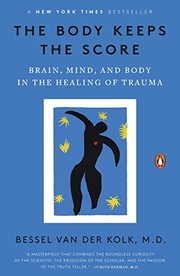
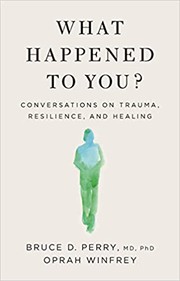
Start with The Body Keeps the Score by Bessel van der Kolk, the landmark book on how trauma reshapes the nervous system and why talking alone often is not enough. Follow it with What Happened to You? by Bruce D. Perry and Oprah Winfrey, which reframes the core question from "what's wrong with you" to "what happened to you" — a shift that removes shame and opens the door.
Stage 2: name the pattern
Now the specifics. Complex PTSD by Pete Walker is the essential guide to C-PTSD from someone who has both studied and lived it — emotional flashbacks, the inner critic, and the four responses trauma trains. Childhood Disrupted by Donna Jackson Nakazawa connects early adversity to lifelong health, grounding the pattern in biology.
Stage 3: work with the body and the parts
Healing reaches the places words cannot. Waking the tiger by Peter A. Levine explains how the body completes interrupted stress responses, and The Polyvagal Theory in Therapy by Deb A. Dana gives the nervous-system map for finding safety. No Bad Parts by Richard Schwartz introduces Internal Family Systems, a compassionate way to work with the protective parts trauma creates.
Stage 4: relationships and self-kindness
Complex trauma is relational, and so is much of the healing. Attached by Amir Levine explains attachment styles and why closeness can feel unsafe. Self-Compassion by Kristin Neff builds the inner kindness that counters the trauma-trained critic, and Myth of Normal by Gabor Maté and Daniel Maté places it all in the wider context of a culture that generates disconnection.
How to study it
Go slowly and prioritize feeling safe over finishing. If a book activates you, put it down and use a grounding practice before continuing — that is skillful, not weak. These books are most powerful alongside a trauma-informed therapist, who can help you titrate the work. They are education and support, not a substitute for professional care, and if you are in crisis, reach out to a clinician or a crisis line rather than pushing through a chapter.
The staged version, with a study plan per stage, is the full reading path. Browse the subject hub, or build your own list.
Ready to learn something deeply?
Build a reading path — free