Every budget works beautifully in the spreadsheet. The failure happens in week three, at a restaurant, tired — because budgets are behavior systems wearing math costumes. The budgeting books worth reading understand this, and they disagree with each other in genuinely useful ways.
Build a budget that actually works (psychology first, spreadsheet second)
July 9, 2026 · 3 min read
Pick a method, not a religion
The path deliberately spans the philosophies, because the right method depends on what is actually wrong.
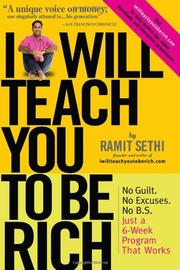
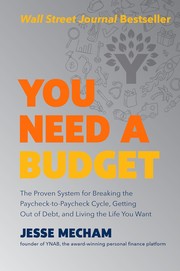
I will teach you to be rich by Ramit Sethi is the automation argument: set up the transfers once, then spend guilt-free on what you love and ruthlessly cut what you do not. Best if you earn decently and leak. You need a budget by Jesse Mecham is the give-every-dollar-a-job method, and the most-loved system in the genre for people whose money feels chaotic rather than short. The total money makeover by Dave Ramsey is the debt-destruction playbook — rigid, motivational, mathematically suboptimal in places (the debt snowball is a psychology decision, not an interest-rate one) and extremely effective for people who need momentum more than optimization.
Read all three if you like, but commit to one. Blending them produces a system with no rules, which is the same as no system.
Then the framing books
Your Money or Your Life by Vicki Robin reframes money as life energy — every purchase costs hours you will not get back — and it is the book most likely to change what you want rather than just what you track. The index card by Helaine Olen makes the opposite point with equal force: the genuinely important personal finance rules fit on a single index card, and the industry's complexity is largely a sales strategy. If the other books have you over-engineering, this one is the corrective.
And Atomic Habits by James Clear supplies the behavior mechanics every budgeting method secretly runs on: make the good behaviour obvious and easy, make the leaky one awkward.
Where the money goes once you have a surplus
A budget is only interesting because of what it frees up, and the last two books on the path are about that.
The millionaire next door by Thomas J. Stanley is the research finding that reframes everything before it: the surveyed millionaires were overwhelmingly ordinary earners with unremarkable houses and high savings rates, not high earners with visible lifestyles. It is the empirical case for the frugality the earlier books argue for on principle. Its data is decades old and its examples are dated, but the central finding — that spending and wealth are barely correlated — has held up.
Then The Simple Path to Wealth by J. L. Collins answers the obvious next question in the plainest possible terms: put the surplus into low-cost broad index funds and leave it alone. It is short, opinionated, and the natural bridge from budgeting into investing. Nothing here is personalised financial advice, and Collins is explicit that his approach suits people who can tolerate volatility and ignore it — worth knowing about yourself before you act on it.
The habit: the weekly money date
Every method in the path lives or dies on one ritual: fifteen minutes a week looking at the numbers. Not to judge — to steer. Budgets fail in the dark; the weekly look keeps the plan matched to reality, which is what flexible actually means.
About 70 hours of reading that will likely be the best-paid hours of your year. Follow the path, then point the surplus at retirement investing.
FAQ
- Which method should I pick — Ramsey, YNAB, or Sethi?
- Match the method to your problem: Ramsey for digging out of debt, YNAB if money feels chaotic, Sethi if you earn decently but leak. The path presents all three so you choose a system, not a religion.
- What should I read once the budget is working?
- The Millionaire Next Door for why a high savings rate matters more than a high income, then J. L. Collins for what to actually do with the surplus. That pair is the shortest route from budgeting to investing.
- Is budgeting worth it if money isn't tight?
- Especially then — untracked comfortable incomes leak the most. Sethi's conscious-spending version barely feels like budgeting: automate the important, then spend freely on what's left.
Get the books
- 1I will teach you to be richAmazon ↗Ramit Sethi
- 2The total money makeoverAmazon ↗Dave Ramsey
- 3You need a budgetAmazon ↗Jesse Mecham
- 4The index cardAmazon ↗Helaine Olen
- 5Atomic HabitsAmazon ↗James Clear
- 6Your Money or Your LifeAmazon ↗Vicki Robin
As an Amazon Associate we earn from qualifying purchases. Some book links are affiliate links; you pay the same price and we may earn a small commission.
Follow the full reading path

A budget that actually works
Beginner8books55 hrs4 stages
@worksherpa♥ 0
Ready to learn something deeply?
Build a reading path — free