Retirement investing suffers from an industry with every incentive to make it seem hard. The evidence points the other way: low-cost index funds, a sensible allocation, and decades of not flinching have beaten the overwhelming majority of professionals. The reading path exists to make you believe that deeply enough to act on it — especially during the crashes that test everyone.
Order matters here for an unglamorous reason. The mechanics are the easy part and you can learn them in a weekend; the failure mode is behavioral, and it arrives years later. So this path front-loads the plumbing, then spends its middle on why indexing works, then spends its back half on your own psychology and on the specific problem of turning a pile of money into an income.
Get the machine running
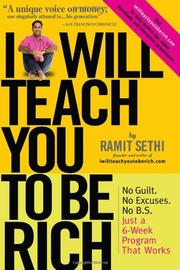
Our retirement path starts with basics in the right order. The total money makeover by Dave Ramsey is the book to start with if debt comes first; its investing advice is the weakest part of it and its debt-payoff psychology is the strongest, so take the half that applies. I will teach you to be rich by Ramit Sethi is the better general starting point for most people: accounts, automation, and a six-week setup that ends with money moving without you.
The core case for indexing
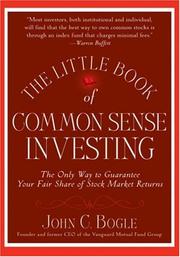
Then the argument itself. The Little Book of Common Sense Investing by John C. Bogle comes from the man who invented the index fund, and it is short, blunt, and mostly about costs. The Simple Path to Wealth by J. L. Collins is the clearest single explanation in print — it began as letters to his daughter and it reads like it. The Bogleheads' guide to investing by Taylor Larimore and colleagues is the full community playbook, the one to keep on the shelf. Underneath all three sits A Random Walk Down Wall Street by Burton Gordon Malkiel, which supplies the half-century of evidence and the market history that makes the other books more than opinion.
If you read only two, read Collins and Bogle. The others are complements rather than alternatives.
The part that actually decides the outcome
Two books address the real risk, which is you. The Psychology of Money by Morgan Housel is a set of short essays on why financially smart people behave irrationally — enough is a moving target, luck and risk are the same thing seen from different angles, and reasonable beats optimal. Your Money and Your Brain by Jason Zweig goes underneath that into the neuroscience of investing decisions: what a losing streak does to your risk tolerance, why patterns appear in random data, and why your certainty peaks at exactly the wrong moment. Read these before your first bear market, not during it.
Turning a portfolio into a retirement
Accumulating is one problem and spending down is a different one, and most beginners never read a book about the second. The Bogleheads' guide to retirement planning is the reference for that half: account types, tax placement, Social Security timing, insurance, and withdrawal sequencing. How Much Money Do I Need to Retire? by Todd Tresidder is the useful skeptical counterweight — it takes apart the standard rules of thumb, including the famous four percent withdrawal rate, and shows how sensitive every number is to assumptions nobody states out loud.
None of this is personal financial advice, and none of these authors knows your tax situation, your health, or your job security. Books make you a much better client of a fee-only adviser; they do not replace one, and anyone promising a specific return is selling something.
The habit: automate, then ignore
The skill that compounds is not stock-picking — it is automation plus inattention. Set the transfer for the day after payday, pick a target-date or three-fund allocation, rebalance on a date rather than on a feeling, and check quarterly at most. The books' deepest shared teaching is that the investor who forgets their password tends to outperform the one who checks daily.
Ten books is roughly 100 hours of reading for what compounds into a decades-long difference. Follow the full path — and fund it with a budget that works.