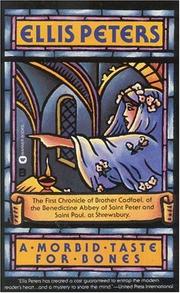
Start with A Morbid Taste for Bones. It is the first chronicle, it is short, and it introduces the premise in one clean movement: a Benedictine monk at Shrewsbury Abbey in the 1130s who was a crusader and a sailor before he took vows, and who therefore knows a great deal about wounds, poisons and human motive that his brothers do not.
You could start almost anywhere, because every case closes inside its own covers. Start at the beginning anyway. The books are short and quick, the series improves as it goes rather than fading, and there is one continuous thread — Cadfael's own private history — that is planted in the early books and settled in the very last one. Beginning at book one costs you nothing and gains you that.
A note on the name. Our catalogue files these under Edith Pargeter, which was the author's real name; she published the Cadfael chronicles as Ellis Peters. Same person, same books.
What you are committing to
There are twenty chronicles plus a book of short stories, and this path takes fifteen of them. You do not have to read all twenty, or all fifteen. The series is genuinely episodic, so the only thing that runs continuously is Cadfael's personal story and the slow progress of the civil war between Stephen and Matilda in the background.
Chronicles 1 to 3: the beginning
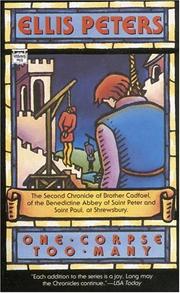
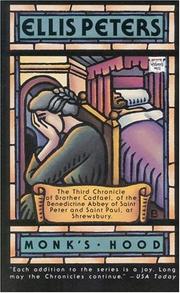
A Morbid Taste for Bones, One Corpse too Many and Monk's Hood. Short, brisk books that go at forty or fifty pages an evening. One Corpse too Many is set during the real siege of Shrewsbury in 1138 and is where the series finds its footing.
Chronicles 4 to 6: the series settles
Saint Peter's Fair, The Leper of Saint Giles and The virgin in the ice. One of these matters more than the others: The virgin in the ice introduces Olivier de Bretagne and the private thread that runs all the way to the final chronicle. If you are sampling rather than reading straight through, that is the one not to skip.
Chronicles 7 to 9: the strongest run
The Sanctuary Sparrow, The devil’s novice and Dead Man's Ransom. This is the stretch generally reckoned the peak of the sequence, and the three to read if you only ever read three. Take Dead Man's Ransom after The virgin in the ice rather than before — the war has moved on and the prisoner exchange assumes it.
Chronicles 10 to 12: the middle
The pilgrim of hate, An excellent mystery and The raven in the foregate are quieter and more interior than the run before them. An excellent mystery in particular is best read slowly and without trying to get ahead of it; its solution is a quiet one and guessing spoils it. If your appetite is flagging, this is a reasonable place to stop, or to jump straight to the last three.
The last chronicles
The summer of the Danes, The Holy Thief and Brother Cadfael’s penance. The most rewarding stretch on the path if you have kept the private thread in view. Read them in this order and read the last one last, deliberately: it is the only chronicle where the continuous story takes the foreground, and it is a genuine ending rather than another case.
A gap to name plainly. This path steps over five chronicles between the middle books and these — The Rose Rent, The Hermit of Eyton Forest, The Confession of Brother Haluin, The Heretic's Apprentice and The Potter's Field. They are good books rather than filler. Nothing here is unreadable without them, but if you want the abbey year by year and the war in sequence, they slot in exactly where they were published.
Publication order or chronological order?
Publication order is chronological order. Ellis Peters advanced the civil war and the abbey calendar in step with the books, so there is nothing to reconcile — read them as numbered. More long detective series laid out this way are on Discover.
Follow the full ordered path here: Brother Cadfael Reading Order and Guide.