Brother Cadfael Reading Order and Guide
Ellis Peters wrote twenty Cadfael chronicles and one book of short stories, and the sequence to use is publication order, which is also very close to internal chronology — the books track the English civil war between Stephen and Maud year by year, and a running thread about Cadfael's own past is paid off in the final novel. This path takes the first twelve in order, then jumps to the last three, which is where the personal story concludes; the volumes it steps over are good and can be read in place whenever you want more.
Start at the Beginning
BeginnerMeet Cadfael, Shrewsbury Abbey and the war in the background, in the three books that set the pattern.
▸ Study plan for this stage
Pace: Three to four weeks for A Morbid Taste for Bones, One Corpse too Many and Monk's Hood — about 680 pages, and these are short, brisk books that go down at 40 or 50 pages an evening. Set expectations first: there are twenty Cadfael chronicles plus a book of short stories, and this path takes fifteen o
- Cadfael himself as the series' unusual idea: a man who took vows at forty after a life as a crusader, sailor and considerable sinner, which is why he is unshockable rather than innocent
- The herbarium as method — Cadfael solves crimes through the pharmacology of what he grows, which is both plot mechanism and characterisation
- The Anarchy as a running clock: the civil war between Stephen and Maud advances year by year through the books, so the political situation in book five is not the one in book one
- Shrewsbury Abbey and the Welsh border as a real, researched place. Edith Pargeter, writing as Ellis Peters, knew the ground and the twelfth-century economy in detail
- Hugh Beringar, introduced in One Corpse too Many, becoming the secular authority Cadfael works alongside for the rest of the series
- Cadfael's Welshness and his bilingualism, which Monk's Hood forces into the open and which the series returns to whenever it crosses the border
- Publication order as the right order, because it is also very nearly the internal chronology — an unusual convenience in a long detective series
- What was Cadfael before he was a monk, and how does the series use that history rather than merely mention it?
- In One Corpse too Many, what is the situation with the ninety-four hanged men, and how does it establish both the war and Hugh Beringar?
- What does Monk's Hood risk by making Cadfael a suspect, and what does it reveal about his past that the first two books withheld?
- How does the abbey's rule — obedience, enclosure, the hours — constrain an investigator, and how does Cadfael get round it?
- Are these mysteries, or historical novels with a body in them? Your answer will shape how much of the series you want.
- Keep a single sheet with the year of each book's events and the state of the civil war. The series moves forward in real time and it is easy to lose track of who currently holds Shrewsbury.
- Look up Shrewsbury on a map, and the Welsh border beside it. Peters is precise about distances and journeys and the books read better with the geography in your head.
- After Monk's Hood, note what you have learned about Cadfael's life before the abbey. Keep adding — that list is the only continuous plot in the series.
- Decide now roughly how many of these you intend to read. Twenty is a lot, and 'as many as I keep enjoying' is a perfectly good answer to have made in advance.
Next up: The abbey, the war and the working partnership with Hugh Beringar are all in place, so the next books can stop introducing and start building the recurring world that makes the middle of this series so comfortable.
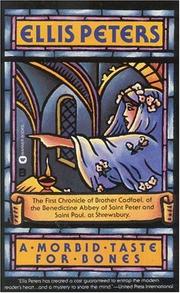
The first chronicle: a party of monks travels into Wales to collect a saint's relics and the villagers object fatally. Start here — it establishes Cadfael as a former crusader and gardener who is entirely unshocked by human behaviour.
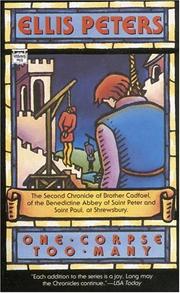
The siege of Shrewsbury in 1138, ninety-four hanged men and ninety-five bodies. The best of the early books, and it introduces Hugh Beringar, who is in nearly every book after it.
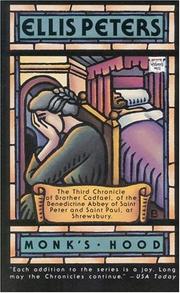
A poisoning with Cadfael's own herbal preparation, which puts him under suspicion and forces his Welsh past into the open. Read third; the series' emotional register widens here.
The Series Settles
BeginnerWatch Peters build a recurring cast and a real medieval economy around the mysteries.
▸ Study plan for this stage
Pace: Three to four weeks for Saint Peter's Fair, The Leper of Saint Giles and The virgin in the ice — around 730 pages. These read fast. One of the three matters more than the others: The virgin in the ice introduces Olivier de Bretagne and the private thread that runs to the final chronicle, so if you a
- The medieval economy as plot: Saint Peter's Fair turns on tolls, trade rights and the friction between a town and the abbey that taxes it, and the detail is the mystery rather than the wallpaper
- Peters's compassion as a working method — The Leper of Saint Giles puts the excluded at the centre and expects the reader to revise their assumptions along with the characters
- Leprosy and the hospital outside the walls, handled with historical accuracy about what the disease meant socially rather than medically
- Marriage as property. Several of the strongest plots in the series turn on a forced or arranged match, which is where Peters locates most of her villainy
- The winter setting of The virgin in the ice used structurally — the weather isolates, delays and preserves, all of which the plot needs
- Olivier de Bretagne's introduction, and the long game Peters starts here without announcing it
- The recurring cast reaching critical mass: Hugh, Brother Jerome, Prior Robert, Abbot Radulfus. From here the books are as much about this company as about the crimes
- What is actually at stake in Saint Peter's Fair beyond the murder, and who profits from the fair?
- How does The Leper of Saint Giles handle the leper hospital — what does Peters assume her reader believes, and how does she correct it?
- What does the winter do for the plot of The virgin in the ice that no other season could?
- Who is Olivier de Bretagne, and what does Cadfael's reaction to him tell you before the book says anything?
- Which recurring character has become most useful to Peters, and what does having them let her skip?
- Read Saint Peter's Fair with the trade arrangements in mind rather than the corpse. It is the best short course available in why the historical detail in this series is load-bearing.
- Add Olivier to your Cadfael-history sheet. This is the moment the series acquires a continuous plot, and it is easy to miss because Peters underplays it.
- Note how Peters introduces a sympathetic outsider in each book — a leper, a suspect foreigner, a servant — and what she does with them. It is her most consistent structural habit.
- If you want to sample rather than complete, read The virgin in the ice and skip nothing else in this stage. It is the hinge.
Next up: With Olivier introduced and the recurring cast settled, the series enters the run most readers rate highest — the books where Peters has stopped building anything and is simply very good at this.
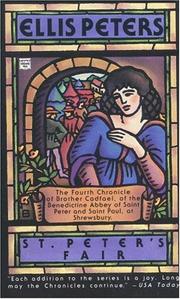
The abbey's annual trade fair, a murdered merchant, and the friction between town and monastery. The best short course in why the historical detail in this series is not decoration.
A forced marriage, a killing, and the leper hospital outside the walls. Peters's compassion is at its most direct here and the plot is among her cleverest.

A winter book, and the pivotal one — it introduces Olivier de Bretagne and the private thread that runs to the very last chronicle. Do not skip this one.
The Strongest Run
BeginnerRead the mid-series novels, generally reckoned the peak of the sequence.
▸ Study plan for this stage
Pace: Three to four weeks for The Sanctuary Sparrow, The devil's novice and Dead Man's Ransom — about 750 pages. This is the stretch generally reckoned the peak of the sequence and the one to read if you only ever read three Cadfaels. Read Dead Man's Ransom after The virgin in the ice rather than before;
- Sanctuary as a legal institution rather than a metaphor — The Sanctuary Sparrow turns on exactly how long a fugitive at the altar may be protected and what happens when the time runs out
- Cadfael's actual method, which is listening. He interrogates almost nobody; he sits with people until they tell him things, which is why the books are gentler than their plots
- Mob justice as Peters's recurring fear: several of the best books put a crowd rather than a killer in the position of greatest danger
- The devil's novice and vocation — a young man taking vows for reasons nobody believes, which lets Peters examine what the abbey is actually for
- The abbey as crime scene rather than as refuge, which is rarer in the series than you would expect and is used deliberately here
- Welsh border politics in Dead Man's Ransom, the territory Peters knew best and wrote with the most confidence
- The war as a machine for producing plots: prisoners, ransoms, displaced people and shifting loyalties, all of them generating crimes that could not happen in peacetime
- What exactly does sanctuary protect the juggler from in The Sanctuary Sparrow, and for how long?
- Why does nobody believe the novice's reasons for taking vows in The devil's novice, and what is Peters saying about religious motive?
- How much of Cadfael's investigating is actually questioning, and how much is waiting? Count the scenes.
- What does the prisoner exchange in Dead Man's Ransom show about how the civil war was actually fought at a local level?
- If someone will only read three of these, is this the right three? Make the case or argue for others.
- Pick the single scene in these three books where Cadfael solves something by saying nothing. There is at least one in each, and it is the series' signature.
- Update your civil war timeline. The situation in Dead Man's Ransom is markedly different from the one in One Corpse too Many and the books assume you have noticed.
- Note the ages of the accused across these three books. Peters's sympathy for the young and powerless is systematic, and seeing it laid out changes how you read the endings.
- If you are enjoying yourself here, this is the point to decide to go the distance. If you are not, this is the strongest run in the series and it is fair to conclude it is not for you.
Next up: Having seen Peters at her best as a puzzle-maker, the middle chronicles show what she does when the puzzles start mattering less to her than the faith and the politics around them.
A terrified young juggler claims sanctuary at the altar and the town wants him hanged. A tight, humane book and a good demonstration of Cadfael's method, which is mostly listening.

A young man takes vows for reasons nobody believes. The most psychologically interesting of the middle books and one of the few where the abbey itself is the crime scene.
A prisoner exchange after a battle, and the Welsh border politics that Peters knew best. Read after The Virgin in the Ice; the war has moved on since.
The Middle Chronicles
IntermediateContinue through the civil war years as the books grow more concerned with faith and less with puzzles.
▸ Study plan for this stage
Pace: Three to four weeks for The pilgrim of hate, An excellent mystery and The raven in the foregate, about 730 pages. These are quieter and more interior than the previous run, and An excellent mystery in particular is best read slowly and without trying to get ahead of it. If you are running low on app
- Saint Winifred's relics returning in The pilgrim of hate, which circles back to the very first chronicle and is the clearest argument for reading in publication order
- Pilgrimage as a social phenomenon: who travels, why, and what a crowd of strangers does to a small town
- Peters shifting weight from puzzle to faith — the middle books are more interested in why people believe things than in how the body got there
- An excellent mystery as the series' best-kept secret, in both senses: a plot whose concealment is unusually well managed and a book whose admirers are quietly devoted
- The raven in the foregate and clerical politics — an imposed, rigid priest as a study in how authority without sympathy destroys a parish
- Ordinary people surviving a civil war, which is the most political the series ever gets and the sharpest thing in it
- Refugees, burned priories and displaced religious as the war's human residue, which supplies most of the casts of these three books
- How does The pilgrim of hate use the relics from A Morbid Taste for Bones, and what does the callback add?
- What is the secret in An excellent mystery, and at what point did you suspect it? Peters conceals it more carefully than usual.
- Why is the new priest in The raven in the foregate so intolerable to the parish, given that he is not corrupt?
- What does Peters think ordinary people owe an authority they did not choose? The three books answer differently.
- Have the mysteries become less important to Peters by this point, and is that a loss?
- Reread the last chapter of A Morbid Taste for Bones before starting The pilgrim of hate. It takes ten minutes and doubles the payoff.
- In An excellent mystery, note the exact page where you first felt something was off. Comparing that with other readers is one of the small pleasures of this series.
- List what the new priest in The raven in the foregate actually does wrong. It is a short list of individually defensible acts, which is Peters's point.
- Take stock: you are twelve books in. Decide whether to fill in the chronicles this path steps over or go straight to the ending. Both are legitimate and the series is built to survive either.
Next up: The war is winding down and the relics have come back into the story, which is exactly where the final chronicles pick up in order to close both the history and Cadfael's own.
Pilgrims arriving for Saint Winifred's feast, one of them not what he claims. It circles back to the relics of the very first book, which is why publication order pays.
Two refugee monks from a burned priory and a secret that Peters keeps unusually well. The quietest and one of the most admired chronicles.
A rigid new parish priest is imposed on the town and drowned. The most political of the series and the sharpest on how ordinary people survive a civil war.
The Last Chronicles
IntermediateJump to the end of the sequence, where the war winds down and Cadfael's own story is finally settled.
▸ Study plan for this stage
Pace: Three to four weeks for The summer of the Danes, The Holy Thief and Brother Cadfael's penance — around 860 pages, and the most rewarding stretch in the path if you have kept the private thread in view. Read them in this order and read the last one last, deliberately. A note on the gap: this path ste
- The summer of the Danes as the series' outlier — an embassy into Wales with a Danish fleet offshore, which is closer to an adventure novel than to a detective story
- Cadfael's bilingual, well-travelled past finally being the point rather than the background, twenty books after it was introduced
- The Holy Thief closing the loop opened in A Morbid Taste for Bones: Saint Winifred's relics vanish, and the series' first plot becomes its penultimate one
- Relics as property, faith and politics simultaneously — Peters's most sustained joke and her most serious point about medieval religion
- Brother Cadfael's penance and the cost of leaving: Cadfael goes without permission, knowing the rule, which puts his vocation and his love for Olivier in direct conflict
- Obedience as the last mystery. The final chronicle asks what a monk owes his abbot when a man he loves is in danger, and it does not treat the answer as obvious
- An ending genuinely earned across twenty books and eighteen years of writing, which is rare in any long series
- Why does The summer of the Danes need to leave Shrewsbury entirely, and what does that let Peters show about Cadfael?
- What does the theft of the relics in The Holy Thief say about how the abbey actually regards them?
- What is the penance of the final title, and who imposes it?
- How does Peters resolve the conflict between Cadfael's vows and his obligation to Olivier — and does the resolution satisfy you?
- Looking back over the whole path, what was the continuous story, and when did you realise it was running?
- Read your Cadfael-history sheet from the beginning before starting Brother Cadfael's penance. Everything on it is about to matter at once.
- Reread the opening chapter of A Morbid Taste for Bones after The Holy Thief. Twenty books apart, same relics, entirely different tone.
- Write down what you think Peters believed about faith, on the evidence of these twenty years of books. She never states it and the series is unusually coherent about it.
- Decide which chronicles you skipped that you now want to go back for. Having read the ending, they are still perfectly readable — one of the real advantages of an episodic series.
Next up: This is the end of the path. With the personal story closed, the remaining chronicles can be read in any order at all, which is the most relaxed possible way to spend more time in Shrewsbury.

Cadfael on an embassy into Wales with a Danish fleet offshore — the most adventurous book in the series and the one that most uses his bilingual, well-travelled past.

Saint Winifred's relics go missing, closing the loop opened in A Morbid Taste for Bones. Read it near the end for exactly that reason.
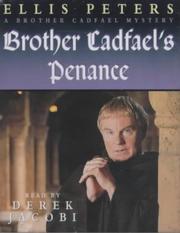
The twentieth and final chronicle, in which Cadfael leaves the abbey without permission for the sake of Olivier. Read it last: it is the resolution the whole series has been quietly setting up since The Virgin in the Ice.
Discussion
Keep reading
Paths that share books, cover the same subject, or open a related topic.