If you want a career whose AI-resistance requires no explanation, consider the one where the entire product is skilled human touch. Massage therapy cannot be done remotely, cannot be generated, and cannot be convincingly imitated by a machine — massage chairs have existed for decades and threatened nobody's practice. Meanwhile demand has moved well beyond spas: massage is increasingly woven into pain management, sports recovery, and healthcare settings, and it is licensed work in most states, which protects both standards and practitioners.
The honest caveat first: nearly every US state requires graduating from an approved massage program (commonly 500 to 1,000 hours) and passing a licensing exam, usually the MBLEx. Books cannot substitute for supervised hands-on training — touch is learned under instruction. What books do is carry the knowledge half of the job: anatomy, pathology, and clinical reasoning are where students struggle and where great therapists separate from average ones. Read in the right order and school becomes consolidation instead of survival.
The path, stage by stage
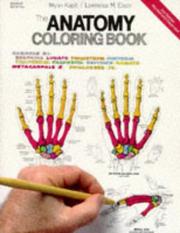
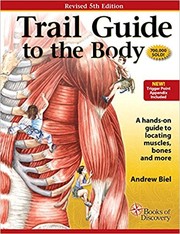
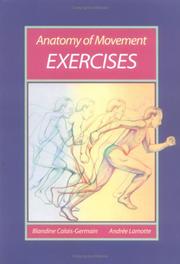
Anatomy comes first, learned actively. The Anatomy Coloring Book by Wynn Kapit turns memorization into engagement — coloring structures builds recall that passive reading never will. Then move to the book that is practically the massage profession's shared textbook: Trail Guide to the Body by Andrew Biel, which teaches you to find muscles, bones, and landmarks with your hands. Palpation is the foundational skill of the entire career, and this book is its bible. Add Anatomy of Movement Exercises by Blandine Calais-Germain to connect structures to how bodies actually move — therapists who understand movement treat causes, not just sore spots.
Then the professional core: Mosby's Fundamentals of Therapeutic Massage by Sandy Fritz is the comprehensive school text — technique, draping, ethics, client assessment, and the business basics of practice. Reading it before or alongside school gives you the full map of the profession.
Next, the clinical stage that elevates your work. The Trigger Point Therapy Workbook by Clair Davies is the accessible classic on referred pain patterns — why the pain is here but the problem is there — and it is immediately useful. Mosby's Pathology for Massage Therapists by Susan G. Salvo teaches the safety-critical knowledge of when massage helps, when to modify, and when to refer out; this is what makes you trustworthy to healthcare providers. Finish with Clinical Massage Therapy by James Waslaski for advanced orthopedic protocols — the treatment-focused work that commands clinical referrals and higher rates.
The full reading path sequences these into stages with a study plan for each.
Your first 90 days
Weeks 1 to 4: start the anatomy books and tour two or three accredited massage programs near you — compare hours, cost, and MBLEx pass rates. Weeks 5 to 8: enroll (many programs run evenings and weekends, so career changers can keep working) and get massaged by different therapists in different styles; it is field research. Weeks 9 to 12: begin the palpation and fundamentals texts alongside your first classes. Plan honestly around the physical reality too — good body mechanics, taught early, is what makes this a long career instead of a short one.
More at the subject hub, or survey other human-centered careers at /subjects/ai-proof-career.
Ready to learn something deeply?
Build a reading path — free