A restaurant meal is one of the few products people still buy specifically because humans made it. The palate calls, the improvisation when the walk-in is missing something, the hospitality judgment of reading a dining room — this is embodied, sensory, high-pressure craft. Automation has nibbled at fast food for decades and will keep nibbling; the craft kitchen, where judgment and taste are the product, is another matter entirely. If your escape plan from a screen-bound career runs through a kitchen, you are not being romantic. You are being fairly practical — as long as you go in with clear eyes.
The clear eyes are what a reading path provides. Cooking knowledge on the internet is infinite and orderless; the career needs sequence — first the truth about the life, then technique, then science, then the business of hospitality. The full reading path runs that order.
Stage 1: The truth about the life
Start with Kitchen Confidential by Anthony Bourdain — still the most honest account of what professional kitchens demand: the hours, the heat, the crews, the adrenaline. Read it as a warning label you might fall in love with. Then read The Making of a Chef by Michael Ruhlman, who enrolled at the Culinary Institute of America as a writer and came out explaining what culinary training actually teaches — and what it costs. Between these two books you will know whether to keep going, which is exactly their job. Buford's Heat, an amateur's trial by fire in a real professional kitchen, is the third witness if you want one.
Stage 2: Technique and palate
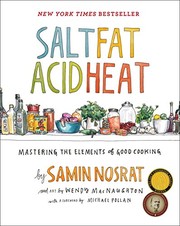
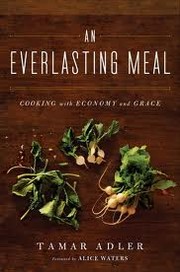
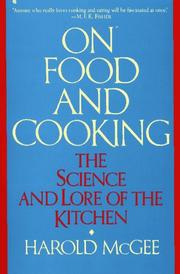
Now build the actual skill. Salt, Fat, Acid, Heat by Samin Nosrat teaches cooking as principles rather than recipes — the four variables that let you cook anything, which is precisely how professionals think. Then drill the classical foundation with Jacques Pépin New Complete Techniques — hundreds of fundamental techniques, photographed step by step, from a chef who trained generations. This is your practice manual: cook from it, repeatedly. Deepen the why with On Food and Cooking by Harold McGee, the kitchen-science reference that explains what is happening inside the pan; chefs who understand the mechanism recover from problems that sink recipe-followers. And read An Everlasting Meal by Tamar Adler for the economy of a real kitchen — cooking from what is there, wasting nothing — which is both a professional skill and a philosophy.
Stage 3: Excellence and the room
The French Laundry Cookbook by Thomas Keller shows what the ceiling of the craft looks like — read it less for the recipes than for the standards: the finesse, the discipline, the respect for ingredients. Then read Setting the Table by Danny Meyer, the hospitality classic arguing that how you make people feel outranks what you serve — the insight that turns cooks into restaurateurs, and the most explicitly automation-proof idea in this whole path.
How to actually start
Kitchens have the lowest barrier to entry of any craft career: restaurants hire inexperienced prep cooks and dishwashers constantly, and the interview is often a working trial, not a resume screen. Ninety-day version: month one, cook through Pépin techniques at home on a schedule while reading Bourdain and Ruhlman. Month two, get a part-time or staging position in the best kitchen that will have you — quality of kitchen beats pay early. Month three, decide your route: learn entirely on the line (common, cheap, slower) or culinary school (faster networks and structure, real tuition). Honesty about the trade: the hours are nights and weekends, early pay is low, and the physical toll is real. The counterweight is a skill that travels anywhere on earth and cannot be outsourced to software.
Taste is human. Service is human. Start at the subject hub, or browse more escape routes on Discover.
Ready to learn something deeply?
Build a reading path — free