African Art: The Best Books to Read, in Order
There is no single book on African art, because the field covers a continent, three thousand years, and object types — masks, textiles, architecture, brass casting, contemporary installation — that no one discipline handles well. What the literature actually consists of is two general surveys, a shelf of museum exhibition catalogues that carry the best photography and the most current scholarship, a set of deep regional monographs, and an increasingly loud argument about how the objects got to Europe. This path takes them in that order, and each book below is described by what it physically is, because a catalogue, a survey and a field monograph are not read the same way.
The Two Surveys
BeginnerGet a continent-wide map: the major traditions, regions and periods, and the vocabulary the rest of the literature assumes.
▸ Study plan for this stage
Pace: Six to eight weeks. Willett's African Art is a compact Thames and Hudson World of Art paperback — under 300 illustrated pages, readable straight through in two weeks. A History of Art in Africa is a 496-page university textbook by six authors, organised region by region; do not read it cover to cove
- The field's basic geography: the Nile Valley, the western Sudan, the Guinea Coast, Equatorial Africa, eastern and southern Africa, and the diaspora. Every later book on this path assumes you can place a people and a region without looking them up.
- The object categories that Western art history handles badly and this field is built on — masquerade, regalia, shrine figures, textiles, architecture, body arts — where performance and use are part of the work rather than context for it.
- Willett is a single-author survey from 1971, revised since. It is the fastest way in and it is dated in specific ways: attribution by tribal style, an implicit cutoff around 1900, and provenance treated as a museum detail rather than a historical one. The later stages correct exactly those points.
- Visonà, Poynor, Cole, Harris, Abiodun and Blier's textbook is the standard reference, and its structural choice matters: it treats contemporary and historical work as one continuous field rather than as separate subjects.
- The tribal style attribution model — assigning an object to an ethnic group by formal traits — is how most museum labels still read and is heavily qualified in current scholarship. Notice how differently the two surveys handle it.
- Dating is a real problem in this field. Wood does not survive long in most of the continent, so the surviving corpus is skewed toward metal, terracotta and the last two centuries, which distorts any narrative built from it.
- Name the major regions and one tradition from each that you could now describe from memory.
- Where do Willett and the Visonà textbook disagree about what counts as African art — in period covered, in object type, or in who made it?
- Why is so little surviving African sculpture more than two hundred years old, and what does that do to any account of stylistic development?
- What does the textbook's decision to run through to contemporary work in the same volume change about the story it tells?
- Pick one object reproduced in both books and compare the two captions. What does each one think you need to know?
- Draw a blank map of the continent and fill in ten traditions from the Visonà textbook by region — Ife, Benin, Bamana, Fang, Kuba, Asante, Dogon and others. Keep it; every book from stage two onward assumes it.
- Take Willett's treatment of Benin and the Visonà chapter on Benin and list every factual point on which the newer book qualifies the older one. That list is the shape of the last fifty years of scholarship.
- For twenty consecutive plates in Willett, write down what the caption tells you about how the object was used and by whom. The proportion of blanks is the survey's real limitation.
- Read the Visonà textbook's introduction twice and write out its stated position on tribal style attribution in your own words, since stage three's monographs are arguing against the version of it Willett uses.
Next up: With a map and a vocabulary in place, the catalogues can be read for the objects themselves rather than for orientation.
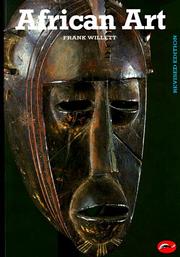
The compact Thames and Hudson World of Art survey, first published in 1971 and revised since — a single-author overview of the whole field in under 300 illustrated pages. It is the cheapest and fastest way in, and it is dated in exactly the ways the later books on this path correct.
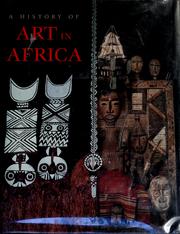
The standard university survey, a large multi-author textbook by Visonà, Poynor, Cole, Harris, Abiodun and Blier organised region by region from the Nile Valley to the diaspora. Read it after Willett: it is the reference you will keep returning to, and it treats contemporary and historical work as one continuous field rather than as separate subjects.
The Exhibition Catalogues
IntermediateSee the objects properly. Catalogues carry the photography, the provenance data and the specialist essays that surveys compress into a paragraph.
▸ Study plan for this stage
Pace: Eight to ten weeks, and this stage is looked at as much as read. Africa, the Art of a Continent is the catalogue of the 1995 Royal Academy exhibition, heavily illustrated with essays by Appiah, Blier, Eyo and others — spend three to four weeks on it and treat the plates as the primary text. Yoruba i
- What a catalogue is for: the plates carry the photography a survey cannot afford, and the entries carry the provenance, dimensions, material and collection history that make later argument possible. The essays are current scholarship at the date of the show, not a settled overview.
- Africa, the Art of a Continent was the largest survey exhibition of African art mounted in Britain, and its curatorial premise — the whole continent including Egypt, chronologically arranged — was itself an argument that drew serious criticism at the time.
- The Yoruba catalogue is the standard introduction to one of the most-studied traditions on the continent, running from Ife terracottas to twentieth-century shrine sculpture, with Abiodun bringing Yoruba aesthetic terms into the analysis rather than translating them away.
- Cole's Icons is organised by recurring image type — the mother and child, the couple, the horse and rider, the stranger — rather than by region, which teaches a comparative habit no regionally arranged book can.
- Provenance lines in catalogue entries are data. Collected 1897, acquired from a dealer, gift of an estate: reading these in bulk is what makes stage four's argument concrete rather than rhetorical.
- Exhibition catalogues are produced by institutions with collections and interests. That does not make them unreliable, but the selection is shaped by what the lenders own.
- The Yoruba catalogue is filed in this catalogue under the truncated display title Yoruba, and Cole's book under the bare title Icons.
- What is the curatorial argument of Africa, the Art of a Continent, and what did including Egypt and North Africa commit the exhibition to?
- What do the Yoruba catalogue's essays claim about Yoruba aesthetic terms that a formal analysis in a survey would miss?
- Take one of Cole's image types and say what stays constant and what varies as it crosses regions.
- Reading twenty provenance lines from the Royal Academy catalogue at random: what date range and what routes of acquisition dominate?
- Where does a catalogue entry give you something the two surveys structurally could not?
- Pick five objects from Africa, the Art of a Continent and find each one in the Visonà textbook. Note what the textbook compressed into a phrase and what the catalogue entry gives you — material, dimensions, collection, date of acquisition.
- Take Cole's image-type scheme from Icons and re-sort thirty plates from the Royal Academy catalogue into his categories. The objects that will not sort are the most interesting result.
- Transcribe the provenance line of twenty entries in the Royal Academy catalogue into a table with columns for date acquired, from whom, and current holder. Keep the table for stage four; it turns the restitution argument into something you have handled yourself.
- Read the Ife material in the Yoruba catalogue closely and note the questions it leaves open. Blier's Art and Risk in Ancient Yoruba, in the next stage, is an answer to some of them.
- For any three plates, write your own catalogue entry from what the survey taught you, then check it against the real one.
Next up: Having handled objects as catalogued things, the monographs put three of them back into the contexts of use that a plate cannot show.

The catalogue of the 1995 Royal Academy exhibition — the largest survey show of African art ever mounted in Britain, with essays by Appiah, Blier, Eyo and others. Enormous, heavily illustrated, and the single best object-by-object reference on this list.

The catalogue of the Center for African Art's Yoruba exhibition, by Drewal, Pemberton and Abiodun — the standard introduction to one of the continent's most-studied traditions, from Ife terracottas to twentieth-century shrine sculpture. Catalogued under the truncated display title Yoruba.

Cole's Smithsonian catalogue, organised by recurring image type — the mother and child, the couple, the horse and rider, the stranger — rather than by region. It teaches the comparative habit that regional books cannot, and is filed under the bare title Icons.
Regional Depth: Objects in Their Own Contexts
IntermediateReplace the survey's summary with three sustained field studies, and see how much of an object's meaning lives in use rather than in form.
▸ Study plan for this stage
Pace: Ten to twelve weeks. Picton and Mack's African Textiles is a British Museum study of about 200 pages, technical and heavily illustrated — three weeks. African Vodun is Blier's fieldwork-based monograph, 481 dense pages of art history and ethnography; five to six weeks and worth the time. Art and Ris
- Textiles are the most widely produced and least written-about African art form. Picton and Mack cover loom types, weaving and dyeing technique, trade routes and meaning, and the technical material is the point rather than a preamble.
- Strip-weaving, resist dye, appliqué and imported cloth: the technical vocabulary that makes it possible to look at a cloth and say where and how it was made.
- Blier's African Vodun is built on fieldwork with the people who commission and use bocio power figures in Benin and Togo, and it is explicitly a refutation of the fetish-object framing those figures receive in European museums. It is an argument, and she says so.
- Meaning in use versus meaning in form: these monographs demonstrate that a substantial part of an object's significance lives in who commissioned it, what it was fed or handled with, and what it was supposed to do — none of which is visible in a plate.
- Art and Risk in Ancient Yoruba reinterprets the naturalistic Ife bronze and terracotta heads against a specific political and climatic crisis. It is a revisionist reading of well-known objects, not a survey of them.
- African Vodun describes objects made for binding, harming and protection, including materials of animal and human origin, and the practices around them.
- Reading a monograph is a different activity from reading a survey: you are following one scholar's evidence and argument, and the footnotes are where the field's disagreements live.
- Explain strip-weaving and what the technique implies about how a finished cloth is designed and sold.
- What is a bocio, and what does Blier say it is for that a museum label calling it a fetish gets wrong?
- What evidence does Blier use in African Vodun that an object-based art history cannot use, and what are the limits of that evidence?
- What crisis does Art and Risk in Ancient Yoruba argue produced the Ife heads, and how does she connect a political event to a sculptural style?
- Which of these three books changed how you would look at an object you had already seen in a catalogue plate? Name the object.
- Find a photograph of an African textile in the Royal Academy catalogue and identify its construction from Picton and Mack — loom width, joining, dye method. This is the one exercise on the path that gives you a technical skill.
- Take Blier's account of one bocio and write the museum label it would have received in 1960, then the label it should receive now. The gap is her book's whole argument.
- Read the Ife entries in the Yoruba catalogue, then Blier's reinterpretation, and list which specific objects her argument depends on. Then ask what her reading would need in order to be wrong.
- Follow one footnote chain in African Vodun back to its source and see what Blier is disagreeing with. Monographs argue with named people, and finding out who is how you locate the field's live disputes.
- Write a paragraph on what a survey, a catalogue and a monograph each cannot do, using one example of each from the last three stages.
Next up: One of those provenance questions — how the objects reached European museums at all — is large enough to need its own stage.
Picton and Mack's British Museum study of woven and dyed cloth across the continent — technique, loom types, trade and meaning. Textiles are the most widely produced and least written-about African art form, and this is the book that fixes the imbalance.
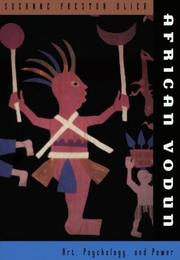
Blier's monograph on the bocio power figures of Benin and Togo: an art-historical account built on fieldwork with the people who commission and use them, and a direct refutation of the fetish-object framing those figures usually receive in European museums.

Blier's later study of Ife, the naturalistic bronze and terracotta heads, and the political crisis that produced them. Read it after the Yoruba catalogue, which supplies the objects this book reinterprets.
Benin, Looting and Restitution
IntermediateFollow one collection — the Benin bronzes — from its making, through the 1897 punitive expedition, into the current restitution argument, and understand why provenance is now an art-historical question rather than a legal footnote.
▸ Study plan for this stage
Pace: Six to eight weeks. Barley's The Art of Benin is a short British Museum introduction of about 144 pages, illustrated, one week. Loot is a 400-page work of journalism, reported from Nigeria and Europe, two to three weeks. The Brutish Museums is 352 pages of sustained polemic with a scholarly apparatu
- The Benin corpus itself: brass plaques, commemorative heads, ivories and regalia produced for a court over several centuries, by guild casters working to royal commission. Barley's short book gives you the objects before the argument about them.
- The 1897 punitive expedition: a British force attacked and burned Benin City, exiled the Oba, and removed the palace's brass and ivory work, which was dispersed through sale into European and American museums and private hands.
- Loot is reported journalism. Barnaby Phillips follows the objects and the people involved on both sides, and keeps Nigerian voices — descendants, curators, officials — central rather than as reaction.
- The Brutish Museums is a polemic by Dan Hicks, a curator at the Pitt Rivers Museum, arguing that the ethnographic museum is itself an instrument of colonial violence and that return is owed. He is an advocate writing from inside an institution that holds such collections, and the book is framed as a
- The two books largely agree on the facts and disagree on the conclusions, which is an accurate picture of the current state of the argument rather than a failure of either.
- Restitution is genuinely contested — over legal title, over which institution or authority in Nigeria should receive returns, and over what museums are for. The books on this path take positions within that dispute rather than settling it.
- Provenance has become an art-historical question rather than a legal footnote: knowing how an object arrived changes what can be said about it, which is why this stage sits inside a reading path about art rather than beside one.
- How were the Benin brasses made and for whom, before any of them left Benin City?
- Give the sequence of the 1897 expedition and what happened to the objects afterwards, in order.
- Where do Phillips and Hicks agree on the facts, and where exactly does the disagreement start?
- What is Hicks's argument about the ethnographic museum as a form, as distinct from his argument about the Benin objects specifically?
- What are the strongest objections to immediate return that these books engage with, and how well do they engage with them?
- Does knowing an object's route into a collection change how you read the catalogue plates from stage two? Be concrete.
- Return to the provenance table you built in stage two and mark every entry with an acquisition date between 1890 and 1910. Then check those entries against the account in Loot.
- Pick one specific Benin object reproduced in Barley and trace it as far as you can through the two later books — where it was in 1896, who took it, who sold it, where it is now.
- Write out Hicks's argument in your own words in one paragraph, then write the strongest counter-argument you can from Phillips's reporting. Do not decide between them on paper; the point is to be able to state both.
- Read the British Museum's own published position on the Benin material alongside Barley's British Museum introduction and note what the introduction does not say.
- List three things you now want to know that none of these three books answers. Those gaps are where the field currently is.
Next up: The restitution argument is being made by and about living artists and curators, which is the field the last stage belongs to.

Barley's short British Museum introduction to the Benin corpus itself — the brass plaques, heads and ivories, and the court that produced them. Start with the objects, before the argument about who should hold them.

A journalist's narrative account of the 1897 raid on Benin City and the century of dispersal that followed, reported from Nigeria as well as from European museums. The most readable entry into the restitution debate, and the one that keeps Nigerian voices central.
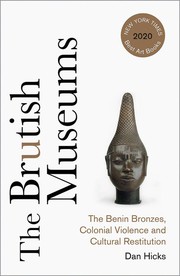
Hicks is a curator at the Pitt Rivers, and this is the polemical case for return, arguing that the ethnographic museum is itself a colonial instrument. Read it against Phillips: the facts largely agree and the conclusions do not, which is the honest state of the field.
Living Contemporary Practice
IntermediateClose the gap between the historical field and the working artists, and see how the market shapes what gets made and what gets called art.
▸ Study plan for this stage
Pace: Eight to ten weeks. Kasfir's Contemporary African Art is a Thames and Hudson survey of about 270 illustrated pages — two weeks, and it reads as the direct sequel to Willett. African Art and Agency in the Workshop is an edited academic volume of 417 pages with chapters by many hands; four weeks, and
- Kasfir's survey covers artists working from the mid-twentieth century onward — workshop-trained painters, art-school graduates, internationally exhibited installation artists — and is the correction to any survey that stops at 1900.
- The workshop, not the studio, is the characteristic site of production for a great deal of African art, historical and contemporary: apprentices, division of labour, repetition and commission. Kasfir and Förster's volume dismantles the individual-genius model imported from European art history.
- Authenticity is a market category. What counts as a genuine African object, who certifies it, and what happens to the price when a piece is identified as made for sale are questions this stage treats as art-historical rather than commercial.
- The copy, the version and the commissioned repeat are normal production categories in a workshop and pathological ones in a Romantic model of authorship, which is the collision the edited volume is about.
- Reading the Contemporary, edited by Oguibe and Enwezor, is an anthology of criticism by African artists, curators and theorists — the field describing itself rather than being described, which puts the terms every earlier book used up for argument.
- The international exhibition circuit — biennials, curated survey shows, the market for contemporary African art — shapes what gets made and what gets called art, and the anthology's contributors are participants in that system as well as critics of it.
- Kasfir and Förster's volume covers the territory of Christopher Steiner's African Art in Transit, which does not resolve in our catalogue.
- Where does Kasfir's contemporary survey begin, and what does her starting point commit her to excluding?
- How does a workshop produce an object, and which assumptions in the earlier books on this path does that process break?
- Who decides whether an object is authentic, and what does the answer reveal about the market rather than the object?
- In Reading the Contemporary, what terms used comfortably by the surveys do the contributors refuse? Name three.
- Having read the field describing itself, which book earlier on this path now looks most dated, and in what specific respect?
- Read Willett's closing chapters and Kasfir's opening chapters back to back. They are both Thames and Hudson surveys about thirty years apart, and the seam between them is where the field's twentieth-century blind spot sits.
- Take one essay from Reading the Contemporary and identify which earlier book on this path it is arguing against. Most of them are arguing against something specific, and naming the target is how the anthology becomes coherent.
- Choose a single contemporary artist from Kasfir's survey and find how they are described in the anthology by a contributor rather than by a survey author. Compare the two descriptions clause by clause.
- Using the workshop model from Kasfir and Förster, rewrite one catalogue entry from stage two to describe production rather than attribution.
- Write a final page listing, for each of the five stages, what kind of book it consisted of and what that kind of book can and cannot tell you. This is the actual literacy this path was for.
Next up: This is the end of the path: a survey map, a catalogue eye, three monographs, a provenance argument and the field's own voice, which is enough to read anything else in it critically.
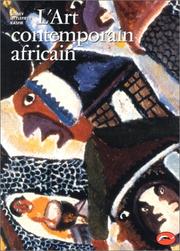
The Thames and Hudson survey of artists working from the mid-twentieth century onward, from workshop-trained painters to internationally exhibited installation artists. It is the direct sequel to Willett in scope and the correction to any survey that ends at 1900.
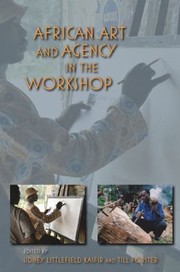
Kasfir and Förster's edited volume on how African art is actually produced — the workshop, the apprentice, the copy, the commission — which dismantles the individual-genius model imported from European art history. This is the book that covers the territory of Christopher Steiner's African Art in Transit, which does not resolve in our catalogue.

Oguibe and Enwezor's anthology of criticism by African artists, curators and theorists — the field describing itself rather than being described. The right last book, because it puts the terms every earlier volume used up for argument.
Discussion
Keep reading
Paths that share books, cover the same subject, or open a related topic.