Best Books on Zoroastrianism, in Reading Order
This curriculum takes an intermediate learner from a solid grounding in Zoroastrian theology and scripture through the religion's historical role in the Persian empires, its survival in the Parsi diaspora, and finally its profound but often underappreciated influence on Judaism, Christianity, Islam, and Gnosticism. Each stage builds the conceptual and historical vocabulary needed to fully appreciate the next, moving from sacred texts and their interpretation outward to world-historical impact.
Scripture and the Prophet
IntermediateUnderstand who Zarathustra was, read the Gathas in a reliable translation, and grasp the core theology — Ahura Mazda, Asha, Druj, and the cosmic dualism — before encountering historical or comparative arguments.
▸ Study plan for this stage
Pace: 4–5 weeks, ~25–30 pages/day, with 2–3 days per week reserved for reflection and exercises
- Zarathustra as a historical prophet: his life, mission, and the context in which he lived and preached
- The Gathas as Zarathustra's own words: their structure, poetic form, and how to read them as primary theological testimony
- Ahura Mazda: the supreme, wise lord and the ultimate source of good, justice, and cosmic order
- Asha (truth/righteousness) and Druj (lie/chaos): the fundamental cosmic principles that structure reality and human choice
- Dualism in Zoroastrianism: the cosmic struggle between good and evil, spirit and matter, and how humans participate in this struggle
- The Yazatas and divine beings: how Ahura Mazda's will is expressed through celestial powers and how they relate to human virtue
- Eschatology and judgment: the individual and cosmic end-times, the role of the soul after death, and ultimate restoration
- Who was Zarathustra historically, and what do we know about the time and place in which he lived and preached?
- What are the Gathas, and why are they considered Zarathustra's own voice rather than later interpretations of his teachings?
- Explain the relationship between Ahura Mazda, Asha, and Druj—how do these three concepts form the theological core of Zoroastrianism?
- What is cosmic dualism in Zoroastrianism, and how does it differ from simple good-versus-evil dualism?
- How do humans participate in the cosmic struggle between Asha and Druj, and what role does choice play in Zoroastrian ethics?
- What happens to the soul after death in Zoroastrian belief, and how does individual judgment relate to the ultimate cosmic restoration?
- Read and annotate one Gatha passage (from Rose's translation) each week; write a one-page reflection on what Zarathustra seems to be saying about Ahura Mazda or the cosmic struggle
- Create a concept map showing the relationships between Ahura Mazda, Asha, Druj, and the Yazatas; update it as you progress through the book
- Write a short biographical sketch of Zarathustra based on what Rose presents; note which details are historically certain versus traditionally believed
- Identify and list 5–7 key theological claims from the Gathas (via Rose's discussion); for each, write one sentence explaining its significance to Zoroastrian worldview
- Compare two different Gatha passages on the same theme (e.g., choice, judgment, or divine power); write a brief analysis of how they reinforce or complicate each other
- Create a timeline or visual diagram of Zoroastrian eschatology—from individual death through cosmic restoration—based on Rose's account
Next up: This stage establishes the theological and scriptural foundations of Zoroastrianism, positioning you to examine how these core ideas developed, spread, and were interpreted across different periods and cultures in subsequent stages.
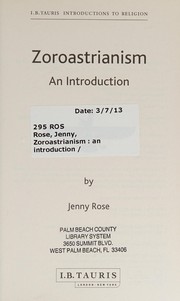
Rose provides a concise, scholarly yet accessible overview of Zoroastrian theology, ritual, and history that contextualizes what you just read in the Gathas and sets up every subsequent stage.
The Persian Imperial World
IntermediateTrace how Zoroastrianism shaped and was shaped by the Achaemenid, Parthian, and Sasanian empires, and understand the religion's institutional development — priesthood, fire temples, and the Avesta — in its political context.
▸ Study plan for this stage
Pace: 4–5 weeks, ~40–50 pages/day (Boyce's text is dense with historical detail; allow time for re-reading key sections on imperial contexts)
- The Achaemenid Empire as the crucible for Zoroastrian institutionalization: royal patronage, fire temples, and the emergence of a formal priesthood (magi)
- The Avesta as a living, evolving text: oral transmission, written codification, and how political stability enabled its preservation and standardization
- Zoroastrianism under the Parthians: religious continuity amid political fragmentation, the role of local fire temples in maintaining community identity
- The Sasanian restoration and systematization: state sponsorship of Zoroastrianism, the high priesthood (Mobeds), and the integration of religion into imperial ideology
- The relationship between priestly authority and imperial power: how rulers legitimized themselves through Zoroastrian ritual and doctrine
- Fire temples as institutional anchors: their architectural, liturgical, and social functions across three empires
- Doctrinal developments in response to empire: how contact with other religions and political pressures shaped Zoroastrian theology and practice
- How did the Achaemenid Empire's political structure enable the formalization of Zoroastrian priesthood and ritual practice, and what role did royal patronage play?
- What evidence does Boyce present for the oral transmission and eventual written codification of the Avesta, and how did imperial stability affect this process?
- How did Zoroastrianism adapt and survive during the Parthian period, when central imperial authority was weaker than under the Achaemenids?
- What were the key institutional changes under the Sasanian Empire, particularly regarding the high priesthood and the relationship between religious and state authority?
- How did fire temples function as both religious and social institutions across the three empires, and what does this reveal about Zoroastrianism's integration into imperial life?
- What theological or practical developments in Zoroastrianism can be traced to contact with other religions or political pressures during the imperial period?
- Create a timeline chart mapping the three empires (Achaemenid, Parthian, Sasanian) against key developments in Zoroastrian institutions (priesthood, Avesta codification, fire temples). Annotate with specific page references from Boyce.
- Write a 2–3 page comparative analysis of how each empire's political structure (centralized vs. decentralized) influenced the organization and authority of the Zoroastrian priesthood.
- Sketch or describe the layout and functions of a fire temple as Boyce portrays it, then explain how its role changed or remained constant across the three imperial periods.
- Compile a glossary of key terms from Boyce (magi, Mobeds, Avesta, fire temple, etc.) with definitions and notes on how their meanings or institutional significance evolved over time.
- Select one doctrinal or ritual practice Boyce discusses and trace its origins, development, and adaptation across the Achaemenid, Parthian, and Sasanian periods—cite specific passages.
- Write a short dialogue or debate between a Zoroastrian priest under the Achaemenids and one under the Sasanians, highlighting how imperial context shaped their authority and responsibilities.
Next up: By mastering how Zoroastrianism became institutionalized within imperial structures, you are now prepared to examine how the religion responded to existential challenges—the rise of Islam, diaspora, and the loss of imperial patronage—and how it survived and evolved beyond the Persian empires.
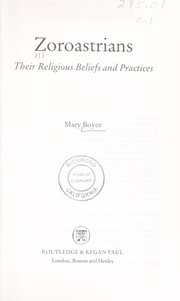
Boyce's landmark survey traces the full arc of Zoroastrian practice from the ancient Iranian steppe through the Sasanian empire; her deep archival command makes this the essential companion to the imperial history you just read.
Influence on the Abrahamic Faiths
ExpertCritically evaluate the scholarly arguments for Zoroastrian influence on Jewish apocalypticism, Christian angelology and eschatology, Islamic cosmology, and Gnostic dualism — distinguishing well-supported claims from speculation.
▸ Study plan for this stage
Pace: 4–5 weeks, ~40–50 pages/day (Zaehner's dense scholarly prose requires careful, annotated reading)
- Zaehner's thesis on Zoroastrian dualism (cosmic struggle between Ahura Mazda and Angra Mainyu) as a template for later religious thought
- The historical plausibility of Jewish contact with Zoroastrianism during the Babylonian exile (586–539 BCE) and Persian period
- Mechanisms of transmission: how Zoroastrian concepts entered Jewish, Christian, and Islamic thought (direct borrowing vs. parallel development)
- Apocalypticism and eschatology: resurrection, final judgment, heaven/hell cosmologies in Zoroastrianism vs. Abrahamic traditions
- Angelology and demonology: the Zoroastrian hierarchy of yazatas and daevas as potential sources for Jewish and Christian angel/demon systems
- The problem of distinguishing genuine influence from scholarly speculation: criteria for evaluating cross-cultural religious transmission
- Gnostic dualism and its relationship to Zoroastrian metaphysics: matter vs. spirit, evil principle, and cosmological conflict
- Zaehner's methodological approach: textual analysis, historical context, and the limits of comparative religion
- What is Zaehner's core argument about Zoroastrian dualism, and how does he distinguish it from other dualistic systems?
- What historical evidence does Zaehner present for Jewish exposure to Zoroastrianism, and what are the limitations of this evidence?
- How does Zaehner account for the emergence of apocalyptic eschatology in Judaism (especially in Daniel and later texts), and what role does he assign to Zoroastrian influence?
- According to Zaehner, what specific elements of Christian angelology and eschatology show Zoroastrian parallels, and how does he evaluate the strength of these connections?
- What does Zaehner say about Gnostic dualism's relationship to Zoroastrianism? Does he argue for direct influence or structural similarity?
- What methodological criteria does Zaehner use to distinguish plausible historical influence from speculative comparison, and where does he acknowledge uncertainty?
- Create a detailed timeline of Zoroastrian-Abrahamic contact (Persian empire, Babylonian exile, Hellenistic period) with specific textual references from Zaehner; mark which periods Zaehner considers most likely for transmission
- Construct a comparative table: list Zoroastrian concepts (e.g., Ahura Mazda, Angra Mainyu, yazatas, daevas, final judgment, resurrection) alongside their proposed parallels in Jewish, Christian, and Islamic texts; note Zaehner's confidence level for each connection
- Write a 1,500-word critical analysis of one specific claim in Zaehner (e.g., Zoroastrian influence on the Book of Daniel), identifying: (a) the textual evidence Zaehner cites, (b) alternative explanations he considers, (c) gaps in his argument, (d) your assessment of plausibility
- Annotate 3–4 key passages from Zaehner where he explicitly addresses the limits of comparative religion; write a synthesis paragraph on his epistemological caution regarding influence claims
- Debate exercise: prepare arguments for and against the claim that 'Zoroastrianism fundamentally shaped Christian eschatology,' using only evidence Zaehner presents; identify which claims are well-supported vs. speculative
- Create a visual concept map showing Zaehner's proposed transmission routes (Jewish → Christian → Islamic, or parallel developments) with supporting evidence for each pathway
Next up: This stage equips you to critically assess comparative religious claims and recognize the difference between plausible historical influence and scholarly overreach—skills essential for evaluating any subsequent study of Zoroastrianism's legacy in later traditions or for engaging with contested historical questions in religious studies.

Zaehner's magisterial synthesis closes the curriculum by tracing the religion's full arc from its origins to its twilight influence on world religions, offering the broadest and most philosophically rich perspective on everything you have studied.
Discussion
Keep reading
Paths that share books, cover the same subject, or open a related topic.