Wole Soyinka Reading Order: Where to Start
Wole Soyinka won the Nobel primarily as a dramatist, but the books most readers finish are the memoirs, and that mismatch should shape the order. Start with one great play and one broadly comic one, work through the rest of the major drama as it darkens from satire into Yoruba tragedy, then read the three memoirs — childhood, prison, and political exile — and finish with the novels and poems, which are the most difficult things he wrote.
Start Here
BeginnerMeet Soyinka as a dramatist through his acknowledged masterpiece and his most performed comedy.
▸ Study plan for this stage
Pace: 1 week for two short plays, 77 and 64 pages. A play is an evening's reading, but budget a second evening for Death and the King's Horseman — most readers go through it once for the plot and once for the language, and the second pass is where it becomes great. Expect to be reading these rather than s
- Reading drama as drama — stage directions are information, not padding, and a Soyinka direction often carries the meaning of the scene. Read them at the same weight as the dialogue
- Elesin Oba's duty in Death and the King's Horseman: a ritual suicide required at the death of a king, prevented by a colonial officer, with consequences nobody intended
- Soyinka's own insistence that this is not a play about a clash of cultures — the colonial officer is a catalyst, and the tragedy is located in Elesin himself. Notice how much the play must resist a reading it is constantly invited into
- Yoruba cosmology as structure rather than setting: a transitional passage between the worlds of the living, the dead and the unborn, which someone must cross on the community's behalf
- Language as characterisation — praise-poetry and proverb for the Yoruba scenes, brisk administrative English for the colonial ones, and the gulf between them doing dramatic work
- The Lion and the Jewel as the counterweight: a village belle courted by a modernising schoolteacher and an old chief, broad, comic and frequently staged
- Comic verdicts that are not simple — the schoolteacher's modernity comes off worse than his confidence suggests, and the play does not straightforwardly side with tradition either
- Soyinka as a working man of the theatre, writing for actors and drummers rather than for the page
- What actually causes the catastrophe in Death and the King's Horseman — the officer's intervention, or something in Elesin?
- Why does Soyinka resist the clash-of-cultures reading, and what would that reading get wrong?
- What is Olunde's function, and what does his choice say about the relationship between Western education and Yoruba duty?
- How does the market scene's language differ from the colonial residency scenes, and what does that difference establish before any argument is made?
- In The Lion and the Jewel, who wins, and does the play approve of the winner?
- What do you lose reading these as texts rather than seeing them performed, and where did you most feel the loss?
- Read Death and the King's Horseman aloud, ideally splitting parts with someone. The praise-poetry passages are close to unintelligible silently and obvious spoken.
- Mark every stage direction involving drums or movement, then reread the scene imagining them. This is the single most useful habit for the rest of the path.
- Write one paragraph summarising the play as a clash of cultures, then one paragraph explaining why Soyinka would reject it. Holding both makes the third stage's politics much clearer.
- Look up the historical incident in colonial Oyo that the play draws on, and note what Soyinka changed. The alterations are all in one direction.
Next up: You can now read a Soyinka script at speed and hear the register shifts, which is exactly the equipment the harder plays demand — and they get denser, darker and much less willing to explain themselves.
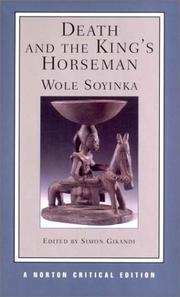
A colonial officer prevents a ritual suicide in wartime Oyo, with catastrophic results. The single greatest thing he wrote and, despite the Yoruba cosmology, a very direct read; begin here.
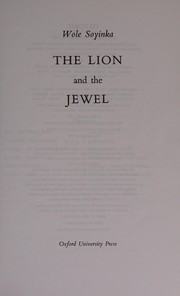
A village belle courted by a modernising schoolteacher and an old chief. Much lighter, frequently staged, and it shows the satirical Soyinka you need before the bleaker plays.
The Rest of the Major Plays
IntermediateFollow the drama as it moves from broad satire into difficult, ritual-saturated tragedy written under and about dictatorship.
▸ Study plan for this stage
Pace: 2–3 weeks for 50, 101 and 84 pages. The Trials of Brother Jero is an evening. The Road is the hardest text in this path per page — 101 pages that take as long as a 300-page novel, and worth two full sittings with the stage directions read closely. Madmen and Specialists is shorter but almost as dema
- Satire on religious hustling in The Trials of Brother Jero: a beach prophet managing his congregation as a business, and the easiest bridge from broad comedy into the difficult work
- The Road's setting as its subject — a Lagos motor park where drivers, touts and a forged-documents racket circulate around one man's search for the moment of death
- The Word, and Professor's pursuit of it: a metaphysical quest conducted in the middle of a squalid, entirely material economy
- Ogun, the Yoruba god of iron, the road and creative destruction, standing behind The Road's accidents and its drivers — the mythology is load-bearing here rather than referential
- The agemo masquerade and the danger of interrupted transition, which is the structural principle of The Road's final movement
- Linguistic density as deliberate obstruction: Soyinka's English here is at its most compressed, and readers who push straight through without rereading get very little
- Madmen and Specialists written after his release from detention — a doctor who tortures, a cult called As, and a play with almost no comfort in it
- Cannibalism and the cult of As as an image of a state that consumes its own people, which is as direct as Soyinka's political writing gets in dramatic form
- What is Professor actually looking for in The Road, and does the play suggest he finds it?
- How does the motor park's economy — bribes, spare parts, forged licences — relate to the play's metaphysics?
- What does the Ogun material contribute that the naturalistic plot could not supply on its own?
- In Madmen and Specialists, what is As, and why is it never defined?
- How does knowing that Madmen and Specialists was written after imprisonment change how you read the doctor?
- Which of these three plays would gain most from being seen rather than read, and why?
- Read The Road twice: once straight through for the situation, once slowly for the language. Nobody gets it in one pass and treating that as a failure is the main reason readers abandon Soyinka.
- Keep a glossary as you go of Yoruba terms and motor-park slang. Building it yourself fixes the vocabulary far better than a footnote does.
- Cast The Road in your head — assign each character a voice and a physical presence before you start. It is written for bodies on a stage and collapses without them.
- After Madmen and Specialists, write down every use of the word As and what it seems to mean each time. The pattern is the play.
- Note the point in this stage where the comedy stops entirely. It is a specific play and a specific scene, and the biography in the next stage explains it.
Next up: The plays have got as dark as they will go, and the reason is biographical — the next stage is where Soyinka stops writing in character and gives the account directly.
A beach prophet working his congregation. A short comic satire on religious hustling, and the easiest bridge from The Lion and the Jewel into the harder work.

A Lagos motor park, a forged-documents racket and a man hunting the moment of death. His most linguistically dense play; read only after the two openers have taught you his idiom.
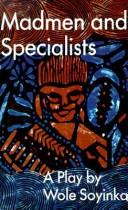
Written after his release from prison, a doctor who tortures and a cult called As. The darkest of the plays and best approached once you know what happened to him between 1967 and 1969.
The Memoirs
IntermediateRead the three autobiographies in life order — childhood, imprisonment, exile — which are the most accessible and best-loved books he wrote.
▸ Study plan for this stage
Pace: 4–5 weeks for 317 and 528 pages. The Man Died is short but slow: it is fragmentary prison writing rather than continuous narrative, and 20 pages a day is realistic. You Must Set Forth at Dawn is a long, more conventional memoir and moves at 40 pages a day. Read them in this order — imprisonment, the
- The Man Died as prison writing rather than retrospective memoir: notes from roughly two years of detention during the Nigerian civil war, much of it in solitary confinement
- Fragmentation as evidence — the disjointed form is the condition it was produced in, not a stylistic choice, and reading it as broken is reading it correctly
- Solitary confinement's specific damage: the accounts of enforced idleness, of hunger strike, and of the mental discipline used to hold a mind together
- The title's charge — that silence in the face of tyranny is a kind of death — which is the most quoted sentence Soyinka ever wrote and the plainest statement of his politics
- The writer as political actor rather than commentator: detention followed an attempt to intervene directly in the conflict, not a piece of writing
- You Must Set Forth at Dawn as the late, expansive counterpart — decades of political risk, the Abacha years, exile, and the long story of a life spent opposing Nigerian governments in turn
- Anecdote as method in the late memoir: it is discursive, digressive and often very funny, which is startling if you arrive straight from the prison notes
- The memoirs as the key to the plays: read them and the sequence of the drama stops looking like an artistic development and starts looking like a biography
- What does the fragmentary form of The Man Died convey that a chronological prison narrative could not?
- How does Soyinka describe holding his own mind together in solitary, and what does that account tell you about the states of mind in the plays?
- What is the argument behind 'the man dies in all who keep silent', and does the memoir make the case or simply assert it?
- How does the tone of the late memoir differ from the prison book, and what has thirty years changed?
- Which of the plays you have read is most directly explained by these two books, and in what specific way?
- What does Soyinka claim political writing can accomplish, and is his own record evidence for or against it?
- Read The Man Died in short sessions rather than long ones. It was written in fragments under duress and reading it in bulk flattens exactly what it records.
- Build a rough timeline of Soyinka's political life from the late memoir, then place each play you have read on it. The correspondence is close and clarifies the whole path.
- Reread the opening of Madmen and Specialists immediately after finishing The Man Died. The connection is unmistakable and needs no commentary.
- Pick one anecdote from You Must Set Forth at Dawn that would work as a scene, and note how you would stage it. Soyinka's memoir instincts are still a dramatist's.
Next up: With the politics and the imprisonment now stated in his own voice, the fiction and the poetry become readable — they are the most difficult things he wrote, and they assume everything the plays and the memoirs have given you.
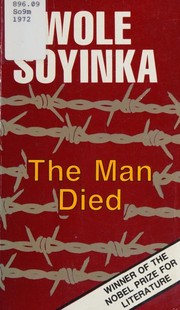
His prison notes from twenty-two months in solitary confinement during the Biafran war. Read straight after Ake for the contrast, and directly before or after Madmen and Specialists.
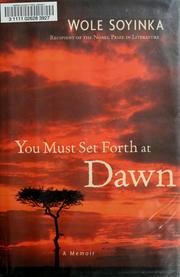
The late memoir of exile, the Abacha years and a life of political risk. It gathers up everything the earlier books left unexplained, so it belongs last of the three.
The Novels and the Poems
IntermediateTake on the prose fiction and the verse, which reward readers who already have the plays and the politics in hand.
▸ Study plan for this stage
Pace: 7–8 weeks for 258, 320, 92 and 589 pages. The Interpreters is short and hard — a fractured modernist structure with five protagonists and no orienting narrator; 20 pages a day and expect to reread. Season of Anomy is similar in difficulty. Idanre and Other Poems is 92 pages that should take a week,
- The Interpreters and the post-independence disappointment: five young Nigerian intellectuals with European educations and no usable role, circling each other in Lagos and Ibadan
- Modernist construction without signposts — the novel moves between five consciousnesses and multiple time frames, and it is genuinely hard on a cold start
- Season of Anomy as myth relocated: an Orpheus descent staged in a Nigeria collapsing into massacre, written out of the same war that produced the prison notes
- Ogun again, and Idanre as the most concentrated statement of the mythology — a long poem built around a night walk with the god of iron and creation, which stands directly behind Death and the King's Horseman
- Poetry as the densest Soyinka: the syntax in Idanre is more compressed than anything in the plays, and it repays the same aloud-and-twice treatment
- The Yoruba pantheon as a working system rather than a set of references, which is what the poems make explicit and the plays assume
- Chronicles from the Land of the Happiest People on Earth as the late return to fiction after nearly fifty years — corruption, body-part trafficking and contemporary Nigerian politics as broad, furious satire
- Hearing the whole career in the last book: the dramatist's dialogue, the memoirist's anecdote and the poet's compression all audible in one novel, which is why it makes a good closing read
- What do the five interpreters actually want, and what does the novel suggest is unavailable to them?
- Why is The Interpreters so much harder than the plays — is the difficulty doing work, or is it a first novelist's overreach?
- How does the Orpheus structure organise Season of Anomy, and what does myth let Soyinka say about a massacre that reportage would not?
- What does Idanre establish about Ogun that changes your reading of Death and the King's Horseman?
- In Chronicles, what has changed in Soyinka's satire since the early comedies, and what has not?
- Across plays, memoirs, novels and poems, which form suits him best — and what is your evidence?
- Before starting The Interpreters, write down the five names. The novel will not reintroduce them and losing track of who is thinking is the standard failure mode.
- Read Idanre aloud in full in one sitting. It is one continuous movement and breaking it up destroys it.
- Put Idanre beside the ritual passages of Death and the King's Horseman. The same god, the same crossing, one in verse and one on a stage.
- In Chronicles, mark the passages that could be lifted straight into a play. There are many, and they show what fifty years of theatre did to his prose.
- Write 400 words ranking the four forms Soyinka worked in. Having read all of them puts you in a very small group of his readers, and the ranking is worth making explicit.
Next up: This is the end of the path — with the mythology, the politics and the whole range of forms in hand, the obvious next move is to go back to Death and the King's Horseman, which now reads as a completely different play.
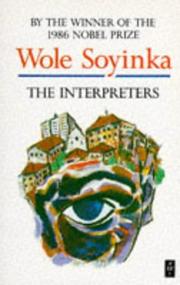
Five young Nigerian intellectuals after independence, in a fractured modernist structure. His first novel and hard on a cold start; it makes far more sense once the early plays are familiar.

An Orpheus myth relocated to a Nigeria collapsing into massacre. The second novel, written out of the same war as The Man Died.
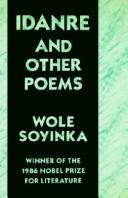
The early poems, centred on a long night walk with the Yoruba god Ogun. The most concentrated statement of the mythology that underlies Death and the King's Horseman.

His first novel in nearly fifty years: a satire of contemporary Nigerian corruption and body-part trafficking. A good closing book, because you can hear every earlier phase of him in it.
Discussion
Keep reading
Paths that share books, cover the same subject, or open a related topic.