Willa Cather Reading Order: Where to Start
This curriculum follows Willa Cather's own artistic arc, beginning with her iconic prairie novels set on the Great Plains and Nebraska frontier, then moving into her mature historical fiction rooted in the American Southwest and colonial past. Each stage builds emotional and thematic familiarity with Cather's lyrical prose, her sense of landscape as character, and her preoccupation with memory and belonging — so that by the final stage, the reader is fully equipped to appreciate the deeper philosophical and spiritual dimensions of her later masterworks.
The Prairie Trilogy: Foundations
BeginnerEstablish a feel for Cather's spare, luminous prose style and her central subject: immigrant pioneers forging identity on the Nebraska plains. These three novels form her 'Prairie Trilogy' and are her most accessible entry points.
▸ Study plan for this stage
Pace: 10–12 weeks total, reading roughly 20–25 pages per day: ~2.5 weeks for O Pioneers! (~300 pages), ~4 weeks for The Song of the Lark (~490 pages), and ~3.5 weeks for My Ántonia (~370 pages), with a few buffer days between books for reflection and journaling.
- Cather's spare, luminous prose style — her use of restraint, precise sensory detail, and lyrical simplicity to evoke vast landscapes and inner lives
- The Nebraska plains as a living character — how the land functions not merely as setting but as a moral and spiritual force that shapes, tests, and transforms the people on it
- Immigrant identity and the pioneer experience — the tension between Old World heritage (Bohemian, Swedish, Norwegian) and the demands of forging a new American self
- Female ambition and self-determination — Alexandra Bergson in O Pioneers! and Thea Kronborg in The Song of the Lark as early portraits of women who refuse conventional limits
- Memory, nostalgia, and narrative framing — especially in My Ántonia, where Jim Burden's retrospective narration filters the past through longing, raising questions about whose story is really being told
- The pastoral ideal vs. the costs of civilization — Cather's elegiac awareness that the pioneering moment is already passing even as she records it
- Art as a form of survival and transcendence — Thea's journey in The Song of the Lark connects the physical endurance of pioneer life to the discipline required of the artist
- Community, belonging, and the outsider — how characters across all three novels negotiate acceptance, isolation, and the price of being different
- In O Pioneers!, how does Cather use the land itself to reflect Alexandra Bergson's inner character, and what does Alexandra's relationship to the soil reveal about Cather's vision of heroism?
- The Song of the Lark is significantly longer than the other two novels — what does Cather gain by tracing Thea Kronborg's development from childhood in Moonstone all the way to operatic stardom, and how does the Panther Canyon episode function as the novel's spiritual turning point?
- In My Ántonia, Jim Burden is an unreliable and emotionally invested narrator — in what ways does his perspective both illuminate and obscure Ántonia Shimerda's actual life and agency?
- All three novels feature immigrant characters navigating American society. Compare how O Pioneers! and My Ántonia treat the Bohemian immigrant experience differently in terms of tone, narrative distance, and outcome.
- How does Cather's prose style — her famous 'unfurnished' aesthetic — serve the subject matter of the plains? Find a specific passage from each novel that exemplifies her technique and explain what she leaves out as much as what she puts in.
- By the end of all three novels, what does Cather seem to be saying about the relationship between place, memory, and identity? Is the prairie a source of freedom, loss, or both?
- Prose imitation journal: After finishing each novel, write one 200–300 word descriptive passage in Cather's style — choose a landscape or a person you know well and practice her technique of precise, unadorned detail. Compare your three attempts to track your growing feel for her voice.
- Character map for My Ántonia: Draw a diagram placing Jim Burden at the center and mapping every major character around him, annotating each connection with the emotion Jim assigns to them. Then write a half-page reflection: whose story does this map actually center, and what does that reveal about the novel's narrative politics?
- Close-reading annotation: Select the Panther Canyon section of The Song of the Lark (Book IV) and annotate it for imagery, pacing, and thematic resonance. Identify at least five moments where Cather connects Thea's artistic awakening to the physical landscape — then write a paragraph arguing what Cather believes art requires of a person.
- Comparative essay (500–700 words): Alexandra Bergson (O Pioneers!) and Ántonia Shimerda (My Ántonia) are both iconic Cather heroines, yet they end their stories very differently. Write a focused comparison of their final chapters, arguing what each ending says about Cather's evolving view of women's lives on the plains.
- Reading aloud practice: Choose one page from each novel — ideally a landscape description — and read it aloud slowly. Record yourself if possible. Notice where the rhythm breaks, where sentences breathe, and where Cather uses silence (short sentences, white space in the prose). Jot down three observations about her sentence-level music.
- Immigrant heritage research note: Pick one immigrant community represented in the trilogy (Bohemian, Swedish, or Norwegian) and spend 30–45 minutes reading about their actual historical migration to the Great Plains in the late 19th century. Write a one-paragraph note on one detail that deepens or complicates your reading of the relevant novel.
Next up: Mastering Cather's prairie voice and her core themes of land, identity, and ambition in these three foundational novels equips the reader to follow her as she turns the same luminous attention toward new landscapes and more psychologically complex protagonists in her later, more experimental work.
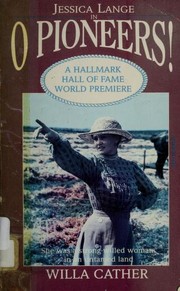
Cather's first great prairie novel and the ideal starting point — its straightforward narrative and iconic heroine Alexandra Bergson introduce her core themes of land, endurance, and belonging with clarity and warmth.
Following O Pioneers!, this longer novel traces an artist's escape from the prairie to greatness, deepening Cather's themes of ambition and self-creation; its more expansive structure prepares the reader for her richer later works.

The crown jewel of the prairie trilogy, best read last among the three so its elegiac, memory-drenched tone lands with full force — by now the reader knows Cather's landscape and can feel the full weight of Jim Burden's nostalgia.
The Prairie World Widened
IntermediateBroaden the prairie experience into small-town life and the immigrant experience of the Midwest, while encountering Cather's darker, more ironic register — essential preparation before the stylistic leap of her historical fiction.
▸ Study plan for this stage
Pace: 6–7 weeks total: Weeks 1–4 for "One of Ours" (~25–30 pages/day, given its length of ~450 pages), then Weeks 5–7 for "A Lost Lady" (~20–25 pages/day, given its brevity of ~170 pages) — leaving time at the end of each book for reflection and journaling before moving on.
- The Midwest small town as both cradle and cage: how Frankfort, Nebraska in 'One of Ours' simultaneously shapes and suffocates Claude Wheeler, illustrating Cather's ambivalence toward the prairie community
- The immigrant experience as moral and spiritual counterweight: the Erlich family and European cultural values in 'One of Ours' as a foil to the provincial materialism of Claude's own family
- Cather's ironic register and narrative distance: unlike the lyrical idealism of earlier prairie works, both novels deploy irony and free indirect discourse to expose self-deception and cultural decline
- The 'lost' protagonist as a new Cather archetype: Claude Wheeler and Marian Forrester are both figures of thwarted potential — but Cather judges them very differently, revealing her complex moral vision
- Masculine disillusionment and the limits of the pioneer ideal: Claude's inability to find meaning on the farm or in marriage, and his fatal romanticization of World War I as escape, as a critique of the pioneer mythology
- The observer-narrator and moral ambiguity: Niel Herbert in 'A Lost Lady' as an unreliable, idealistic lens through which Marian Forrester is filtered — readers must read against Niel to fully see her
- Decline of the pioneer aristocracy: Captain Forrester and his class in 'A Lost Lady' as embodiments of a vanishing code of honor, displaced by the crude commercialism of figures like Ivy Peters
- Compression vs. expansion as deliberate craft choices: contrasting Cather's sprawling, episodic structure in 'One of Ours' with the crystalline economy of 'A Lost Lady' as two different solutions to the same thematic problem
- In 'One of Ours,' how does Claude Wheeler's relationship with the Erlich family expose the cultural and spiritual poverty of his own upbringing, and what does this contrast suggest about Cather's view of the immigrant contribution to American life?
- Cather was criticized (notably by Hemingway) for her romanticized portrayal of World War I in 'One of Ours.' Using evidence from the novel itself, construct an argument either defending or challenging the claim that Cather is aware of — and ironizes — Claude's romanticization of the war.
- How does Niel Herbert's idealization of Marian Forrester in 'A Lost Lady' function as both a narrative device and a thematic trap? What does the novel reveal about Marian that Niel cannot or will not see?
- Both Claude Wheeler and Marian Forrester are described as 'lost' in different senses. Compare the nature of their lostness — what each has lost, who or what is responsible, and whether Cather offers either figure any redemption.
- Captain Forrester and Ivy Peters represent two generations of Western men in 'A Lost Lady.' What specific values, behaviors, and attitudes define each, and how does their contrast function as Cather's elegy for the pioneer era?
- How does Cather's narrative style shift between 'One of Ours' and 'A Lost Lady'? Identify at least two specific craft-level differences (e.g., point of view, sentence rhythm, structure) and explain what each achieves thematically.
- **Irony Annotation Log:** As you read 'One of Ours,' keep a running log of passages where Cather's narrative voice seems to subtly undercut Claude's perceptions or desires. At the end of the novel, review the log and write a one-page argument: is Cather complicit in Claude's romanticism, or is she always one step ahead of him?
- **Niel vs. Marian Character Split-Page:** Draw a vertical line down a notebook page. On the left, record what Niel *says* or *believes* about Marian Forrester at key moments in 'A Lost Lady.' On the right, record what the text *actually shows* about her actions and inner life. Use this split-page to write a short essay on the gap between Niel's narrative and Marian's reality.
- **Structural Comparison Essay (500–700 words):** After finishing both books, write a comparative essay examining one scene of social gathering from each novel (e.g., a dinner at the Erlich house in 'One of Ours' vs. a party at the Forrester home in 'A Lost Lady'). Analyze how Cather uses the social scene differently in each book to reveal character and cultural values.
- **Pioneer Elegy Close Reading:** Select the passage in 'A Lost Lady' where Captain Forrester's decline is most vividly rendered. Read it aloud twice, then write a paragraph-length close reading focusing on diction, imagery, and sentence rhythm — asking: how does Cather make the reader feel the loss without sentimentalizing it?
- **Immigrant Voice Exercise:** Identify three or four moments in 'One of Ours' where immigrant characters (the Erlichs, or others) speak or act in ways that implicitly critique mainstream American prairie culture. Compile these into a brief 'counter-narrative' — a one-page summary of what the novel looks like from the immigrant perspective rather than Claude's.
- **Stage Reflection Journal:** After completing both books, write a one-to-two page personal reflection addressing: How has your understanding of 'the prairie' as a concept shifted from what you may have encountered in earlier Cather reading? What is Cather mourning in these two novels, and do you find her mourning convincing?
Next up: By absorbing Cather's ironic distance and her elegiac treatment of vanishing worlds in these two novels, the reader is now primed to follow her into historical fiction — where she applies the same mourning intelligence not to the recent Midwest past, but to the deep Catholic and colonial past of the American Southwest and Quebec.

This Pulitzer Prize-winning novel follows a Nebraska farm boy into World War I, bridging the prairie world and the wider world beyond it, and showing Cather's range beyond pure landscape lyricism.
A short, perfectly crafted novel about the fading of the pioneer generation; its compressed elegance and moral complexity mark the transition from her early style to the leaner, more allusive prose of her masterworks.
The Historical Southwest: Masterworks
ExpertEngage with Cather's late historical fiction — her most ambitious and spiritually resonant work — set in the ancient landscapes of New Mexico and the colonial past, where landscape, faith, and civilization itself become the subject.
▸ Study plan for this stage
Pace: 10–12 weeks total: ~2 weeks for The Professor's House (~30 pages/day), ~4 weeks for Death Comes for the Archbishop (~20 pages/day, savoring the episodic structure), ~3–4 weeks for Shadows on the Rock (~25 pages/day) — allow extra days between books for reflection journaling.
- The embedded narrative as spiritual threshold: the 'Tom Outland's Story' insert within The Professor's House functions as a novel-within-a-novel, contrasting the ancient Cliff City with the Professor's modern disillusionment — study how Cather uses structural rupture to enact meaning
- Landscape as theology: in all three books, the physical world (the New Mexican mesa, the Sonoran desert, the St. Lawrence rock) is not backdrop but active spiritual agent — track how Cather renders geography as a form of sacred revelation
- The legend/chronicle form: Death Comes for the Archbishop and Shadows on the Rock deliberately abandon conventional plot in favor of episodic, hagiographic structures drawn from medieval saints' lives and French chronicles — understand why Cather chose anti-novelistic forms for these subjects
- Faith as civilizational architecture: Cather examines how Catholic ritual, memory, and material culture (cathedrals, kitchens, relics) build and sustain human communities across time — distinguish her treatment of institutional religion from personal spirituality
- The tension between the ancient and the modern: The Professor's House stages this as psychological crisis; Death Comes for the Archbishop stages it as cultural encounter; Shadows on the Rock stages it as the fragile preservation of Old World order in the New World wilderness
- Colonialism, indigenous culture, and Cather's ambivalence: Death Comes for the Archbishop in particular forces the reader to grapple with Cather's admiring yet paternalistic portrayal of Navajo and Pueblo peoples and the displacement wrought by the Church — engage critically rather than uncritically
- Character as vessel of civilization: Latour, Vaillant, Cécile Auclair, and Tom Outland are all figures who carry a way of life within themselves — analyze how Cather constructs interiority through action, habit, and devotion rather than psychological confession
- Style as spiritual practice: Cather's late prose — spare, luminous, deliberately archaic in places — is itself an argument about what literature should do; study her sentences as craft objects and as ethical statements
- In The Professor's House, what does the Blue Mesa represent to Tom Outland, and how does its story reframe the Professor's own spiritual crisis? What is lost when the mesa's artifacts are sold, and what does that loss mirror in the Professor's domestic life?
- Death Comes for the Archbishop is structured as a series of loosely connected episodes rather than a conventional plot. How does this episodic, legend-like form reflect the book's themes of faith, time, and the accumulation of a life well lived?
- How does Cather portray the relationship between Bishop Latour and Father Vaillant — two men of the same faith and mission but radically different temperaments — and what does their friendship argue about the nature of vocation and human love?
- In Shadows on the Rock, the rock of Quebec and Cécile's kitchen become almost interchangeable symbols. What is Cather saying about domesticity, memory, and the transmission of culture across generations and across an ocean?
- All three books engage with the encounter between European civilization and the North American continent. How does Cather's treatment of that encounter differ across the three works in terms of tone, sympathy, and historical self-awareness?
- Cather said she wanted Death Comes for the Archbishop to have the quality of a fresco — flat, luminous, without shadows of psychological complexity. Do you find this achieved? What are the artistic gains and losses of that aesthetic choice?
- Structural mapping: For The Professor's House, draw a diagram of the three-part structure and mark exactly where 'Tom Outland's Story' sits. Write a one-page analysis of why Cather places it there and what emotional and thematic effect the interruption creates.
- Landscape close-reading: Choose one landscape description from each of the three books (e.g., the Cliff City mesa, the desert ride to Acoma, the St. Lawrence in winter). Write a comparative paragraph on each: What sensory details does Cather select? What spiritual or emotional register do they invoke? How does the prose rhythm enact the landscape?
- Hagiography research exercise: Read a short medieval saint's life (the life of St. Francis or a brief excerpt from Jacobus de Voragine's Golden Legend) and then reread one episode from Death Comes for the Archbishop. Write a one-page comparison: How does Cather borrow from and depart from the hagiographic tradition?
- Critical debate journal: Death Comes for the Archbishop has been criticized for romanticizing the Catholic colonization of the Southwest and marginalizing indigenous voices. Read one short critical essay on this topic (e.g., from scholars like John J. Murphy or Reynolds Price), then write your own 400-word position statement: Do you find the criticism fair? What textual evidence supports or compli
- Character voice exercise: Choose either Cécile Auclair (Shadows on the Rock) or Father Vaillant (Death Comes for the Archbishop) and write a one-page first-person journal entry in their voice for a scene that occurs 'off the page' — a moment Cather implies but does not show. Focus on matching Cather's restrained, devotional tone.
- Synthesis essay: After finishing all three books, write a 600–800 word essay responding to this prompt: 'In these three works, Cather suggests that civilization is not built by conquest or ideology but by attention, habit, and love. Do you agree?' Use specific scenes from all three books as evidence.
Next up: Mastering Cather's late historical and spiritual vision — her use of landscape, legend, and civilizational memory — equips the reader to return to her earlier and shorter work with new eyes, recognizing how the seeds of these grand themes were present from the very beginning of her career.

A pivotal transitional novel in which a long central section set among the cliff dwellings of the Southwest erupts inside a domestic story — it is the bridge between her prairie world and the ancient American past she explores next.
Cather's most celebrated historical novel, set in 19th-century New Mexico; its episodic, legend-like structure and profound meditation on faith and landscape represent the full flowering of everything built in earlier stages.
Set in 17th-century Quebec, this quiet, deeply interior novel is best read last — it rewards a reader already attuned to Cather's themes of civilization, memory, and the sacred, offering her most contemplative and mature vision.
Discussion
Keep reading
Paths that share books, cover the same subject, or open a related topic.