Start with My Ántonia. It is the most complete thing Cather wrote about the Nebraska plains — a Bohemian immigrant girl seen across thirty years by a narrator who half loves her and wholly fails to keep up with her — and it moves at a pace that no longer feels like 1918. The famous set pieces, the plough silhouetted against the setting sun and the winter suicide told in two flat paragraphs, are the best short argument for why she matters.
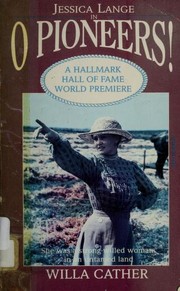
The obvious alternative is O Pioneers!, the earlier prairie novel and the one usually listed first. It is shorter and it is very good, but it is also more schematic, and the land is more idea than place in it. If you read My Ántonia first and want more of the same country, O Pioneers! is the natural second book rather than a sacrificed first one.
The prairie novels, and the one to skip
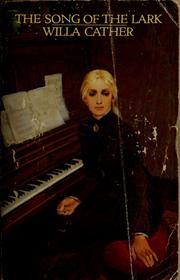
People speak of a prairie trilogy — O Pioneers!, The Song of the Lark, My Ántonia — but Cather never planned it as a sequence and the books share no characters. Read My Ántonia then O Pioneers! in whichever order you like.
The Song of the Lark is the honest problem. It follows a singer from a Colorado town to an international career, and at nearly five hundred pages it is easily her longest and her baggiest; Cather herself cut it substantially for a later edition and said the ending went on too long. Most readers find the first half fine and the operatic second half a slog. Read it if the artist-formation story appeals to you specifically; otherwise skip it without guilt.
The middle period: her best short books
This is where Cather is at her most controlled, and where a reader who liked the prairie novels should go next. A Lost Lady is under two hundred pages, near-perfect, and quietly devastating — a boy watching a woman he idolises adapt to a coarser America than the one that made her. It is the book to hand someone who thinks Cather is only about pioneers.
The Professor's House is stranger and divides people. A middle-aged academic drifting away from his own life gets two-thirds of the novel, and then the whole thing stops for a long inset narrative about a mesa in New Mexico before returning. Cather compared the structure to a square window opening on to blue air. Some readers find the interruption the most beautiful thing she wrote; others find it a book broken in half. Either way, read A Lost Lady first.
One of Ours is the awkward one. It won the Pulitzer and it is her least admired novel — a Nebraska farm boy who finds meaning in the First World War, with battlefield chapters written by someone who had not seen a battlefield. Hemingway was famously rude about it. It is worth reading only after you already care about her.
The late work
Death Comes for the Archbishop is the second peak and, for a substantial number of readers, the high point of everything. Two French priests build a diocese in New Mexico across decades; there is barely a plot, and the book proceeds as a sequence of luminous episodes because Cather wanted the form of a saint's legend rather than a novel. It is calm, strange and unlike anything before it in her work.
Shadows on the rock attempts the same method in seventeenth-century Quebec and is gentler, smaller and considerably quieter. Admirers value it; newcomers usually find it thin. Read it only if the Death Comes for the Archbishop method delighted you.
Where to stop
My Ántonia, A Lost Lady and Death Comes for the Archbishop are the essential three, and stopping there gives you a fair and generous picture of the writer. Everything else is for readers who want the whole shelf. Cather is also a useful counterweight to the same period seen from William Faulkner.
Follow the full ordered path here: Willa Cather Reading Order: Where to Start.
Ready to learn something deeply?
Build a reading path — free