Learn Web Application Security: The Best Books, in Order
This curriculum starts at the intermediate level, assuming basic web development familiarity, and builds systematically from attacker mindset and core vulnerability classes through hands-on exploitation techniques to secure design principles and advanced real-world application. Each stage sharpens both the offensive understanding needed to find bugs and the defensive knowledge needed to fix them — because you cannot truly secure what you don't know how to break.
Attacker Mindset & Core Vulnerabilities
IntermediateUnderstand how web applications are attacked, internalize the most critical vulnerability classes (XSS, SQLi, CSRF, etc.), and develop the mental model of thinking like an attacker.
▸ Study plan for this stage
Pace: 8–10 weeks, ~40–50 pages/day (with 2–3 days/week for exercises and review)
- The attacker's reconnaissance and mapping workflow: how attackers discover, enumerate, and profile web applications before exploiting them
- Input validation and output encoding failures as the root cause of XSS, SQLi, and command injection vulnerabilities
- The browser's security model (same-origin policy, cookies, CORS) and how violations enable CSRF, clickjacking, and session hijacking
- SQL injection mechanics: how malformed queries bypass authentication and extract data; parameterized queries as the primary defense
- Cross-site scripting (XSS) variants (reflected, stored, DOM-based) and their exploitation chains in real applications
- CSRF tokens, SameSite cookies, and the fundamental trust assumptions that attackers exploit
- Authentication and session management weaknesses: predictable tokens, insecure storage, and privilege escalation paths
- The mental model of threat modeling: thinking through an attacker's perspective to identify overlooked attack surfaces
- Walk through the complete reconnaissance phase an attacker would perform on a target web application. What information would they gather and how would they use it?
- Explain how a SQL injection vulnerability arises from improper input handling, and demonstrate why parameterized queries prevent this class of attack
- Describe the three main types of XSS (reflected, stored, DOM-based), provide a concrete example of each, and explain the payload execution context in each case
- How does the same-origin policy protect against certain attacks, and what are the legitimate exceptions (CORS, postMessage) that attackers can abuse?
- What is CSRF, why does it work, and how do CSRF tokens and SameSite cookies defend against it? What are the limitations of each defense?
- Identify at least three authentication or session management weaknesses that could allow an attacker to impersonate another user or escalate privileges
- Given a hypothetical web application feature, how would you think like an attacker to identify potential vulnerabilities in its design and implementation?
- Set up a local vulnerable web application (e.g., DVWA or WebGoat) and perform a complete reconnaissance phase: map all endpoints, identify input fields, test for common parameters, and document the application's technology stack
- Craft and execute SQL injection payloads against a test database: perform authentication bypass, extract data from multiple tables, and verify that parameterized queries block the same attacks
- Create and deliver reflected, stored, and DOM-based XSS payloads in a controlled lab environment; document how each payload executes and what data it can access
- Perform a CSRF attack in a lab setting: craft a malicious form or script that triggers an unintended action on a victim's behalf, then implement and test CSRF token and SameSite cookie defenses
- Analyze a real-world authentication mechanism (or a realistic simulation): identify weak session token generation, test for session fixation, and attempt privilege escalation
- Threat model a simple web application feature (e.g., password reset, file upload, comment submission): list all inputs, identify trust boundaries, and propose at least five potential attack vectors
Next up: This stage equips you with the attacker's playbook and the ability to recognize critical vulnerabilities in isolation; the next stage will teach you how to design and implement secure defenses, build secure architectures, and apply these lessons systematically across an entire application.

The definitive field manual for web application security — covers every major vulnerability class with attack and defense in tandem. Start here to build a comprehensive, structured vocabulary of web threats.

Dives deep into the browser security model, HTTP quirks, and the root causes of web vulnerabilities. Reading this second gives you the 'why' behind the attacks you just learned.
Hands-On Exploitation Techniques
IntermediateMove from conceptual knowledge to practical exploitation skills — learn to find, reproduce, and demonstrate real vulnerabilities in web applications.
▸ Study plan for this stage
Pace: 6–8 weeks, ~40–50 pages/day with 2–3 days per week dedicated to hands-on labs and exploitation exercises
- Reconnaissance and information gathering techniques for identifying attack surfaces in web applications
- Common web vulnerabilities (SQL injection, XSS, CSRF, authentication bypass) and their exploitation mechanics
- Low-level exploitation fundamentals: buffer overflows, memory corruption, and shellcode generation (from Hacking)
- Practical penetration testing workflow: scoping, enumeration, exploitation, and post-exploitation
- Using industry tools (Burp Suite, Metasploit, debuggers) to automate and execute attacks
- Writing and modifying exploit code to target specific vulnerabilities in real applications
- Understanding defensive mitigations and how to bypass or work around them
- Documenting and reporting findings from successful exploitation attempts
- What are the key phases of a penetration test, and how does reconnaissance inform the exploitation phase?
- How would you identify and exploit an SQL injection vulnerability in a web application, and what tools would you use?
- Explain the mechanics of a buffer overflow attack: how does overwriting the stack lead to code execution?
- What is the difference between reflected and stored XSS, and how would you exploit each in a real application?
- How do you write or modify a Metasploit module or custom exploit to target a specific vulnerability?
- What post-exploitation techniques would you use after gaining initial access, and why is privilege escalation important?
- Set up a vulnerable web application lab (DVWA, WebGoat, or Juice Shop) and perform full reconnaissance using tools like Nmap, Burp Suite, and manual enumeration
- Identify and exploit at least 3 SQL injection vulnerabilities in a test application; document the attack vector, payload, and impact
- Craft and execute XSS payloads (both reflected and stored) in a vulnerable application; demonstrate session hijacking or credential theft
- Write a custom exploit script (Python or Bash) that automates the discovery and exploitation of a specific vulnerability class
- Perform a buffer overflow exploitation exercise: overflow a vulnerable C program, control the instruction pointer, and execute shellcode
- Use Metasploit to scan, identify, and exploit a vulnerable service; modify an existing module to target a custom or patched version of the service
- Conduct a complete penetration test on a deliberately vulnerable web application: from reconnaissance through exploitation to post-exploitation and reporting
Next up: This stage equips you with hands-on exploitation skills and practical tool mastery, preparing you to advance to defensive security practices where you'll learn to detect, prevent, and remediate the exact vulnerabilities you've just learned to exploit.

Provides a practical, scenario-driven approach to penetration testing web and network targets. Bridges theory to hands-on practice with real tooling and workflows.

Builds a deeper understanding of how exploitation works at a technical level, including memory and code execution — essential context for understanding why certain web vulnerabilities are so dangerous.
Secure Design & Developer Defense
IntermediateShift to the defender's perspective — learn how to design, build, and review web applications so that vulnerabilities are prevented by architecture, not just patched after the fact.
▸ Study plan for this stage
Pace: 8–10 weeks, ~40–50 pages/day (mix of dense technical content and threat modeling frameworks)
- Secure coding principles in Java: input validation, output encoding, parameterized queries, and cryptographic best practices to prevent injection, XSS, and authentication bypass
- Defense-in-depth architecture: layering security controls so that no single vulnerability can compromise the entire application
- Threat modeling methodology: identifying assets, threat actors, attack vectors, and vulnerabilities systematically before code is written
- The STRIDE framework and data flow diagrams: practical tools for decomposing applications and discovering threats early in design
- Secure defaults and fail-safe mechanisms: designing systems that are secure by default rather than requiring developers to opt-in to security
- Code review techniques: recognizing common Java vulnerabilities (SQL injection, deserialization flaws, weak cryptography) and architectural weaknesses
- Risk assessment and prioritization: translating threat models into actionable security requirements and development priorities
- Building security into the development lifecycle: integrating threat modeling and secure design into requirements, architecture, and testing phases
- What are the top 5 input validation and output encoding strategies in Java, and when should each be applied to prevent injection and XSS attacks?
- How would you design a multi-layered defense strategy for a web application, and what role does each layer play in preventing common vulnerabilities?
- Walk through the STRIDE threat modeling framework: what does each letter represent, and how do you apply it to a data flow diagram?
- Given a simple web application architecture (e.g., user login, database query, API response), how would you identify threats, prioritize them by risk, and propose mitigations?
- What are the differences between secure-by-default design and secure-by-opt-in, and why does the former matter for developer security?
- How do you conduct a security code review of Java code, and what specific patterns and libraries should raise red flags?
- Read Iron-Clad Java chapters 1–3 (secure coding fundamentals) and create a personal reference guide of the top 10 Java security anti-patterns and their fixes
- Build a simple Java web application (login form + database query) intentionally vulnerable to SQL injection and XSS; then refactor it using parameterized queries and output encoding from Iron-Clad Java
- Create a data flow diagram (DFD) for a real or hypothetical web application (e.g., e-commerce platform, social media app); identify all data flows, trust boundaries, and external entities
- Apply the STRIDE framework to your DFD: for each element, systematically identify potential threats (Spoofing, Tampering, Repudiation, Information Disclosure, Denial of Service, Elevation of Privilege)
- Conduct a threat modeling workshop on a sample application: document 5–10 threats, assign risk ratings (likelihood × impact), and propose mitigations aligned with Iron-Clad Java principles
- Review 2–3 open-source Java web applications (or code samples) for security flaws; document findings using a threat model and secure coding checklist
Next up: This stage equips you with both the defensive mindset and practical tools to prevent vulnerabilities at design and code level; the next stage will likely focus on testing and validation—learning how to verify that your secure designs and implementations actually work against real attacks.

The most practical developer-focused guide to building secure web applications, covering output encoding, authentication, access control, and more with concrete code examples.

Teaches you to systematically identify threats during the design phase — the highest-leverage point for preventing vulnerabilities before a line of code is written.
Advanced Topics & Real-World Application
ExpertMaster advanced attack surfaces, modern API and cloud-era web security, and the craft of professional security code review and bug hunting.
▸ Study plan for this stage
Pace: 8–10 weeks, ~40–50 pages/day with 2–3 days per week for hands-on labs and code review practice
- Systematic vulnerability assessment methodology: scoping, information gathering, testing, and reporting frameworks
- Attack surface mapping and threat modeling for complex applications: identifying entry points, trust boundaries, and data flows
- Common vulnerability patterns in real-world code: logic flaws, race conditions, state management issues, and architectural weaknesses
- Secure code review techniques: static analysis, manual inspection strategies, and identifying vulnerabilities that automated tools miss
- Authentication and session management vulnerabilities: token handling, privilege escalation, and account enumeration
- API security assessment: REST/SOAP/GraphQL attack surfaces, parameter tampering, and authorization bypass patterns
- Cryptographic implementation flaws: weak algorithms, improper key management, and side-channel vulnerabilities
- Reporting and remediation: translating technical findings into business risk, prioritization, and working with development teams
- What are the five core phases of a software security assessment, and what specific activities occur in each phase?
- How do you systematically map an application's attack surface, and what are the key differences between external and internal testing perspectives?
- What are the most common logic flaws and state management vulnerabilities in web applications, and how do you identify them during code review?
- Describe the methodology for assessing authentication and session management security, including common bypass techniques and their mitigations.
- How do you approach a security code review of a REST API, and what are the top authorization and parameter handling vulnerabilities to look for?
- What cryptographic implementation mistakes do you commonly encounter in real-world code, and how do you evaluate their actual risk?
- Conduct a full security assessment of a deliberately vulnerable web application (e.g., WebGoat, DVWA, or Juice Shop) following the Dowd methodology: scope, gather information, test systematically, and produce a professional report.
- Perform a manual code review of a real open-source web application (200–500 lines of authentication/session handling code), documenting vulnerabilities, their severity, and recommended fixes in a structured format.
- Map the complete attack surface of a multi-tier application (frontend, API, backend, database): identify all entry points, trust boundaries, data flows, and potential attack vectors.
- Analyze and exploit 3–5 authentication/session management vulnerabilities in a lab environment (token prediction, privilege escalation, account enumeration), then document the root cause and remediation.
- Review and critique a cryptographic implementation in real code (key generation, storage, usage), identifying weaknesses and proposing secure alternatives with justification.
- Participate in a live code review session or bug bounty program: find and document at least one non-trivial vulnerability in a real application using the assessment techniques from the book.
Next up: This stage equips you with the systematic methodology, deep technical knowledge, and hands-on skills to identify and validate complex vulnerabilities in real-world applications—preparing you to specialize in either advanced threat modeling and architectural security, emerging attack surfaces (cloud/containers/serverless), or advanced exploitation and post-exploitation techniques.
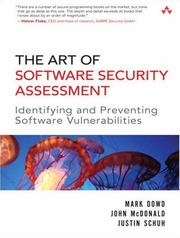
The gold standard for deep source-code and design-level security review. Caps the curriculum by teaching you to audit complex applications with the rigor of a professional security researcher.
Discussion
Keep reading
Paths that share books, cover the same subject, or open a related topic.