Web application security is a field where you have to understand attacks to build defenses, and that dual nature is why reading order matters. Read a secure-coding book with no sense of how attacks actually work and the advice feels arbitrary; learn only offense and you never learn to design vulnerabilities out. A word up front: these books are for defending systems you own or are authorized to test, never for attacking others.
The path builds attacker intuition first, moves through hands-on testing, then swings to secure design, and ends on rigorous code review.
Understand how the web breaks
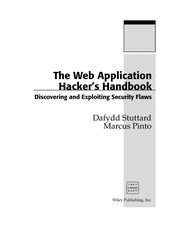
Start with The web application hacker's handbook, the comprehensive tour of how web apps get compromised and how to probe them. Pair it with The tangled Web, which explains the browser and web platform quirks that make so many vulnerabilities possible. Together they give you the mental model everything else builds on.
Practice attacking (ethically) and defending
The Hacker Playbook 3: Practical Guide To Penetration Testing frames security work as a repeatable engagement with real tooling, and Hacking takes you down to the low-level techniques that underlie many exploits so nothing feels like magic. Then swing to the defender's side: Iron-Clad Java shows what secure application code actually looks like in practice.
Design securely and review rigorously
Threat modeling teaches you to find weaknesses on the whiteboard before they ship, which is the highest-leverage security skill there is. Real-World Bug Hunting grounds all of this in real disclosed vulnerabilities and the mindset of finding them responsibly. Finish with The art of software security assessment, the deep, demanding book on auditing code for the flaws that automated tools miss.
These books complement hands-on practice and formal training; they do not replace authorization, ethics, or professional credentials. Follow the full path to keep the sequence.
Follow the full reading path →
Ready to learn something deeply?
Build a reading path — free