Water gardens and ponds: an ordered book list to build your own
This curriculum takes a beginner from zero knowledge to confident water garden designer across three tightly focused stages. You start by building core vocabulary and an intuitive feel for how a pond ecosystem works, then move into hands-on construction and plant/fish selection, and finally develop the deeper ecological and design judgment needed to keep a thriving, balanced feature year after year.
Foundations: Understanding the Pond Ecosystem
BeginnerUnderstand what a healthy pond ecosystem is, how water chemistry and biology interact, and what the major components (liners, pumps, filters, plants, fish) do — before spending a dollar or digging a hole.
▸ Study plan for this stage
Pace: 4–5 weeks, ~25–30 pages/day, focusing on Part 1 (ecosystem fundamentals) and Part 2 (water chemistry & biology) before moving to technical components
- Pond ecosystem balance: how plants, fish, bacteria, and water chemistry create a self-sustaining environment
- Water chemistry fundamentals: pH, ammonia, nitrite, nitrate, and dissolved oxygen and their roles in fish and plant health
- The nitrogen cycle in ponds: how beneficial bacteria break down fish waste into plant nutrients
- Biological filtration vs. mechanical filtration: why both are essential for water clarity and safety
- Plant roles in ponds: oxygenation, nutrient absorption, shade, and habitat creation
- Fish as ecosystem indicators: what their behavior reveals about water quality and balance
- Seasonal changes and their impact on pond chemistry, plant growth, and fish metabolism
- Common imbalances and early warning signs: algae blooms, fish stress, and plant decline
- What is the nitrogen cycle in a pond, and why do beneficial bacteria matter more than frequent water changes?
- How do pH, ammonia, and dissolved oxygen interact to affect fish health, and what do normal ranges look like?
- What is the difference between mechanical and biological filtration, and why do you need both?
- How do aquatic plants contribute to ecosystem balance beyond just looking pretty?
- What behavioral or visual signs indicate that your pond ecosystem is out of balance?
- Why does a newly established pond take 4–6 weeks to stabilize, and what is happening during that time?
- Create a labeled diagram of the nitrogen cycle in a pond, showing fish waste → ammonia → nitrite → nitrate → plants, and the role of bacteria at each step
- Build a simple water chemistry reference card with normal ranges for pH, ammonia, nitrite, nitrate, and dissolved oxygen for a fish pond
- Visit a local pond, aquarium store, or online pond forum and observe/document one ecosystem imbalance (algae bloom, fish gasping, plant decline) and hypothesize its cause based on Nash's framework
- Sketch a cross-section of a balanced pond showing the major zones (deep zone, shallow zone, marginal zone) and which plants and organisms belong in each
- Write a 1–2 page 'ecosystem health checklist' you could use before building your own pond, covering water chemistry, biological activity, plant diversity, and fish behavior
- Compare two pond scenarios from Nash's case studies or examples: identify what one does right and what the other does wrong in terms of ecosystem balance
Next up: With a solid grasp of how a healthy pond ecosystem works, you're ready to learn the technical hardware—liners, pumps, and filters—that creates and maintains the conditions for that balance.

A true beginner's primer that introduces every major concept — liners, pumps, filtration, plants, and fish — in plain language. Reading this first gives you the vocabulary and mental map needed for everything that follows.
Building It Right: Construction & Equipment
BeginnerPlan, excavate, and assemble a pond with confidence — choosing the right liner, sizing pumps and filters correctly, and avoiding the most common first-build mistakes.
▸ Study plan for this stage
Pace: 4–5 weeks, ~25–30 pages/day, with 2–3 days between books for review and planning exercises
- Site selection and assessment: evaluating sunlight, drainage, soil type, and proximity to trees and utilities
- Pond sizing and depth requirements: matching dimensions to your garden space and the needs of plants/wildlife
- Liner selection and installation: understanding EPDM rubber, PVC, and concrete options; calculating liner dimensions and avoiding punctures
- Excavation techniques: creating proper slopes, shelves for marginal plants, and a stable foundation
- Pump and filter sizing: matching flow rates to pond volume and choosing between submersible and external systems
- Plumbing and circulation: installing intake and discharge lines, managing water levels, and preventing common leaks
- Common construction mistakes: avoiding undersizing filters, poor compaction, inadequate underlayment, and improper grading
- Equipment assembly and testing: connecting components safely and running a dry-run before filling
- What are the three most important factors to consider when selecting a site for your pond, and why does each matter?
- How do you calculate the correct liner dimensions for a rectangular pond, and what safety margin should you add?
- What is the difference between a submersible pump and an external pump, and when would you choose each?
- Why is proper excavation and compaction critical to pond longevity, and what are the main mistakes to avoid?
- How do you size a filter for your pond, and what happens if you choose one that is too small?
- Walk through the step-by-step process of installing a pond liner without puncturing it
- Create a site assessment checklist for your garden: photograph potential locations, measure sunlight hours, note tree proximity, identify utility lines, and evaluate drainage patterns
- Sketch your pond design to scale on graph paper, including depth zones (shallow marginal shelf, deep center), dimensions, and equipment placement
- Calculate the liner dimensions needed for your planned pond using the formula provided in the books; add 2 feet to length and width, and 1 foot to depth × 2
- Research and compare at least three liner materials (EPDM, PVC, concrete) by cost, durability, and ease of repair; create a comparison table
- Visit a garden center or online supplier and select a pump and filter system appropriate for your pond volume; document the flow rate, wattage, and why it matches your needs
- Draw a detailed plumbing diagram showing how the pump, filter, and intake/discharge lines will connect in your pond
- Visit a completed pond in your area (botanical garden, neighbor, or garden show) and identify the construction elements you've learned: liner type, equipment placement, plant shelves, and any visible maintenance features
- Create a pre-construction checklist of all tools and materials you'll need, organized by phase (site prep, excavation, liner installation, equipment assembly)
Next up: Mastering construction and equipment fundamentals positions you to populate your pond with the right plants and fish, which requires understanding their specific habitat needs and how to maintain water quality and balance.
Bridges the gap between inspiration and practical construction for typical backyard scales; covers siting, liner installation, and basic plumbing in an approachable, well-illustrated format.
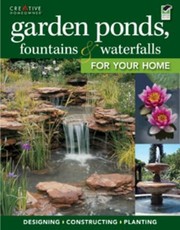
A step-by-step construction guide from Ortho's trusted home-improvement series that walks through pump sizing, filtration setup, and waterfall building — ideal to read right before breaking ground.
Plants & Fish: Stocking a Balanced Feature
BeginnerSelect, plant, and maintain aquatic plants and fish that work together biologically, creating a naturally balanced pond that stays clear and healthy with minimal intervention.
▸ Study plan for this stage
Pace: 4–5 weeks, ~25–30 pages/day. Start with Nash's cultivation guide (2 weeks), then move to Slocum's broader water gardening text (2–3 weeks), allowing time for hands-on experimentation between readings.
- Plant taxonomy and roles: deep-water plants, marginal plants, floating plants, and oxygenators—how each serves the pond ecosystem
- Nutrient cycling and biological balance: how aquatic plants consume excess nutrients and produce oxygen, preventing algae blooms and maintaining water clarity
- Fish-plant symbiosis: selecting fish species (goldfish, koi, etc.) that complement plant growth and water quality without overloading the system
- Planting techniques and substrate requirements: proper depth, soil composition, and container placement for different plant types
- Seasonal plant and fish care: dormancy cycles, feeding schedules, and maintenance routines that keep the pond stable year-round
- Water chemistry fundamentals: pH, dissolved oxygen, and nitrogen cycle management through biological filtration via plants and fish waste
- Stocking density and carrying capacity: calculating how many plants and fish a pond can support based on volume and surface area
- What are the four main categories of aquatic plants, and what specific ecological role does each play in a balanced pond?
- How do aquatic plants help maintain water clarity, and what happens if you stock too few plants relative to fish?
- What fish species are suitable for beginner water gardens, and what are their stocking limits based on pond volume?
- Describe the proper planting depth and substrate for marginal plants versus deep-water plants.
- How does the nitrogen cycle function in a planted pond, and why is this cycle critical for preventing algae blooms?
- What seasonal adjustments must you make to fish feeding and plant care to maintain balance through winter dormancy?
- Create a plant inventory chart: list 8–10 aquatic plant species from Nash's guide, categorizing each by type (deep-water, marginal, floating, oxygenator) and noting their oxygen production and nutrient uptake rates.
- Design a stocking plan for a 500-gallon pond: select 3–4 plant species and 2–3 fish species using Slocum's guidelines, calculate carrying capacity, and justify your choices based on biological balance.
- Prepare planting containers: gather pots, aquatic soil, and gravel; practice the planting techniques from Nash's chapters, then photograph or sketch your setup for reference.
- Conduct a water chemistry baseline test: measure pH and dissolved oxygen in your pond (or a test container), then predict how your plant and fish selections will shift these parameters over 4 weeks.
- Build a seasonal care calendar: map out feeding schedules, plant trimming, fish monitoring, and dormancy periods for your specific pond using Slocum's seasonal guidance.
- Observe and document: spend 15 minutes daily for one week watching your pond (or a reference pond), noting fish behavior, plant growth, and water clarity changes; correlate observations to Nash and Slocum's explanations of biological balance.
Next up: Mastering plant and fish selection establishes the biological foundation of your pond; the next stage will deepen this by teaching you how to diagnose and correct imbalances when they arise—troubleshooting algae, disease, and water quality problems through advanced filtration and maintenance strategies.
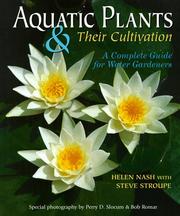
The most thorough beginner-friendly reference on aquatic plant selection, planting depth, fertilization, and seasonal care — read this before buying a single plant.
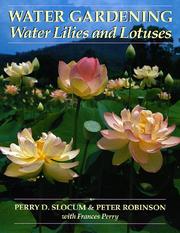
The canonical reference on water lilies and lotus — the centerpiece plants of most water gardens — providing cultivar selection, planting, and care guidance that deepens plant knowledge gained in the previous book.
Design Mastery: Aesthetics, Balance & Long-Term Care
IntermediateSynthesize construction, biology, and aesthetics into cohesive pond designs; develop seasonal maintenance routines and troubleshoot common problems like algae, leaks, and fish illness.
▸ Study plan for this stage
Pace: 4–5 weeks, ~25–30 pages/day, with 2–3 days per week dedicated to hands-on design sketches and maintenance planning
- Integrated pond design: balancing aesthetic vision with biological function and structural durability
- Seasonal maintenance cycles and their role in preventing common problems (algae blooms, water quality decline, fish stress)
- Algae management strategies: mechanical, biological, and chemical approaches tailored to pond type and climate
- Leak detection, repair, and prevention through proper liner selection and installation oversight
- Fish health assessment and treatment of common illnesses (parasites, bacterial infections, environmental stress)
- Water chemistry fundamentals: pH, nitrate, phosphate, and dissolved oxygen as they relate to long-term ecosystem stability
- Aesthetic principles applied to pond design: focal points, plant placement, hardscape integration, and seasonal visual interest
- Troubleshooting frameworks: diagnosing problems by observing water clarity, fish behavior, and plant health
- How do you balance aesthetic design choices (e.g., plant selection, hardscape materials) with the biological and structural requirements of a stable pond ecosystem?
- What are the key maintenance tasks for each season, and how do they prevent or mitigate common problems like algae blooms and fish illness?
- How do you diagnose and treat algae problems, and when should you use mechanical, biological, or chemical interventions?
- What steps would you take to detect a leak, determine its location and severity, and repair it without draining the entire pond?
- How do water chemistry parameters (pH, nitrates, phosphates, dissolved oxygen) influence fish health and plant growth, and how do you monitor and adjust them?
- What are the early warning signs of common fish illnesses, and how do you differentiate between environmental stress and infectious disease?
- Create a detailed seasonal maintenance calendar for a hypothetical pond in your climate zone, listing specific tasks for spring, summer, fall, and winter with timing and materials needed
- Design a complete pond layout (sketch or digital) that integrates aesthetic elements (focal points, plant groupings, hardscape) with biological zones (shallow shelves for marginals, deep zone for fish refuge, filter placement)
- Develop a water chemistry monitoring log: test pH, nitrate, and phosphate levels in an existing pond (or a simulated water sample) weekly for 4 weeks and document trends and corrective actions
- Write a troubleshooting decision tree for algae problems: map out how you would diagnose the type of algae (green water, string algae, blanketweed) and select appropriate treatments based on pond conditions
- Conduct a leak simulation exercise: mark a section of pond liner with a small puncture (in a test container or isolated area), practice locating it using water level monitoring and dye tests, then patch and verify the repair
- Observe or photograph a real pond (yours or a local example) and write a detailed assessment of its aesthetic design, biological balance, and maintenance needs, then propose three specific improvements
Next up: This stage equips you with the integrated knowledge and diagnostic skills to design and maintain a thriving pond from inception through seasons; the next stage will likely deepen specialization—whether in advanced plant cultivation, koi husbandry, or ecosystem restoration—building on this foundation of cohesive design and problem-solving.

A comprehensive, well-organized reference that ties together design principles, plant communities, fish stocking ratios, and year-round maintenance — the ideal capstone that rewards readers who have already built foundational knowledge.
Discussion
Keep reading
Paths that share books, cover the same subject, or open a related topic.