Walker Percy Reading Order: Where to Start with the Novels and the Essays
Percy was a doctor who caught tuberculosis, spent years in a sanatorium reading Kierkegaard, converted to Catholicism, and then wrote six novels about American men who cannot work out why an ordinary Tuesday feels like a catastrophe. He also wrote a self-help parody that is one of the strangest books published by a major American novelist. The order matters because the novels come in pairs that share characters, and publication order splits those pairs by a decade.
The Only Correct Starting Point
BeginnerMeet Percy's central diagnosis — that despair looks like an ordinary comfortable life and feels like nothing at all — in the book where he states it most cleanly.
▸ Study plan for this stage
Pace: Two weeks for about 240 pages. The Moviegoer is short and the plot is thin on purpose, so read it in short sittings — thirty pages an evening — rather than in a rush. It covers eight days in Binx Bolling's life and rewards a reader moving at roughly the pace of the week it describes.
- Percy's central diagnosis, stated more cleanly here than anywhere else: despair does not look like unhappiness. It looks like a comfortable life proceeding normally, and it feels like nothing at all — which is why the person in it cannot name the problem.
- Binx calls what he is doing 'the search', and the novel's comedy comes from his inability to say what he is searching for. The vagueness is the point, not a failure of the character.
- The everydayness is Percy's term for the enemy: the settling of ordinary routine over experience so that nothing registers. Watch for the moments where it lifts — a chance encounter, a film, a crisis — and note how quickly it closes again.
- Moviegoing is doing specific philosophical work. Binx feels a place become real when he has seen it on film, which is Percy's illustration of a self that can only certify its own experience at second hand.
- Percy trained as a doctor and the novel's diagnostic register is deliberate: symptoms, presentation, a case. He is describing a condition rather than telling a story about a man who has one.
- Kate is not a love interest in the ordinary sense. Her explicit distress is the counterpoint to Binx's inarticulate version, and the novel is more interested in what the two states have in common than in what separates them.
- The Mardi Gras setting and Aunt Emily's stoic Southern moralism give Binx two rival accounts of how to live — celebration and duty — and the book declines both.
- The final pages shift register sharply and briefly. What Percy is and is not claiming there is genuinely arguable, and the argument sets up every later book on this path.
- What is Binx searching for? Answer using only what the novel gives you, and note how much you had to supply.
- How does moviegoing function as more than a hobby? Point to the passage where the mechanism is clearest.
- What are the two ways of living that Aunt Emily and Mardi Gras represent, and on what grounds does the book refuse each?
- Kate is explicit about her distress and Binx is not. What does Percy gain by pairing them?
- What actually changes in the final pages, and how much of the change is stated rather than implied?
- The novel is diagnostic in register. What would it look like if Percy had written it as a straightforward story of a man in crisis?
- Mark every passage where Binx describes the search. Read them consecutively and write 200 words on whether they are consistent with one another.
- List every film Binx sees or mentions and what he says about it. The list is a running commentary on the novel's own method.
- Write 250 words summarising Percy's diagnosis of despair in your own words, without using the word despair.
- Reread the last five pages after finishing and write a paragraph on what is claimed there and what is left open.
Next up: You now have the diagnosis in its cleanest form; the next stage takes one man and applies it twice, twenty-five years apart.
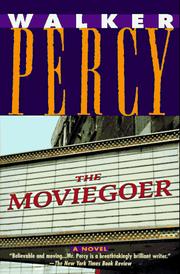
A New Orleans stockbroker spends the week before his thirtieth birthday going to films and conducting a search he cannot define. His first novel, a National Book Award winner, and short. Start here without exception: every later book assumes you have already accepted its premise.
The Will Barrett Pair, Read Together
IntermediateRead the two novels that share a protagonist as the single work they effectively are, and see Percy's one character examined at twenty-five and again at fifty.
▸ Study plan for this stage
Pace: Six to seven weeks for roughly 770 pages. The Last Gentleman is about 410 pages and needs three weeks. The Second Coming is around 360 and needs two to three. Read them back to back with no other Percy in between — that is the whole point of this stage, and it means departing from publication order
- The Last Gentleman gives a young Southerner with amnesiac fugues and a telescope, who attaches himself to a dying boy's family and drifts west. It is The Moviegoer's search made literal — a man who genuinely does not always know who he is or where he has been.
- The telescope is the novel's central image: an instrument for seeing distant things sharply while remaining unable to see one's own situation at all.
- Will Barrett's fugues are a comic device and a philosophical one at once. Percy can put a man in a place with no memory of arriving, which is the everydayness problem stated as a symptom.
- The Vaught family, and particularly the dying Jamie, force the novel toward a question about last things that Will spends the book avoiding. The famous late scene at the hospital is where the book's religious question becomes unavoidable and stays unresolved.
- The Second Coming returns to the same man fourteen years and four novels later — wealthy, widowed, falling over on golf courses, and deciding to force God to answer him by an experiment that risks his own life.
- Reading them consecutively is what makes the pair work: the fourteen-year gap between the books becomes the twenty-five-year gap in the character's life, and that effect is destroyed if three other novels sit between them.
- The Second Coming is the warmest thing Percy wrote, and Allie — who has escaped a psychiatric institution and speaks in a reconstructed private language — is the closest he comes to a genuinely hopeful character.
- Allie's language is not a whimsical touch. She is rebuilding speech from scratch, which is Percy's semiotic interest showing up inside a novel, and it connects directly to the non-fiction in the final stage.
- What does the telescope let Will see, and what does it stop him from seeing? Trace the image across the novel.
- How do the fugue states function structurally? What could Percy not do without them?
- The hospital scene near the end of The Last Gentleman is deliberately ambiguous. State the two most plausible readings and what each requires.
- Will's experiment in The Second Coming is intended to force an answer. Does the novel treat it as heroic, absurd, or both?
- What has changed in Will between the two books, and what has not changed at all?
- Allie is rebuilding language. What does Percy get from that which a conventionally articulate character could not supply?
- Read the two novels back to back with no gap, and write 300 words immediately after the second on what the pairing revealed that publication order would have hidden.
- Keep a note of every fugue or lapse in The Last Gentleman with what triggers it. The pattern is the character's diagnosis.
- Write a page on the hospital scene, setting out both readings without choosing between them.
- Collect ten of Allie's reconstructed phrases and write a paragraph on what each is doing that ordinary phrasing would not.
- Compare the last page of each novel side by side and write 200 words on what has changed in Percy's willingness to resolve.
Next up: Having watched one man diagnosed twice, the next stage widens the same diagnosis from an individual to a culture.

A young Southerner with amnesiac fugues and a telescope attaches himself to a dying boy's family and drifts west. Read it second: it is The Moviegoer's search made literal, and it is the setup for the book below.
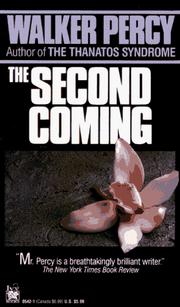
The same Will Barrett, fourteen years and four novels later, wealthy, widowed, falling over on golf courses, and deciding to make God answer him. Published in 1980, but read it immediately after The Last Gentleman rather than in publication order — the fourteen-year gap is the point, and it is wasted if three other novels sit in between.
The Dystopias and the Dark One
IntermediateTake Percy's science-fiction satires and his cruellest novel, and see the diagnosis widened from one man's malaise to a whole culture's.
▸ Study plan for this stage
Pace: Eight to nine weeks for about 1,030 pages. Love in the Ruins is around 400 pages and is genuinely funny — two to three weeks. The Thanatos Syndrome is about 370 and should follow immediately, another two to three weeks. Lancelot at around 255 pages is short and should be read last and slowly; it has
- Love in the Ruins gives a drunk psychiatrist, Dr Tom More, a device that claims to measure the soul, in a near-future America coming apart along political, racial and religious seams simultaneously. It is the funniest thing Percy wrote and the right entry to his satirical mode.
- The lapsometer is a joke and a serious proposition at once: an instrument that could locate the split in the self that Percy's whole body of work is about, wielded by a man too impaired to use it responsibly.
- Percy's satire fires in every direction — at liberals, conservatives, behaviourists, clergy and his own Catholic institutions — which is why the book has been claimed by people who agree with almost nothing else about him.
- The Thanatos Syndrome brings the same Tom More out of prison to discover that someone has been dosing the water supply with a compound that makes people docile, tractable and free of anxiety.
- The novel is explicitly an argument, from a Catholic position, about euthanasia, the treatment of the unwanted and what a medicalised humanitarianism can license. Percy states his position through the plot and does not hide it, and readers who reject that position will still find the argument set ou
- Reading the two More novels consecutively works for the same reason the Barrett pair does: one character, two moments, one continuous diagnosis extended from the individual to the institutional.
- Lancelot is a man in an asylum telling a silent priest why he blew up his own house with his wife inside it, and it is the bleakest and most formally controlled of the six novels.
- The form is the whole achievement: a monologue addressed to a listener who says nothing until the final page, so the reader is placed in the priest's position and made to supply the resistance the text withholds. Reading it early can put a reader off Percy entirely, which is why it comes last.
- What does the lapsometer claim to measure, and what does the novel think would follow if such a device existed?
- Percy's satire in Love in the Ruins spares nobody. What is the common target underneath the individual jabs?
- The Thanatos Syndrome argues a case. State the case as precisely as you can, and then state the strongest objection to it.
- Tom More is impaired in both novels. Why does Percy insist on an unreliable diagnostician?
- In Lancelot, what does the priest's silence do to the reader? Would the novel work with a speaking interlocutor?
- Lancelot has a coherent worldview and has done something monstrous. Where exactly does the novel break with him, and is the break sufficient?
- List every faction Percy satirises in Love in the Ruins and write one line each on what he thinks is wrong with it. The completeness of the list is the finding.
- Write 400 words setting out The Thanatos Syndrome's argument and 400 setting out the strongest reply, without concluding.
- Read Lancelot in as few sittings as you can manage and note every place the priest is described doing anything. There are very few; they are the novel's other half.
- Take one page of Lancelot's monologue and mark where the rhetoric is most persuasive. Then write a paragraph on why persuasiveness is the danger.
- Compare Tom More in the two novels: what has been punished out of him, and what has not?
Next up: The novels have now dramatised the whole diagnosis; the last stage is Percy stating it directly, in the arguments the fiction was built on.
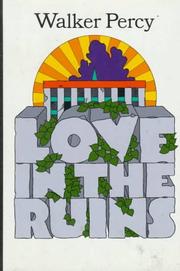
A drunk psychiatrist with a device that measures the soul, in a near-future America coming apart along every seam. The funniest thing Percy wrote, and the right entry to his satirical mode.

The same Dr Tom More, out of prison, discovering that someone has been dosing the water supply to make people docile. His last novel and a direct sequel, so read it straight after Love in the Ruins for the same reason the Barrett books are paired.
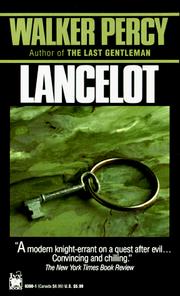
A man in an asylum tells a silent priest why he blew up his own house with his wife inside it. The bleakest and most formally controlled of the six, with no comic relief at all. Read it last among the novels; it is the one that can put you off him if it comes early.
Percy Without the Fiction
IntermediateRead the non-fiction that spells out the philosophy the novels dramatise: semiotics, Kierkegaard, and why Percy thought the self is the one thing science cannot describe.
▸ Study plan for this stage
Pace: Eight to ten weeks for roughly 1,025 pages. Lost in the Cosmos is about 260 pages and reads fast but should be taken in pieces — two to three weeks, doing the quizzes rather than skimming them. The Message in the Bottle is around 335 pages of genuine philosophy of language and needs four weeks and a
- Lost in the Cosmos is subtitled The Last Self-Help Book and genuinely is a parody self-help book — quizzes, multiple-choice thought experiments, diagrams — with a long semiotics intermission dropped into the middle of it.
- The parody is a delivery mechanism rather than a joke at the reader's expense: the quiz format forces you to answer questions about yourself before Percy tells you what the answers mean, which is a rhetorical solution to the problem that nobody believes a diagnosis of their own despair.
- The book's central question is why the self is the one thing in the universe it cannot get information about — you can look up the composition of a star but not what you are — and why that asymmetry produces the condition the novels describe.
- The Message in the Bottle is the serious philosophy of language behind it: an argument that human symbol-use is not a more complex version of animal signalling but a different kind of event, and that behaviourist accounts cannot describe it.
- Percy's interest in Helen Keller's moment at the water pump recurs across the non-fiction. He takes it as the clearest available instance of a symbol being grasped as a symbol, and much of his argument rests on that reading.
- The theological move follows directly: if symbol-use is irreducible, then the creature that does it is not fully describable by the sciences that describe everything else, and Percy takes that as an opening rather than a proof. He is explicit that it is not a demonstration.
- Signposts in a Strange Land collects posthumous essays, interviews and occasional pieces on the South, on Catholicism, and on his own novels — the best place to hear him explain in plain speech what he thought he was doing in all six.
- Reading the non-fiction last is deliberate: taken first it would flatten the novels into illustrations of a thesis, and the novels are better than that. Taken here, it explains what you have already felt.
- State Percy's question about the self in one sentence. Why does he think the asymmetry between self-knowledge and world-knowledge is not merely a practical limitation?
- Why does Percy present the argument as a self-help parody? What would be lost if Lost in the Cosmos were written as an essay?
- What is Percy's argument that symbol-use is irreducible? Identify the step a behaviourist would reject.
- Percy leans heavily on the Helen Keller episode. Is it doing evidential work or illustrative work?
- Where does the philosophy of language connect to the theology, and how far does Percy claim the connection carries?
- After the whole path: is Percy a novelist with a philosophy, or a philosopher who wrote novels? Cite specific books for your answer.
- Actually do the quizzes in Lost in the Cosmos rather than reading past them, and note the two or three where your answer surprised you.
- Write 300 words summarising the semiotics section of Lost in the Cosmos, then compare it with the corresponding argument in The Message in the Bottle and note what the joke version left out.
- Take the Helen Keller passage and write a page on what it is being asked to prove and whether it can bear the weight.
- In Signposts, find Percy's own account of two of his novels and compare it with your reading. Where he disagrees with you, decide who is right.
- Reread the last three pages of The Moviegoer now, having finished the non-fiction, and write 200 words on what has changed.
- Draw up your own three-book Percy reading order for a newcomer, with a line of justification each, and note where it differs from this path.
Next up: This closes the path: you have read all six novels in the order that makes their pairs legible, plus the arguments underneath them, and can decide for yourself whether the diagnosis holds.
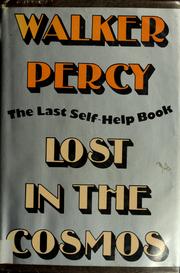
Subtitled The Last Self-Help Book, and it genuinely is a parody self-help book, complete with quizzes, thought experiments and a long detour into semiotics. Read it first among the non-fiction: it is the accessible statement of everything the essays argue formally.
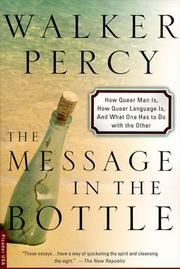
The serious philosophy of language, on why humans alone use symbols and what that implies about the soul. Hard going and worth it if Lost in the Cosmos left you wanting the argument rather than the joke. Open Library carries a mangled publication year on this record; the book is from 1975.

Posthumous essays, interviews and occasional pieces on the South, on Catholicism, and on his own novels. The completist's book, and the best place to hear Percy explain in plain speech what he was doing in all six.
Discussion
Keep reading
Paths that share books, cover the same subject, or open a related topic.