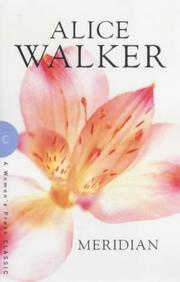
Start with Meridian. It is short, it is the novel Walker wrote before the famous one, and it is about a young Black woman in the civil rights movement deciding what she is actually willing to do — a harder, colder book than the one most readers know her by. If you have never read a word of Walker, Meridian gives you her voice without the enormous cultural weight that now sits on top of The Color Purple.
The obvious alternative is to begin with The Color Purple itself, and there is nothing wrong with that: it won the Pulitzer, it is her best-known work, and Celie's letters are as good an opening as American fiction offers. But most people arriving at this page have already met it, through the novel, the film or the musical. Reading Meridian first, or immediately after, is what stops Walker collapsing into a single book.
The core novels
Meridian, then The Color Purple. Then go back to The third life of Grange Copeland, her first novel — a brutal three-generation story of a sharecropping family that contains, in early form, nearly every theme she spent her career on. It is the least forgiving book here and the one that explains the others.
In Love and Trouble is the early story collection, and it is where the range is clearest: thirteen stories about Black women, some realist, some folkloric, none of them long.
The essays and the poems
In Search of Our Mother's Garden is the essential non-fiction, published as In Search of Our Mothers' Gardens — the book where Walker coined the term womanist and, just as importantly, went looking for Zora Neale Hurston's unmarked grave and dragged her back into print. If you read one book of criticism by a novelist this decade, this is a strong candidate.
Revolutionary Petunias is the poetry collection to start with; the poems are plain, short, and closer in temper to Meridian than to the later fiction. The Same River Twice is a memoir about the making of the film of The Color Purple and the criticism that followed it — useful, and unusual in that it prints the screenplay she wrote and the objections she received.
The later, more divided books
This is where readers split, and the split is worth stating plainly rather than smoothing over. The Temple of My Familiar is a sprawling, time-jumping, reincarnation-threaded novel that some readers love and others abandon; it does not behave like The Color Purple at all. Possessing the Secret of Joy returns to a character from that novel and centres on female genital cutting; it was widely read and also drew sustained criticism from African feminist scholars over how it framed the practice and who was given authority to speak about it. That argument is real and unresolved, and both the novel and the critique are worth encountering.
By The Light of My Father's Smile and Now is the Time to Open Your Heart are the late, most mystical novels. Readers who came for the social realism of the first three books often find these frustrating. Readers who came for the spiritual current find them the payoff. Try one, not both, before deciding.
Where to stop
For most readers the natural stopping point is after The Color Purple, Meridian, The third life of Grange Copeland and In Search of Our Mother's Garden — one late novel, plus the essays, plus the poems. That is a complete picture of the writer. Everything after is for people who want the whole arc, including the parts that argue with themselves. The Alice Walker hub collects the rest.
Follow the full ordered path here: Alice Walker in Order: Where to Start Beyond The Color Purple.