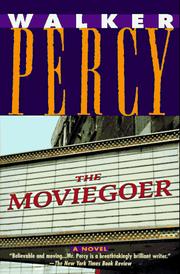
Start with The Moviegoer. It won the National Book Award in 1962, it is his first novel and his best, and it is short. A New Orleans stockbroker drifts through Mardi Gras week conducting what he calls "the search" — an inquiry into why ordinary contented life feels like sleepwalking. It is funny, which people rarely expect.
There is no serious argument for starting anywhere else. What is worth deciding is where to go next, because Percy's later novels get stranger and more explicitly religious, and readers who loved the first one do not always follow.
The novels that continue the search
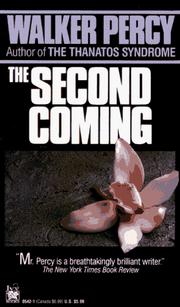
The last gentleman is the natural sequel in temperament — a young Southerner with amnesia and a telescope, adrift. The second coming returns to the same character decades later, and it is the warmest thing Percy wrote, containing an actual love story rather than a diagnosis.
The satires
Love in the ruins and The Thanatos Syndrome are the science-fiction-tinged comedies, both featuring a bad-Catholic psychiatrist named Tom More. The first imagines America coming apart along its existing fault lines; the second is about a scheme to medicate the population into contentment. Percy was a doctor and these are, at bottom, arguments about what medicine is for. The Thanatos book is his most polemical and its treatment of euthanasia and eugenics is where readers most often part company with him.
Lancelot sits apart and is the hardest to like — a monologue by a man in a psychiatric institution, unreliable and violent, with no comic relief. It is also, for some readers, his most powerful book.
The non-fiction, which is where the ideas live
Lost in the cosmos is subtitled a self-help book and is nothing of the kind: a parody questionnaire that turns into a genuine treatise on why human beings are the only creatures who can feel homeless in their own lives. It is his most enjoyable non-fiction and the best companion to the novels.
The message in the bottle is the serious version — essays on language and meaning, drawing on Kierkegaard and on semiotics, and considerably harder going. Signposts in a strange land collects the shorter pieces published after his death.
A note on what he is arguing
Percy was a Catholic convert and his novels are arguments as well as stories. He thought modern life had achieved comfort and lost the ability to say what a person is for, and he wrote comedies about that. Readers who do not share his convictions can and do read him — the diagnosis lands independently of the cure — but it is more honest to say the convictions are there than to pretend the books are neutral.
Where to stop
The Moviegoer and Lost in the cosmos is a real acquaintance with him, and it is where a lot of readers happily stop. The second coming if you want another novel. The satires are for readers who like the arguments; Lancelot is for readers who want to see how dark he could go.
Follow the full ordered path here: Walker Percy Reading Order: Where to Start with the Novels and the Essays.
Ready to learn something deeply?
Build a reading path — free