W.G. Sebald Reading Order: Where to Start
This curriculum moves through Sebald's four major prose works in the order best suited to building familiarity with his distinctive style — the melancholy wandering, the embedded photographs, the long sentences, the obsession with memory and catastrophe — before turning to his essays and critical reception. Starting at an intermediate level, the path begins with his most accessible and celebrated novel, deepens through the major works, and closes with his own critical writing and a key scholarly companion.
The Four Major Works
IntermediateRead all four of Sebald's major prose works in a sequence that builds emotional and formal complexity, understanding how each book deepens his preoccupations with exile, the Holocaust, and the archaeology of loss.
▸ Study plan for this stage
Pace: 8–10 weeks total: ~3 weeks for Vertigo (~20–25 pages/day, savoring the four-part structure), then ~5–6 weeks for Austerlitz (~15–20 pages/day, given its denser emotional and architectural weight), with 1 week reserved at the end for comparative re-reading and reflection.
- The Sebaldian narrator: an unnamed, semi-autobiographical wanderer whose unreliability and melancholy are structural, not incidental
- Prose-image fusion: the embedding of photographs, documents, and illustrations directly into the text as ambiguous 'evidence' rather than illustration
- Palimpsestic memory: the idea that places, buildings, and objects are layered with suppressed or forgotten histories that bleed through into the present
- Exile and dislocation: in Vertigo through the restless itineraries of Stendhal, Casanova, Kafka, and the narrator; in Austerlitz through a Kindertransport survivor's lifelong estrangement from his own identity
- The Holocaust as an absence: Sebald's refusal to represent atrocity directly, instead approaching it through architectural ruins, archival fragments, and the silences of survivors
- Temporal vertigo: the collapse of historical distance so that the 18th, 19th, and 20th centuries coexist and contaminate one another in a single sentence
- The labyrinthine sentence: Sebald's long, clause-heavy, digressive syntax as a formal enactment of memory's associative, non-linear movement
- Intertextuality and literary haunting: how Vertigo invokes Stendhal, Kafka, and Casanova, and how Austerlitz echoes Proust, Benjamin, and Borges as structural and thematic presences
- In Vertigo, how does the four-part structure — moving from Stendhal and Casanova to the narrator's own journeys — create a cumulative argument about the relationship between travel, obsession, and failed memory?
- Austerlitz reconstructs a life through architecture, train stations, and fortifications rather than through conventional autobiography. What does Sebald suggest about the relationship between built space and repressed trauma?
- Both books embed photographs and images into the prose. Choose one image from each book and analyze how its ambiguity (it neither confirms nor denies the text) functions differently from a conventional illustration.
- How does Sebald use the figure of the double or doppelgänger in Vertigo, and how does this motif transform into the question of identity theft and erasure in Austerlitz?
- Sebald's narrators are always listeners and witnesses rather than protagonists. How does this narrative stance shape the reader's ethical relationship to the suffering being described?
- Trace the motif of light and darkness — literally and metaphorically — across both books. How does each work use failing or artificial light to signal epistemological and emotional limits?
- Photograph exercise: Select one of the photographs embedded in either Vertigo or Austerlitz. Write a 300-word close reading that treats the image as you would a passage of prose — analyzing composition, what is absent from the frame, and how its placement in the text creates or undermines meaning.
- Sentence dissection: Choose one paragraph-length sentence from Austerlitz (there are many candidates). Map its grammatical structure: identify every subordinate clause, locate the main verb, and then write a short reflection on what is lost if the sentence is broken into shorter units. What does the syntax itself perform?
- Itinerary mapping: Using Vertigo, trace the narrator's physical journeys on a map (Vienna, Venice, Verona, the narrator's English hometown, etc.). Annotate each location with the historical or literary figure it summons. What pattern emerges from the geography of obsession?
- Parallel reading journal: Keep a double-entry notebook as you read Austerlitz. On the left page, record moments where Austerlitz speaks directly about his past. On the right, record moments where the narrator describes architecture or landscape. At the end, look for structural echoes — how often does a building 'say' what Austerlitz cannot?
- Rewrite in a different register: Take a two-page passage from Vertigo and rewrite it in plain, journalistic prose — short sentences, no digressions, no embedded images. Then write a paragraph reflecting on what this experiment reveals about why Sebald's style is inseparable from his subject matter.
- Comparative essay (500–700 words): Argue for or against the following claim: 'Vertigo is a book about the impossibility of recovering the past; Austerlitz is a book about the impossibility of escaping it.' Use specific scenes and formal features from both books as evidence.
Next up: Having established Sebald's core formal grammar — the wandering narrator, the image-text dialectic, the archaeology of trauma — through these two works, the reader is now equipped to encounter The Emigrants and The Rings of Saturn, where these techniques are applied to collective rather than individual memory and to the slow entropy of entire civilizations.
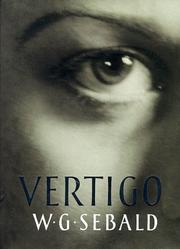
Actually Sebald's first major prose work, it rewards being read third, once the reader has the vocabulary for his style. Its layered literary allusions (Stendhal, Kafka, Casanova) and unreliable memory become richer after The Emigrants.
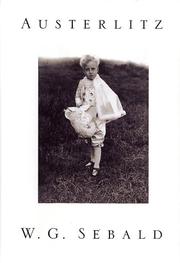
Sebald's final and most architecturally ambitious novel — a single character's recovery of a suppressed Holocaust childhood. It synthesizes everything from the earlier books and should be read last among the fiction, as its full weight depends on that accumulated context.
Sebald on Literature: The Essays
IntermediateUnderstand Sebald as a critic and literary thinker — his debts to Kafka, Bernhard, Nabokov, and others — and see how his essays illuminate the obsessions driving the fiction.
▸ Study plan for this stage
Pace: 6–7 weeks total: Weeks 1–3 on "A Place in the Country" (~20–25 pages/day, pausing to annotate each essay); Weeks 4–6 on "Campo Santo" (~15–20 pages/day, with slower reading for the unfinished Corsica fragments); Week 7 reserved for comparative review and exercise completion.
- Sebald as a critic-practitioner: how his essays function as creative acts in their own right, not merely academic commentary
- The debt to literary forebears: tracing Sebald's explicit and implicit dialogue with Rousseau, Walser, Mörike, Hebel, and Keller in 'A Place in the Country', and with Kafka, Nabokov, and Chatwin in 'Campo Santo'
- Melancholy as aesthetic and ethical stance: how Sebald reads melancholy in other writers as a moral response to historical catastrophe and personal displacement
- The figure of the outsider-artist: Sebald's consistent attraction to writers and painters who lived at the margins of literary culture or suffered obscurity and mental illness
- Prose style as argument: how Sebald's essayistic sentences — long, digressive, image-laden — enact the very ideas about memory and time he is analyzing in others
- The essay as pilgrimage: the recurring structure in both books of a journey (physical or archival) toward a writer's life, mirroring the narrator-wanderer of the fiction
- Literature and natural history: Sebald's reading of writers through landscapes, seasons, and ecological detail as a counter-history to progress narratives
- The unfinished and the fragmentary: 'Campo Santo's' posthumous incompleteness as itself a Sebaldian theme — the ruin, the interrupted project, the text that cannot close
- In 'A Place in the Country', what specific qualities does Sebald identify in Robert Walser's walking and writing practice, and how do those qualities reappear in Sebald's own narrative fiction?
- How does Sebald use the visual arts — paintings, drawings, and illustrations — within these essays to make critical arguments that prose alone cannot, and what does this tell us about his broader aesthetic?
- What does 'Campo Santo's' Corsica section reveal about Sebald's thinking on death, ritual, and cultural memory, and how does this connect to the literary essays that follow it in the same volume?
- Across both books, which recurring obsessions — thematic, stylistic, biographical — appear in Sebald's portraits of other writers, and what do these obsessions tell us about his own self-construction as an author?
- How does Sebald treat the relationship between biography and literary form — does he believe a writer's life explains the work, or does he resist that equation, and where in the essays is this tension most visible?
- In 'Campo Santo', how does Sebald's essay on Nabokov or Chatwin function as a kind of covert poetics — a statement of what Sebald himself is trying to do in his fiction?
- Annotation map: For each essay in both books, keep a two-column log — left column: the writer/artist being discussed; right column: every moment where Sebald's critical voice bleeds into something autobiographical or self-reflective. At the end, write a one-page synthesis of what this map reveals about Sebald's critical persona.
- Style imitation: Choose one paragraph from Sebald's essay on Walser ('A Place in the Country') and one from his Nabokov or Chatwin essay ('Campo Santo'). Write a 300-word essayistic passage in Sebald's manner about a writer or artist you admire, deliberately borrowing his sentence architecture, image-embedding, and tonal register.
- Intertextual thread-pulling: Select one writer Sebald discusses (e.g., Walser, Kafka, Nabokov) and read a short primary text by that writer alongside Sebald's essay. Write a 400-word response: where does Sebald's reading illuminate the primary text, and where does it seem to project his own preoccupations onto it?
- Essay-to-fiction bridge: Identify three specific critical claims Sebald makes in these essays (about memory, landscape, melancholy, or form) and find a passage in one of his novels (e.g., 'The Rings of Saturn' or 'Austerlitz') where that claim appears to be dramatized fictionally. Present your findings as a short annotated comparison.
- Fragmentary form exercise: 'Campo Santo' is posthumous and incomplete. Write a 250-word reflection on how the book's unfinished state changes your reading experience — does incompleteness feel like a flaw or a meaning-making feature? Ground your answer in at least two specific moments from the text.
- Critical voice portrait: After finishing both books, write a 500-word 'portrait of Sebald as critic' in the style of the essays themselves — digressive, image-rich, moving between biography and idea — as if Sebald were one of his own subjects.
Next up: By internalizing Sebald's critical vocabulary and his literary debts through these essays, the reader is now equipped to encounter his major fiction with a double vision — reading the novels both as imaginative works and as the living enactment of the poetics he articulated as a critic.

Six essays on writers and artists Sebald loved — Walser, Mörike, Keller, Hebel, Rousseau, and Jan Peter Tripp — written in the same prose style as the fiction. The ideal bridge between the novels and his more formal criticism.
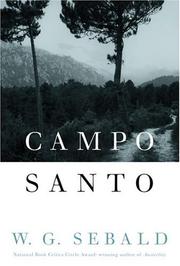
Posthumously collected essays and fragments, including the unfinished Corsica project and literary-critical pieces. Essential for understanding Sebald's thinking on natural history, memory, and the essay form itself.
Discussion
Keep reading
Paths that share books, cover the same subject, or open a related topic.