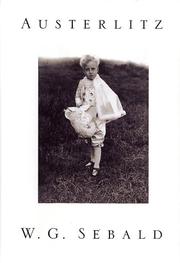
Start with Austerlitz. It is the closest thing Sebald wrote to a conventional novel: one man, one story, told across decades of chance meetings — a boy sent to Wales on a Kindertransport who spends his adult life reconstructing what happened to the parents he cannot remember. The digressions on fortress architecture and moth behaviour are still there, but they hang on a spine, and that spine is what makes it the right entry point.
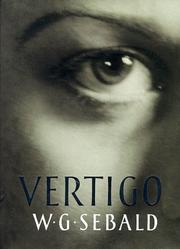
The obvious alternative is publication order, which would start you at Vertigo, and that is a mistake for a first-time reader. Vertigo is the earliest, the strangest and the least anchored — four loosely joined sections moving between Stendhal, Kafka, an unnamed narrator in northern Italy and a return to a Bavarian village, with no plot to hold on to. Readers who begin there often conclude Sebald is doing nothing when in fact they have started with the hardest case.
Be aware that our catalogue is missing two of the four prose books, and their absence is conspicuous: The Rings of Saturn, the walk along the Suffolk coast that many readers consider the best of them, and The Emigrants, the four biographical portraits that made his English-language reputation. Both are widely available and both belong in the sequence below.
The order to actually read them in
Begin with Austerlitz. Read The Rings of Saturn second, because by then you will accept a book with no plot at all and can enjoy the drift from silk-weaving to Thomas Browne's skull to a hurricane. The Emigrants third — four lives, each unravelling toward the same unstated cause. Then Vertigo last, when you no longer need a handrail.
That is the reverse of publication order and it is deliberate. There is no chronology to preserve — the books do not share characters or a timeline — so nothing is lost by taking the accessible one first.
Warnings that are worth having in advance
Sebald has almost no dialogue. Speech arrives as reported speech inside long sentences, sometimes nested three deep, and in Austerlitz there are no chapter breaks at all — the book runs as one continuous block of prose for hundreds of pages. Paragraphs can go on for a dozen pages. If you read in short bursts on a phone this will defeat you; read in stretches of half an hour or more and the rhythm becomes the pleasure.
The photographs are the other thing people trip on. Grainy, uncaptioned images sit in the text — train stations, faces, receipts — and they are a mix of found, borrowed and altered material. They are not documentation and should not be trusted as such. That instability is the point: these books hover between memoir, essay and fiction, and they never tell you which one you are holding.
The essays and the posthumous work
A place in the country collects six essays on writers and one painter — Rousseau, Keller, Walser, Hebel among them — and it is the clearest window on what Sebald read and why. It is slighter than the prose books but the Robert Walser essay alone justifies it.
Campo Santo is the posthumous gathering: fragments of an abandoned Corsica book plus critical pieces, assembled after his death in 2001. It is genuinely for people who have read the four prose works and want more, and it will give a newcomer a false impression of a writer who was normally far more controlled. Read it last or not at all.
Where to stop
After Austerlitz and The Rings of Saturn you have the writer at full strength. Everything else deepens the picture rather than changing it, and Campo Santo is completist territory. If the slow, wandering, memory-haunted mode appeals, Toni Morrison works a very different set of the same materials.
Follow the full ordered path here: W.G. Sebald Reading Order: Where to Start.
Ready to learn something deeply?
Build a reading path — free