Vikram Seth Reading Order: Where to Start
Vikram Seth has never written the same kind of book twice: a hitchhiking travelogue through Tibet, a novel in sonnets, the longest single-volume English novel of the century, a book about musicians, a double biography of his own great-uncle and aunt, and several volumes of formal verse. So the order here is not thematic but strategic — begin with the two short, warm books, take on the two novels that made his name, then the family history, then the poems, which are where his ear for metre came from in the first place.
Start Here
BeginnerGet Seth's voice — courteous, exact, curious about strangers — in the two shortest books, before committing to a novel that runs to almost 1,500 pages.
▸ Study plan for this stage
Pace: 2 weeks. An Equal Music is 380 pages of unusually transparent prose and goes in about a week at 50 pages a day. From Heaven Lake is 178 pages of travel narrative and can genuinely be finished in two evenings. Read them in this order — the novel establishes the voice, the travelogue shows where it ca
- Seth's defining quality: courteous, exact prose that never draws attention to itself, which is why the emotional damage in his books arrives without warning
- Technical detail as the vehicle for feeling — An Equal Music runs on quartet rehearsals, bowings and the specifics of a Beethoven or Bach part, and expects the reader to care about the mechanics
- Hearing loss as the novel's cruellest device: a musician losing the sense her art depends on, described by a narrator who cannot help her
- An unreliable and self-serving narrator delivered in entirely reasonable prose — Michael's account of what he did years earlier should not be taken at face value
- The travelogue as apprenticeship: hitchhiking from Xinjiang through Tibet to Nepal as a student, and the habit of noticing strangers precisely that later fills a 1,400-page novel
- Observational patience — From Heaven Lake spends pages on lorry drivers, paperwork and border officials, and that willingness to stay with the unremarkable is the method of everything after
- No two Seth books are the same kind of book, so 'his style' is a matter of temperament rather than form
- How much of what Michael tells you about the end of the relationship do you believe, and where does the prose let doubt in?
- Does An Equal Music work if you cannot read music — and what is Seth doing to carry a reader who cannot?
- In From Heaven Lake, what does Seth notice that a professional travel writer would probably have cut?
- How does the young traveller of the travelogue relate to the narrators Seth later writes — what is already there?
- Both books are about being a foreigner somewhere. What is the difference between how each treats that condition?
- Listen to one of the works discussed in An Equal Music while reading the rehearsal chapters. Seth is describing something audible and the scenes double in effect.
- Mark three places where Michael's version of events is quietly contradicted by what someone else says. Building that list is how the novel is meant to be read.
- Trace the From Heaven Lake route on a map — Xinjiang, Tibet, Nepal. The geography explains the book's pacing.
- Write 200 words describing a journey by public transport in Seth's register: no adjectives doing emotional work, only what was seen and said.
Next up: You have the voice and the patience now, and both books were short — which matters, because the next stage contains a novel in sonnets and the longest single-volume English novel most readers will ever attempt.

A London string-quartet violinist meets a pianist he abandoned years earlier, who is going deaf. The most compact of his novels and the easiest first taste of how much technical detail he can make emotional.

His first book: hitchhiking from Xinjiang through Tibet to Nepal as a student. Read second to see the observational patience that later fills the big novel, in a form you can finish in two evenings.
The Two Great Novels
IntermediateRead the formal experiment and the vast realist novel back to back, and understand that they are the same writer solving opposite problems.
▸ Study plan for this stage
Pace: 10–12 weeks, and this is the stage where people stop. The Golden Gate is 307 pages of verse — read it at about 30 pages a day over ten days, aloud where possible. A Suitable Boy is 1,408 pages: at 25 pages a day that is eight weeks, at 40 pages a day about five. The good news is structural — the nov
- The Golden Gate is written entirely in sonnets — close to six hundred of them, in a tetrameter stanza borrowed from Pushkin's Eugene Onegin, including the dedication, the acknowledgements and the table of contents
- Verse that does not feel like verse: the rhyme is so fluent that most readers forget they are reading poetry within twenty pages, which is the technical achievement
- 1980s San Francisco as subject — careers, protest, loneliness and a cast of secular professionals, handled with a lightness the form makes possible
- A Suitable Boy's premise as an engine, not a plot: Mrs Rupa Mehra's search for a husband for Lata licenses Seth to move through four families and every layer of newly independent India
- Four interlinked families as a structural device for covering the country — landowners, professionals, politicians, musicians — so that a domestic question opens onto land reform and a general election
- The first general election and Partition's aftermath as the novel's real subject, entered sideways through households rather than head-on
- Hindu–Muslim relations handled at the level of friendship, marriage and neighbourhood rather than as a thesis
- The same writer solving opposite problems: maximum formal constraint in one book, maximum realist expansion in the other, with the same tone of voice in both
- At what point did you stop noticing the rhyme in The Golden Gate, and what does that say about what the form is for?
- What can a novel in sonnets do with a change of scene or an interruption that prose cannot?
- What is Lata actually choosing between at the end of A Suitable Boy, and does the novel endorse her choice?
- How does Seth use the general election material — is it background to the marriage plot, or is the marriage plot background to it?
- Which of the four families is the novel most sympathetic to, and how can you tell without being told?
- Does A Suitable Boy earn its length? Name a section you would cut, then say what you would lose.
- Read the first ten stanzas of The Golden Gate aloud. The metre is only fully audible spoken, and after ten stanzas your ear carries the rest silently.
- Set a fixed daily page count for A Suitable Boy before you begin and treat it as non-negotiable. The chapters are short by design; readers who wait for a free weekend never finish it.
- Keep a one-page family chart for A Suitable Boy — four surnames, who married whom, who is in politics. Seth provides one, but drawing your own fixes the names far better.
- Note the parts where the novel leaves Lata entirely for fifty pages or more. Listing them shows you what the marriage plot was really there to do.
- After finishing, write 300 words on which of the two novels required more skill. There is no right answer and the question forces you to say what you think Seth is good at.
Next up: Having read Seth invent four fictional families and follow them across a subcontinent, you are in the right position for the book where he does the same work on real relatives whose documents he actually had.
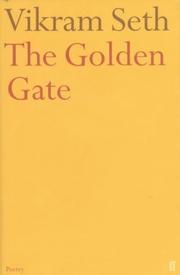
A novel about 1980s San Francisco yuppies written entirely in Pushkin sonnets. Read it before A Suitable Boy: it is far shorter, and it trains your ear for the metrical control that runs quietly under the prose.
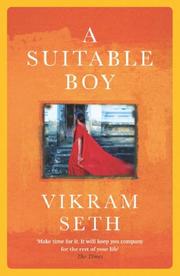
A mother's search for a husband for her daughter in newly independent India, across four families and a general election. The central work, and the one everything else in this path either prepares for or reflects on.
The Family History
IntermediateSee Seth turn his novelist's attention on real people, including his own relatives, and on the twentieth century's worst events.
▸ Study plan for this stage
Pace: 2–3 weeks for 503 pages. Slower going than the fiction: Two Lives braids biography, memoir and primary documents, and the wartime correspondence sections are worth reading carefully rather than at novel pace. About 30 pages a day is comfortable.
- A double biography of Seth's own great-uncle and great-aunt — an Indian dentist and a German Jewish woman who met in Berlin and made a life in London
- The twentieth century entered through one household: colonial India, Nazi Germany, the Holocaust and post-war Britain all arrive as things that happened to two people Seth knew personally
- The biographer inside the book — Seth lived in their house as a student, so he is a witness as well as a researcher, and the book keeps declaring which he is being
- Working from documents: letters, tapes and interviews are quoted at length, and Seth is explicit about the gaps his sources leave
- Shanti's war and Henny's losses handled at different registers — one is a soldier's story with a physical injury at its centre, the other is an absence reconstructed from correspondence
- The ethical problem of writing about relatives who cannot consent, which Seth addresses rather than avoids
- The non-fiction counterpart to A Suitable Boy: the same interest in how families survive history, without the freedom to invent
- Where does Seth mark the limits of what his sources can tell him, and how does he handle those gaps?
- How does his presence as a nephew who lived in the house change what the book can claim to know?
- What is the effect of quoting the letters at length rather than summarising them?
- Which of the two lives is better documented, and how does that imbalance shape the book?
- Set against A Suitable Boy: what can Seth do with invented families that he cannot do here, and what can he do here that fiction would not permit?
- Keep a timeline of the two lives in parallel columns until they converge. The book's structure is exactly that convergence.
- Mark every passage where Seth states what he does not know. The honesty is the book's method and it is easy to read past.
- Compare one letter Seth quotes in full with the paragraph of his own commentary that follows it, and ask what the commentary adds.
- Write 200 words on whether you would want a relative to write this book about you. Seth is aware of the question and the book is better read with it open.
Next up: Two Lives already turns on documents, elegy and things not fully recoverable, which is the natural approach to the verse — where Seth is most technically ambitious and where the same subjects appear in a far smaller compass.
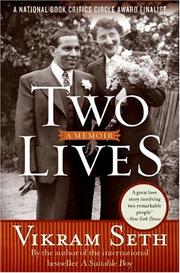
The biography of his Indian great-uncle and his German-Jewish great-aunt, who met in Berlin and married in London. Read after A Suitable Boy — it is the non-fiction counterpart to the family sweep of the novel.
The Poems and Fables
IntermediateFinish with the verse, where Seth is most technically ambitious and least widely read, in the order he published it.
▸ Study plan for this stage
Pace: 3–4 weeks, and page count is a poor guide here — the collections run 62, 61 and 130 pages plus a late volume, but poetry read at prose speed does not register. A handful of poems per sitting, three or four sittings a week. Beastly Tales is the exception: rhyming animal fables that can be read straig
- Formal verse in the late twentieth century — Seth writes in metre and rhyme at a time when almost nobody publishing did, which is what made The Golden Gate possible
- The Humble Administrator's Garden and its three-part geography: poems of China, India and California, grouped by three trees, which is Seth's own life as a structure
- Rhyme made to sound effortless: the interest is in how few of these poems sound strained, and in finding the ones that do
- Plainness as the mature mode — All You Who Sleep Tonight is short, unornamented lyric, and the poems on Hiroshima and on the camps are the plainest of all
- Atrocity handled by understatement, fifteen years before Two Lives took up the same subject in prose
- Beastly Tales as demonstration rather than light relief: ten fables in rhyming couplets drawn from India, China, Greece and Ukraine, and the clearest exhibit of his technical ease
- The elegiac late register — the final collection is quieter, working the same craft with far less to prove
- Poetry as the source of the prose: the metrical control audible under A Suitable Boy's sentences is what these books were training
- How do the three sections of The Humble Administrator's Garden differ in tone, and does the arrangement by tree do any real work?
- In the Hiroshima and camp poems, what is achieved by refusing rhetoric — and would prose have done it better?
- Which of the Beastly Tales works least well, and is the failure in the story or the couplet?
- What has changed between the first collection and the last, apart from subject matter?
- Having read The Golden Gate first, which formal habits in these poems do you now recognise from the novel?
- Is Seth a better poet or a better novelist, and what is the evidence in these four books?
- Read Beastly Tales aloud, ideally to someone else. Couplets are written to be spoken and the timing of the jokes only exists in performance.
- Take one short lyric from All You Who Sleep Tonight and scan it — mark the stresses. Seth's plainness is metrically exact and the scansion proves it.
- Put a poem about China from the first collection beside the corresponding stretch of From Heaven Lake. The same journey in two forms is the most useful comparison in this path.
- Copy out one stanza of The Golden Gate and one short poem from the collections by hand. The continuity of ear between them is unmistakable once written out.
- Rank the four books and defend last place in a paragraph. These collections are rarely discussed and it is worth forming your own view rather than borrowing one.
Next up: This is the end of the path — you have read Seth in every form he works in, and the only thing left is the reread it all points toward: A Suitable Boy with the sonnets and the poems in your ear.
Poems of China, India and California, grouped by three trees. His first mature collection and the source of the formal habits that produced The Golden Gate.

Short, plain lyrics including poems on Hiroshima and on the camps. The most emotionally direct of the collections, and it anticipates the subject matter of Two Lives by fifteen years.

Ten animal fables in rhyming couplets, drawn from India, China, Greece and Ukraine. Light relief, and the clearest demonstration of how effortless his rhyme can be made to seem.
The late collection, elegiac and quieter. A fitting end to the path: the same craftsmanship, thirty years on, with far less to prove.
Discussion
Keep reading
Paths that share books, cover the same subject, or open a related topic.