Best Books to Learn Video Game Design (in Order)
This curriculum takes a beginner from the fundamental language of game design through mechanics and systems thinking, then into the craft of level design and the psychology of player engagement. Each stage builds the conceptual vocabulary needed for the next, ending with advanced insight into what makes players truly hooked.
Foundations: The Language of Game Design
BeginnerUnderstand what games are, how they work at a fundamental level, and develop the core vocabulary every game designer needs.
▸ Study plan for this stage
Pace: 4-5 weeks, ~40-50 pages/day (Schell's book is ~460 pages; includes time for reflection and exercises)
- Games are systems with rules, players, and meaningful choices that produce quantifiable outcomes
- The Lens framework: viewing games through multiple perspectives (player experience, mechanics, aesthetics, story, etc.)
- The MDA framework (Mechanics, Dynamics, Aesthetics): how design choices cascade into player experience
- Core vocabulary: mechanics, dynamics, aesthetics, challenge, agency, feedback loops, and win/loss conditions
- The designer's mindset: empathy for the player and iterative playtesting as essential design tools
- How games differ from other media through interactivity and player agency
- Elemental tetrad: story, mechanics, technology, and aesthetics as interconnected design pillars
- What is Schell's definition of a game, and what distinguishes games from play, toys, and other media?
- Explain the MDA framework and how mechanics create dynamics that produce aesthetic experiences for players.
- What is the Lens framework, and how can designers use multiple lenses to evaluate their game design?
- How do feedback loops and meaningful choices create player agency and engagement?
- What role does playtesting and player empathy play in the iterative design process?
- How do the four elements of the elemental tetrad (story, mechanics, technology, aesthetics) interact in a complete game design?
- Analyze a simple game you know well (chess, tic-tac-toe, Candy Crush, etc.) using Schell's definition: identify its rules, players, meaningful choices, and quantifiable outcomes.
- Play a game for 30 minutes while taking notes on the mechanics you observe, then write how those mechanics create specific dynamics and aesthetic experiences (using the MDA framework).
- Choose one game and apply 5-6 different lenses from Schell's framework to it (e.g., the lens of the player, the lens of the game, the lens of the story, the lens of the economy). Document what each lens reveals.
- Design a simple paper-based game (e.g., a dice game, card game, or turn-based challenge) with clear rules and a win condition. Playtest it with 2-3 people and document their feedback on player agency and feedback clarity.
- Create a one-page design document for a game concept that identifies its elemental tetrad: what story does it tell, what mechanics drive it, what technology does it need, and what aesthetic experience should it create?
- Conduct a 'feedback loop audit' of a game you play regularly: map out all the feedback loops (visual, audio, mechanical) and explain how they guide player behavior and maintain engagement.
Next up: This stage establishes the shared vocabulary and conceptual frameworks that all subsequent game design work depends on, preparing you to dive into specific design disciplines (systems design, level design, narrative design, etc.) with a solid foundational understanding of how games work holistically.
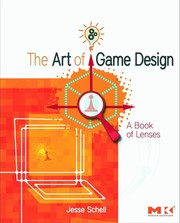
The single best starting point for any aspiring game designer — it builds a complete mental framework for thinking about games through 100+ practical 'lenses'. Read this first to establish the vocabulary and mindset everything else builds on.
Mechanics: Rules, Loops, and How Games Feel
BeginnerUnderstand how game mechanics are constructed, how core loops are designed, and how rules create meaningful player choices.
▸ Study plan for this stage
Pace: 4–5 weeks, ~40–50 pages/day. Start with "Rules of Play" (Chapters 1–8 on foundational game design theory and formal systems), then move to "Game Mechanics" (Chapters 1–6 on core mechanics and loops). Allocate 1 week per book with 2–3 days for review and exercises.
- Formal systems: how rules define the boundaries and possibilities of a game
- Core loops: the repeating sequences of player actions and game responses that form the heart of gameplay
- Meaningful choice: how rule design constrains and enables player agency within a game system
- Emergence: how simple rules interact to create complex, unpredictable gameplay experiences
- Feedback systems: how games communicate rule outcomes to players through mechanics and aesthetics
- Mechanical balance: how rule adjustments affect difficulty, pacing, and player engagement
- Abstraction vs. simulation: when to simplify rules for clarity versus when to model reality for immersion
- What is the difference between a formal system and a dramatic narrative, and why does this distinction matter for game design?
- How do core loops function in a game, and what makes a loop 'tight' versus 'loose'?
- How do rules create meaningful player choices, and what happens when a game offers choices without real consequences?
- What is emergence in game design, and how do simple rule sets generate complex player experiences?
- How should feedback systems be designed to communicate mechanical outcomes clearly to players?
- What trade-offs exist between mechanical balance and player agency, and how do designers navigate them?
- Play a simple board game (e.g., Chess, Tic-Tac-Toe, or Snakes & Ladders) and map out its core loop: what is the repeating sequence of actions, decisions, and feedback?
- Redesign one rule in a familiar game and playtest it with others; document how that single change affects meaningful choice and emergence.
- Analyze a video game you know well (e.g., Super Mario Bros., Candy Crush, or Dark Souls) and identify its formal system: what are the core rules, constraints, and win/loss conditions?
- Create a paper prototype of a simple game with 3–5 core rules; playtest it and refine the rules based on whether players face meaningful choices and whether the loop feels engaging.
- Document the feedback systems in two different games (one digital, one analog); compare how each communicates rule outcomes and mechanical state to the player.
- Write a 1–2 page design document for a game mechanic that uses emergence: describe simple rules that could generate multiple valid strategies or unexpected interactions.
Next up: This stage grounds you in the foundational language and theory of how games work mechanically; the next stage will build on this by exploring how these mechanics are shaped by player psychology, narrative context, and iterative design processes.

The definitive academic treatment of game mechanics and rules — establishes a rigorous framework for understanding how rules generate meaning and play. Read before systems books to understand the atomic building blocks.
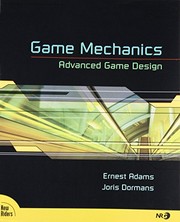
Translates the theory of mechanics into practical design patterns and tools, including internal economies and feedback loops. Bridges the gap between rules theory and systems design.
Systems Thinking: Emergence and Complexity
IntermediateLearn to design interconnected systems that produce emergent, dynamic gameplay greater than the sum of their parts.
▸ Study plan for this stage
Pace: 4–5 weeks, ~40–50 pages/day, with 2–3 days per week dedicated to hands-on design exercises
- Emergence: how simple rules and interactions between game systems create complex, unpredictable player experiences
- System interconnection: designing feedback loops, dependencies, and relationships between mechanics that reinforce each other
- Dynamics vs. statics: understanding how static systems (rules, numbers) produce dynamic behavior (player strategies, evolving situations)
- Constraints and possibility spaces: how limitations and rule sets define the range of meaningful player choices
- Feedback loops and balance: positive and negative feedback mechanisms that maintain engagement without stagnation
- Emergence through layering: combining simple, well-understood systems to create depth and replayability
- Player agency within systems: designing systems that respond meaningfully to player decisions while maintaining coherent game logic
- How do simple, individual game mechanics combine to produce emergent gameplay that feels complex and unpredictable?
- What is the difference between a game's static systems (rules, values) and its dynamic behavior, and why does this distinction matter for design?
- How do feedback loops (both positive and negative) function in game systems, and what happens when they become unbalanced?
- What role do constraints play in creating meaningful player choices, and how do possibility spaces emerge from rule limitations?
- How can you design interconnected systems so that changes in one mechanic meaningfully affect others without creating unintended cascades?
- What are the key principles for layering simple systems to create depth without overwhelming the player?
- Map a game system you know well (e.g., Deckbuilding in Slay the Spire, economy in Civilization): identify all feedback loops, constraints, and emergent behaviors that arise from their interaction
- Design a simple 2–3 mechanic system (e.g., resource generation, spending, and scarcity) on paper; playtest it with a friend and document unexpected emergent behaviors
- Analyze a game that feels 'broken' or unbalanced: trace which feedback loops are failing and propose system changes to restore equilibrium
- Create a possibility space diagram for a simple game mechanic (e.g., a combat system): show all meaningful player choices and how they branch
- Prototype a game with intentional layering: start with one core mechanic, then add a second that interacts with it, then a third; document how complexity emerges
- Redesign a single mechanic from an existing game to create a different feedback loop; predict and test how this changes emergent player behavior
Next up: This stage equips you with the conceptual vocabulary and design intuition to recognize and engineer emergence; the next stage will teach you how to apply these systems-thinking principles to specific game genres and player psychology, deepening your ability to craft experiences tailored to your audience.

One of the clearest books ever written on systems design and emergence in games — written by the designer of RimWorld. It directly addresses how complex, living game systems are architected and balanced.
Level Design: Space, Flow, and Player Guidance
IntermediateMaster the craft of designing game spaces that guide players intuitively, create pacing, and deliver moment-to-moment experience.
▸ Study plan for this stage
Pace: 8–10 weeks, ~25–30 pages/day (approximately 4–5 hours/week of focused reading and note-taking)
- Spatial design principles: how architecture and geometry guide player movement and perception
- Flow theory applied to level design: balancing challenge, pacing, and player agency
- Intentional player guidance through environmental design, visual hierarchy, and implicit/explicit signposting
- Moment-to-moment gameplay: designing encounters that create rhythm and emotional beats
- Composition and layout: using symmetry, asymmetry, focal points, and sight lines to shape experience
- Verticality and traversal: designing 3D spaces and movement mechanics that feel intuitive
- Narrative integration: embedding story and theme through environmental storytelling and spatial progression
- Iteration and playtesting: refining level designs based on player behavior and feedback
- How can you use architectural principles (symmetry, focal points, sight lines) to guide players through a space without explicit UI markers?
- What is flow theory, and how do you apply it to level design to maintain player engagement across varying difficulty?
- How does moment-to-moment pacing differ from macro-level pacing, and why does each matter in level design?
- What are the differences between implicit and explicit player guidance, and when should you use each?
- How can verticality and elevation changes enhance both navigation and combat/encounter design?
- How do you embed narrative and theme into a level's spatial design without relying solely on dialogue or cutscenes?
- Analyze a level from a game you know well (e.g., Dark Souls, Half-Life 2, Celeste): map its sight lines, focal points, and player flow paths; identify how architecture guides the player
- Sketch a small 2D level layout (top-down) using at least three distinct spatial zones; annotate how each zone creates different pacing and challenge
- Design a vertical traversal sequence (stairs, ramps, platforms) that teaches a movement mechanic intuitively through spatial arrangement alone
- Create a mood board or annotated reference sheet showing how 3–4 real architectural spaces could inspire a game level's atmosphere and navigation
- Playtest a simple level prototype (digital or paper-based) with 2–3 people; document where they got lost, where they felt guided, and where pacing dragged or spiked
- Redesign an existing level from a published game based on flow theory: identify pacing problems and propose spatial/encounter changes to improve engagement
Next up: This stage equips you with the spatial and pacing fundamentals to design engaging level spaces; the next stage will likely build on this by exploring how to layer systems, mechanics, and narrative progression across entire game worlds and campaigns.
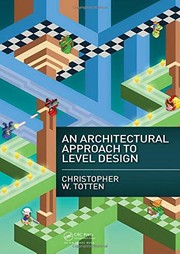
The most comprehensive and rigorous book on level design available — draws on architecture, psychology, and game history. Read first in this stage to build a full spatial design vocabulary.

Complements Totten with a more practical, process-oriented view of level design, covering flow, affordances, and player communication through space.
Player Psychology: Hooks, Retention, and the Feel of Play
ExpertUnderstand the deep psychology of motivation, reward, and engagement — and use it ethically to design games that keep players genuinely hooked.
▸ Study plan for this stage
Pace: 4–5 weeks, ~25–30 pages/day (approximately 200 pages total; allows time for reflection and application)
- The Hook Model: Trigger → Action → Variable Reward → Investment (the core framework for habit formation)
- Internal vs. external triggers: how to identify what prompts player behavior and design for intrinsic motivation
- The role of variable rewards in dopamine release and engagement (why unpredictability keeps players engaged)
- Investment mechanics: how players' time, effort, and emotional commitment deepen engagement and lock them into the game loop
- Ethical design vs. manipulation: the responsibility of designers to build habits that benefit players, not exploit them
- Habit zones and user types: how different players form habits at different speeds and intensities
- Behavioral psychology foundations: understanding loss aversion, scarcity, social proof, and other psychological triggers in game design
- What are the four stages of the Hook Model, and how does each stage function to create habit-forming behavior?
- How do internal triggers differ from external triggers, and why is designing for internal triggers more sustainable for long-term engagement?
- Why does variable reward (rather than predictable reward) create stronger psychological engagement, and what are the risks of relying on it?
- What is the investment phase, and how do mechanics like progression, customization, and social commitment deepen player investment?
- What is the ethical line between designing engaging games and exploiting player psychology? How can designers use the Hook Model responsibly?
- How would you audit an existing game using the Hook Model framework to identify where it succeeds or fails in creating habits?
- Map the Hook Model onto a game you play regularly: identify the trigger (internal and external), the action, the variable reward, and the investment. Write a 1–2 page analysis.
- Design a simple mobile game mechanic (e.g., a daily login system, a progression loop) using the Hook Model. Sketch the flow and explain how each stage creates habit formation.
- Conduct a 'trigger audit' of three games: list all the triggers (notifications, UI elements, social cues) that prompt player action. Categorize them as internal or external.
- Create a player psychology persona for a game you're designing: describe their pain point, what internal trigger would motivate them, what action you'd want them to take, and what variable reward would keep them coming back.
- Debate the ethics: choose one game known for strong engagement (e.g., Candy Crush, Fortnite) and write a 2–3 page reflection on whether its Hook Model implementation is ethical or exploitative. Propose redesigns if needed.
- Build a 'habit loop canvas' for a game mechanic: document the trigger, action, reward, and investment for one core loop in a game you're designing or analyzing. Iterate it twice based on psychological principles from the book.
Next up: This stage establishes the psychological *why* behind engagement and habit formation; the next stage will likely apply these principles to specific game systems (progression, reward structures, social mechanics) and explore how to balance engagement with ethical design and player well-being.

Lays out the trigger-action-reward-investment loop that underlies addictive product and game design. Essential reading for understanding retention mechanics before studying their game-specific applications.
Discussion
Keep reading
Paths that share books, cover the same subject, or open a related topic.