V.I. Warshawski Reading Order: Where to Start
Sara Paretsky has published more than twenty V.I. Warshawski novels since 1982, and the cases are individually self-contained — but the series is really one long book about Chicago, and the people around V.I. age, fall out and die in sequence. Read in publication order. Starting in the middle costs you the friendship with Lotty Herschel, the history with the Streeter brothers and the slow deterioration of V.I.'s own body, all of which are the reason readers stay. This path takes the core sequence through the strongest run and then says where you can reasonably stop, because nobody needs to read all of them.
Start Here: The Early Chicago Cases
BeginnerMeet V.I., Lotty and Mr Contreras, and get the series' founding argument — that white-collar crime in Chicago is violent crime with better lawyers.
▸ Study plan for this stage
Pace: Three to four weeks for about 1,000 pages across three novels of 320 to 350 pages. These are the tightest books in the series and read fast — a week each is comfortable. Read them consecutively; the supporting cast is being assembled here and gaps make it harder to feel that happening.
- V.I. is Victoria Iphigenia Warshawski: daughter of a Polish-American Chicago police officer and an Italian immigrant singer, a former public defender who quit because the job was rigged, now a solo investigator working out of a Loop office.
- Paretsky's founding move, in 1982, was to write a female private eye who is the hero rather than the victim, the secretary or the corpse. The hardboiled apparatus is all there — the office, the beating, the wisecrack — with the assumption that the detective is a man removed.
- The series' recurring argument is stated in the first book and never abandoned: white-collar crime is violent crime with better lawyers. The bodies come from insurance fraud, pension raids and negligent institutions, not from criminal masterminds.
- Indemnity Only sets the pattern — a missing-person job opens into union pension funds and insurance money, and the respectable people are the dangerous ones.
- Deadlock moves onto the Great Lakes shipping trade and starts the series' other habit: the case is personal. V.I. investigates because someone she is related to is dead, and Paretsky uses family to keep the corporate crime from going abstract.
- Lotty Herschel is the most important relationship in the series. She is an Austrian Jewish refugee doctor who came to Britain as a child on the Kindertransport, she runs a storefront clinic, and she is the person V.I. answers to. Their friendship, and its ruptures, are why readers stay for twenty bo
- Mr Contreras arrives partway through this stage — a retired machinist downstairs who appoints himself V.I.'s protector without being asked. He is the comic relief and, over the long run, the emotional cost of her independence.
- Killing Orders is the toughest of the three and the one that establishes the series' willingness to hurt its detective badly. It goes after the Church, V.I.'s own extended family, and financial fraud at once.
- What did V.I. leave the public defender's office over, and how does that grievance shape which cases she takes?
- In each of these three books, who is the ultimate beneficiary of the crime — and how far up the social ladder is that person from the one who commits the violence?
- What does Lotty know about V.I. that nobody else does, and what does Lotty demand of her in return?
- Why does Paretsky keep making the cases personal — a cousin, an aunt, a neighbour — when the crimes themselves are institutional?
- How does V.I. get information? Track the actual methods across three books; almost none of them are the ones a male hardboiled detective would use.
- What happens to V.I. physically in Killing Orders, and how does the book treat it differently from the way a Chandler novel treats a beating?
- Start a Chicago map. V.I.'s neighbourhoods are specific and recurring — the Loop office, her apartment, Lotty's clinic, South Chicago — and marking them makes the later books' geography of money and neglect legible.
- Note the first appearance of each recurring character with one line on how they met. There are perhaps eight who matter across twenty books and this list is worth more than a plot summary.
- For each novel, write the crime in one sentence as a newspaper would report it, then write it again as V.I. understands it. The gap between those two sentences is Paretsky's whole method.
- Read the first chapter of Indemnity Only alongside the first chapter of any classic male-narrated PI novel you know. The parallels are deliberate and the departures are the argument.
- Keep a running note of what V.I.'s independence actually costs her — sleep, friendships, money, the flat. Paretsky is keeping that ledger too and it comes due in the later books.
Next up: With V.I., Lotty and Mr Contreras in place and the series' argument about respectable crime established, Paretsky spends the next three books aiming at much larger institutions.

The first, from 1982, and genuinely important: a female private investigator who is hard-boiled without being a joke was close to new when it appeared. Start here, and expect the period detail to feel dated in a way that is part of the pleasure.

Second, on the Great Lakes shipping industry, and the book where Paretsky's method becomes clear — pick an industry, learn it properly, and find the murder inside the paperwork.

Third, and the first to go at V.I.'s own family and the Chicago archdiocese. Read it in place: it establishes the estrangements that recur for the next thirty years.
The Series Hits Its Stride
BeginnerRead the late-eighties run where the institutional targets get bigger and the supporting cast settles into place.
▸ Study plan for this stage
Pace: Four weeks for roughly 1,080 pages. Blood Shot is the one to slow down for — it is the best of the early run and its emotional payload is heavier than its page count suggests. A week each for Bitter Medicine and Burn Marks, two for Blood Shot if you want it to land.
- Bitter Medicine puts V.I. inside the medical system: a hospital, a death that should not have happened, and violence around an abortion clinic. It is the first book where the institution being investigated is one Lotty belongs to, which strains the friendship in a way the plot depends on.
- Blood Shot, published in Britain as Toxic Shock, sends V.I. back to South Chicago, the steel-mill neighbourhood she grew up in and escaped. It is widely rated the strongest of the early novels and it won a Crime Writers' Association dagger.
- The crime in Blood Shot is industrial chemical poisoning, and Paretsky makes the point that the people being poisoned are the people V.I. went to school with. The class anger in this series is autobiographical in shape and this is where it is sharpest.
- Burn Marks is about arson, machine politics and V.I.'s alcoholic aunt Elena, and it is the series' most direct engagement with Chicago's political machine and with homelessness.
- A pattern is now visible: each book pairs a systemic crime with a family member who cannot be saved. The systemic half supplies the plot and the family half supplies the reason V.I. will not let go.
- Paretsky ages her characters in real time, which almost no series detective does. V.I. is visibly older across these books, her injuries take longer to heal, and that continuity is why reading in order matters more here than in most crime series.
- The supporting cast has settled: Lotty, Mr Contreras, the dogs, the police contacts, the ex-husband. From this point the books assume you know them and stop introducing them.
- What does Blood Shot say about who bears the cost of industrial production, and why does V.I.'s personal history make her the right narrator for it?
- Where does Lotty's professional position put her at odds with V.I. in Bitter Medicine, and how is that conflict resolved — or not?
- How does Burn Marks connect arson to city politics? Trace the chain from the fire to the person who profits.
- What is the recurring role of the unsaveable relative across these three books, and what does it let Paretsky do that a purely professional case would not?
- How has V.I.'s relationship to South Chicago changed by the end of Blood Shot compared with the beginning?
- Before starting Blood Shot, look up what happened to the South Chicago steel industry in the 1980s. Ten minutes of context makes the novel considerably heavier.
- Track the physical toll across these three books — every injury, and how long it takes V.I. to recover. Paretsky is deliberately refusing the convention where a detective is fine by the next chapter.
- Write down, for each book, the moment V.I. could have walked away and did not, and what she gives as her reason. The reasons change across the series and that change is the character arc.
- Add the South Chicago locations to your map. The geography of the later books, especially Fire Sale and Brush Back, is built on top of this one.
- Note where the narration is angry rather than cool. Paretsky lets V.I. lose her temper on the page in a way the hardboiled tradition does not permit, and locating those passages is a good way to see what she changed about the form.
Next up: The mid-run books establish V.I.'s Chicago in full, which is the foundation the two longest and most ambitious novels in the series then build on.

Private hospitals, an abortion clinic under attack, and Lotty Herschel moved to the centre of the story. The first book where the friendship carries as much weight as the case.

V.I. returns to the South Chicago neighbourhood she grew up in, and to industrial poisoning covered up for decades. Widely regarded as the best in the series, and it won the CWA Silver Dagger.
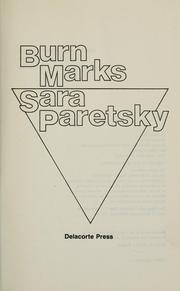
Arson, city politics and an alcoholic aunt V.I. cannot get rid of. The most personal of the early books, and the one that best shows how the family material and the case material are the same material.
The Nineties Peak
IntermediateRead the two long, ambitious novels that close the first phase of the series, then the reset that follows.
▸ Study plan for this stage
Pace: Five to six weeks for about 1,300 pages. These are substantially longer books than the early ones — Tunnel Vision runs to 475 pages — and they are structured more like social novels than like cases. Roughly 30 pages an evening, and expect the first hundred pages of each to move slower than the eight
- Guardian Angel is about the gentrification of V.I.'s own street: elderly neighbours being pushed out, a dead man's dogs, and a financial fraud that runs through her ex-husband's law firm. It is the book where the crime is closest to her front door.
- Tunnel Vision is the most ambitious of the early phase and the longest to that point — a homeless family living in the basement of a building V.I. is investigating, tied to a domestic-violence shelter and to agricultural finance. Paretsky is openly writing a social novel that contains a mystery.
- The scale change is deliberate. From Guardian Angel onward the books carry more subplots, more named characters and more Chicago, and readers who preferred the lean eighties novels usually part company here.
- Tunnel Vision closes the first phase of the series. There is then a five-year gap before Hard Time, the longest break Paretsky has taken, and the change across it is audible.
- Hard Time is the reset: a new decade, a media conglomerate, and a private prison. V.I. herself ends up inside the system she is investigating, which is the most extreme thing Paretsky has done to her.
- Private incarceration as a business is the subject, and Hard Time is where the series' argument shifts from corporations that harm people incidentally to corporations that profit from harm directly.
- V.I. is now well into middle age and the books say so. Her body, her finances and her tolerance for being hit have all changed, and Hard Time is the book that makes those limits into plot.
- How does Guardian Angel connect the fate of individual elderly neighbours to a financial fraud? What is the mechanism?
- What does Tunnel Vision gain from its extra length, and what does it lose relative to the tighter early books? Be specific rather than general.
- What changes in Hard Time after the five-year publication gap — in V.I.'s circumstances, in the prose, and in the kind of villain Paretsky chooses?
- What is the business model of the private prison in Hard Time, and how does the novel make a financial arrangement feel like violence?
- Across these three, how has V.I.'s relationship with the Chicago police changed since the early books?
- Keep a character list while reading Tunnel Vision. It carries more named figures than any earlier book and the commonest complaint about it is losing track rather than losing interest.
- After Guardian Angel, write a paragraph on what gentrification does to the neighbourhood you marked on your map in stage one. The series has been building that street for ten years specifically so this book can dismantle it.
- Read the first chapter of Indemnity Only again immediately after Hard Time. Seventeen years separate them and the difference in what V.I. can physically do is the clearest evidence of Paretsky's real-time ageing.
- Note where Paretsky gives a chapter to a non-V.I. perspective or a document. The later books widen out this way, and recognising the device makes the length feel structural rather than baggy.
- Decide at the end of this stage how much more you want. This is a natural stopping point, and choosing to continue deliberately is better than drifting into a twenty-book commitment.
Next up: Hard Time restarts the series for a new decade with a bruised, older detective, which is exactly the V.I. the twenty-first-century novels are written for.

Gentrification, a dead neighbour and a pension fraud, with Mr Contreras and the dogs fully established. A very Chicago book about what happens when money arrives in a working neighbourhood.

Homelessness, a body in the basement of her own office building, and the flooded freight tunnels under the Loop. The biggest of the early novels and the end of the first movement — Paretsky then took five years off from the character.
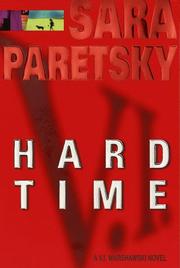
The return, and effectively a second first book: private prisons, media conglomerates, and V.I. herself incarcerated. If you want to start later than 1982, this is the only other defensible entry point.
The Modern Run, and Where to Stop
IntermediateTake the strongest of the later novels and stop deliberately, rather than working through all twenty-plus.
▸ Study plan for this stage
Pace: Six to seven weeks for about 1,900 pages. These are the longest books in the series — Fire Sale runs past 500 pages — and there is a decade-long jump between Fire Sale and Brush Back, so leave a real gap before the last one and read it as a late return rather than as the next instalment.
- Total Recall is the one many readers rate highest in the whole series. It braids Holocaust restitution claims, the insurance industry's wartime records and a man claiming recovered memories of being a child survivor — and it finally opens Lotty's own history, which the previous ten books had kept cl
- Because Total Recall is Lotty's book, it repays every page you have spent with her since Indemnity Only. It is the single strongest argument in this series for reading in publication order.
- Blacklist sets the 1950s red scare against post-2001 surveillance law directly, using a house and a family with a history in both. Paretsky is writing about the present through the past and does not hide it.
- Fire Sale returns V.I. to South Chicago, now with the mills gone and a big-box retailer in their place, coaching basketball at her old high school. Read it against Blood Shot: same neighbourhood, twenty years of deindustrialisation later.
- Brush Back, from 2015, goes back to South Chicago again, this time through baseball, an old boyfriend and a conviction V.I. helped secure long ago. It is a late-career book about what her own past looks like from the other side.
- There are more than twenty V.I. novels and this path stops at Brush Back. That is a deliberate cut, not an oversight: the later books are competent and current, but Brush Back closes the South Chicago material that runs from Blood Shot through Fire Sale, which makes it a genuinely shaped ending rath
- If you want more after this, keep going in publication order. The cases stay self-contained; what you gain by continuing is more time with Lotty and Mr Contreras, and what you lose by stopping is nothing structural.
- What does Total Recall reveal about Lotty, and how does it change your reading of her behaviour in the earlier books?
- How does Total Recall handle the recovered-memory claim — does the novel adjudicate it, and where does it leave the reader?
- What parallel is Blacklist drawing between the 1950s and the 2000s, and does the plot support the parallel or merely assert it?
- Set Fire Sale against Blood Shot: what has replaced the industry, who now employs the neighbourhood, and what has stayed the same?
- In Brush Back, what does V.I. discover about a case from her own past, and what does the book conclude about her earlier certainty?
- Having read seventeen of these, what would you say the series is actually about, in a sentence that is not 'a detective solves crimes'?
- Reread Lotty's first substantial scene in Indemnity Only before starting Total Recall. Twenty years of restraint pay off in that book and the contrast is worth setting up.
- Map South Chicago three times — as it appears in Blood Shot, in Fire Sale and in Brush Back. It is a thirty-year portrait of one place and the series' most sustained achievement.
- After Blacklist, note which surveillance provisions the novel describes and check when they were enacted. Paretsky was writing close to the news and the dating sharpens the book.
- Write one page ranking the seventeen books, then look at where the ones you rank highest sit in the run. Most readers find their favourites cluster, which tells them which phase of Paretsky they actually want more of.
- Decide explicitly whether to continue past Brush Back, and write the reason. The later novels exist and are worth reading; what they will not do is give you a better ending than this one.
Next up: This closes the recommended sequence with the South Chicago arc completed — the remaining novels continue V.I.'s working life, but nothing after Brush Back is required to have read the series properly.

Holocaust restitution claims, recovered memory, and the book that finally opens up Lotty Herschel's past. Essential if you have come to care about her, which by now you have.

McCarthyism and the post-9/11 security state braided together across two eras. The most overtly political book in the series and the best of the 2000s run.

Big-box retail, a South Side high school and V.I. coaching basketball where she once played. It closes the loop that Blood Shot opened on her old neighbourhood.

A late high point about a decades-old murder, Chicago ward politics and Wrigley Field. A good final stop — the series continues past it, but the later books are variations rather than developments, and nothing after this changes V.I. much.
Discussion
Keep reading
Paths that share books, cover the same subject, or open a related topic.