Claude Lévi-Strauss imported the method of structural linguistics into anthropology and argued that the human mind everywhere works by the same combinatorial logic. That made him for two decades the most famous intellectual in France, and eventually the figure the discipline defined itself against. The primary work ranges from a beautiful travel memoir to a four-volume analysis of Amerindian myth, so the order you meet it in matters more than usual.
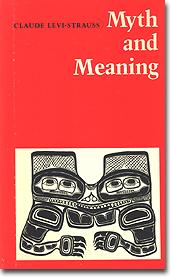
Begin with Myth and meaning, which is genuinely 54 pages: five short radio talks in which he explains his own project in plain spoken language, unlike anything else he wrote. It is primary text that reads like an introduction. Then Edmund Leach's short study, catalogued under the bare title Levi-Strauss — 130 pages by a British social anthropologist who admired the method, used it, and was sharply sceptical of its more sweeping claims, written at the height of the structuralist moment. Patrick Wilcken's Claude Levi-Strauss: The Poet in the Laboratory is the standard modern biography: the Brazilian fieldwork, the wartime exile in New York where structural linguistics reached him, the fame, and the long decline of the programme.
Two catalogue warnings
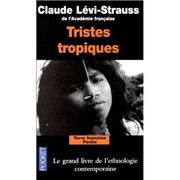
Everything primary here is translated from French, and two of our records need checking before you buy. The way of the masks resolves to a Spanish-language record — the edition is La vía de las máscaras — so confirm the language of what you are ordering. And the record for Tristes Tropiques carries a Chinese translator's name in the author field; that is metadata noise from a translated edition, not a different book.
The memoir and the programme
Tristes Tropiques is the 1955 memoir of fieldwork among the Nambikwara and Bororo, 416 pages, one of the great books of the century in any genre, and it opens by announcing that its author hates travelling. Read it for the sensibility rather than the theory. Introduction to the Work of Marcel Mauss is a 104-page essay reinterpreting Mauss's theory of gift exchange as an unconscious structure rather than a conscious practice — the clearest statement of what Lévi-Strauss thought he was adding to the French tradition, and the concept the kinship work runs on.
Structural anthropology is the programmatic essay collection, 410 pages, including the famous analysis of the Oedipus myth and the argument for treating kinship terms the way linguists treat phonemes. This is where the method is actually stated. A second collection, Structural Anthropology Volume Two, appeared later and is not on this list.
Kinship, totemism and the savage mind
The elementary structures of kinship is the vast doctoral thesis arguing that the incest prohibition is the rule that forces exchange between groups, making kinship a system of communication. It is technical and long — our record carries no page count — and it is the foundation of his professional reputation as opposed to his public one. Read it selectively.
Totemism, 132 pages, dissolves totemism as a category: what looked like primitive mysticism is a system for thinking about difference. It is the compact rehearsal for The savage mind, and should be read immediately before it. The savage mind is the central theoretical work — the science of the concrete, bricolage, and the claim that so-called primitive thought is as rigorous as scientific thought and differently applied. Its final chapter is a direct assault on Sartre's Critique of Dialectical Reason, denying that historical consciousness gives the West any privileged standpoint, and that quarrel is the one most worth having read.
The mythologies
The raw and the cooked is the first volume of Mythologiques, opening from a single Bororo myth and moving by transformation across hundreds of others, structured deliberately like a piece of music. It is overwhelming by design; read the overture and the first movement carefully rather than trying to finish it. Only that one volume of the four is on this list, so the project as a whole remains beyond what our catalogue covers here.
The way of the masks is the far more contained late study of Northwest Coast masks, where a mask's meaning depends on the neighbouring masks it inverts — the best demonstration of the transformational method at a scale you can hold in mind, subject to the language check above. Close with The story of Lynx, 276 pages on Amerindian myths of twinship and asymmetry, ending on the arrival of Europeans: the mature method used lightly, by an author with nothing left to prove.
Critics eventually concluded that the myth analyses could never be falsified, and that objection is worth carrying with you rather than resolving in advance. The staged sequence, with a plan for each stage, is at /paths/pt_ai_understanding-claude-levi-strauss.