Umberto Eco: Which Book to Read First and What Comes Next
Eco was a professor of semiotics who started writing novels at forty-eight, and the order you meet him in matters more than for almost any other novelist: readers who begin with Foucault's Pendulum usually stop there. The path opens with The Name of the Rose, which is a monastery murder mystery before it is anything else, then takes the two later historical novels that use the same trick, saves the difficult conspiracy novel for when you have the vocabulary, and closes with the non-fiction — including a short book on writing a dissertation that has become an unlikely classic.
Start Here: The Name of the Rose
BeginnerRead the one Eco novel that works completely as genre fiction, and learn to let the medieval theology wash past you on a first reading rather than fighting it.
▸ Study plan for this stage
Pace: Three to four weeks for the novel at 30-40 pages a day, then a single evening for the Postscript. The novel's first hundred pages are the slowest — Eco said so himself — so plan to push through the abbey description and the Adso-and-William introductions rather than rationing them.
- The locked-room structure underneath: monks die in an order that appears to follow the Apocalypse, and William reasons like a detective while insisting that the pattern he sees may be his own invention
- The library as the book's real antagonist — a labyrinth organised so that nobody can find what they are not meant to find
- The Franciscan poverty controversy and the Avignon papacy, which are genuine fourteenth-century politics and which Eco does not simplify; let them wash past on a first reading
- Aristotle's lost book on comedy as the object of the plot, and laughter as the thing the abbey's authority cannot survive
- Adso as an old man remembering his youth — every judgement in the book is delivered twice, by the boy and by the monk he became
- The Postscript's account of the hundred-page 'penance': Eco's claim that the slow opening deliberately selects its readers
- Semiotics arriving in disguise — signs that are read correctly and lead to the wrong conclusion, which is the argument the whole novel makes
- William solves the murders and is wrong about why they happened. What exactly was he wrong about, and what does the novel want you to take from that?
- What does the abbey stand to lose if the second book of Aristotle's Poetics survives? Answer in the terms Jorge gives, not in modern ones.
- Why does Eco open with a hundred pages of architecture and theology, and does the Postscript's justification convince you?
- How does the frame — an old Adso writing about a young Adso — change what you can trust in the account?
- Which of the theological disputes turned out to matter to the plot, and which were genuinely scenery? Name one of each.
- Read the novel first without looking anything up, then reread only the pages where you were lost, this time checking the Franciscan and Avignon references. The difference between the two readings is the book's design.
- Write a 200-word summary of William's method of reasoning, using two specific deductions from the text. Then find the passage where he disavows it.
- After finishing, read the Postscript in one sitting and mark every claim Eco makes about the novel that you would dispute from your own reading. Published in Britain as Reflections on The Name of the Rose, it is the same short essay.
- Draw the abbey's library plan from the text alone before William works it out. Getting it wrong is the intended experience.
Next up: You now know Eco's basic move — a period setting, a document that may be a forgery, and a narrator recalling his own younger credulity — which is the machinery the next two novels run again at higher speed.

The only correct starting point. A Franciscan and his novice investigate deaths in a fourteenth-century abbey, and everything Eco cares about — signs, libraries, the danger of certainty — arrives smuggled inside a locked-room mystery. Skip nothing, but do not stop to look things up.
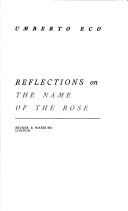
A short essay in which Eco explains what he was doing and why the novel opens with a hundred pages designed to repel the wrong readers. Published in Britain as Reflections on The Name of the Rose. Read it immediately after the novel, not before.
The Historical Novels
IntermediateTake the two later novels that reuse the Name of the Rose formula — a period setting, a forged document, a narrator who cannot be trusted — and watch Eco's real subject emerge: how lies become history.
▸ Study plan for this stage
Pace: Eight to ten weeks for all three, or six if you skip The Island of the Day Before on a first pass. Baudolino is the fastest of the three and can carry 40 pages a day. The Prague Cemetery is shorter but harder going for reasons of content rather than difficulty; give it three weeks and do not read it
- The invented document as Eco's recurring engine: Prester John's letter in Baudolino, the Protocols in The Prague Cemetery, both fabrications that go on to shape real history
- Baudolino's comic register — a self-confessed liar narrating his own life, so that the reader cannot separate the account from the lying it describes
- The Prague Cemetery's structural choice: Simonini is the only invented character in a book otherwise populated by real people, which puts the burden of fiction on the forger alone
- How a forgery accretes authority — copied, translated, cited, believed — which is the process both novels dramatise rather than assert
- Frederick Barbarossa's court and the Fourth Crusade as the historical spine of Baudolino, used accurately even where the narrator is not
- The Island of the Day Before's baroque conceit: a ship, a date line, and a narrator writing a romance he cannot live, with almost no incident at all
- The escalation across the stage from harmless invention to lethal invention, which is the reason for this reading order
- Baudolino admits he lies. Which parts of his narration do you nonetheless believe, and on what grounds?
- The Prague Cemetery is deliberately repellent. What does Eco gain by making his forger loathsome rather than seductive, and what does he lose?
- Trace how one fabricated document in these novels acquires believers. What are the steps, and are they the same in both books?
- Why does Eco put every real historical figure alongside a single invented protagonist in The Prague Cemetery? What would change if Simonini were real?
- Is The Island of the Day Before a novel at all, on your reading, or an extended essay with a castaway in it? Argue from its structure.
- List every claim Baudolino makes about himself that the novel later confirms or contradicts. The list is short, and it is the whole joke.
- Write 300 words on how The Prague Cemetery depicts the fabrication of the Protocols without endorsing any account of them, citing two specific scenes.
- Compare the opening chapter of Baudolino with the opening of The Name of the Rose side by side, and note in writing what Eco changed about how he introduces a narrator.
- If you read The Island of the Day Before, pick one chapter and rewrite its events as a plot summary in five sentences. The difficulty of the exercise is the point of the book.
Next up: Having watched invented documents acquire believers across three centuries of setting, you have the vocabulary the conspiracy novel assumes — which is precisely the vocabulary readers who start with it do not have.
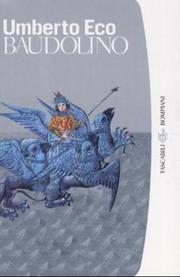
The most enjoyable of the later novels and the right third book. A peasant liar attaches himself to Frederick Barbarossa and invents, among other things, the kingdom of Prester John. Comic where The Name of the Rose is austere.
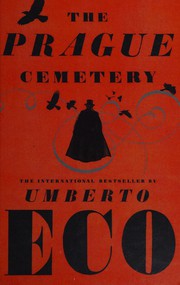
The forger's novel: a nineteenth-century document-faker whose greatest work is the Protocols of the Elders of Zion. Deliberately repellent — its protagonist is the only wholly invented character in a book otherwise populated by real people. Read after Baudolino, whose harmless lying it turns lethal.
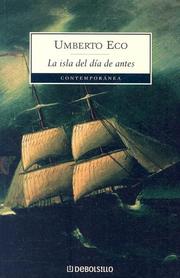
A shipwrecked seventeenth-century nobleman on an abandoned ship near the international date line. The most static and most beautiful of the novels, and easily skipped — place it here if you want the whole run, later if you want the plots.
The Hard One, and What Comes After It
IntermediateTake on the conspiracy novel that defeats most readers who start with it, and see the late, slighter fiction that returns to the same theme at a fraction of the weight.
▸ Study plan for this stage
Pace: Ten to twelve weeks. Foucault's Pendulum alone deserves six to eight at 20-25 pages a day — it is dense with hermetic material and rewards a steady quota over a sprint. The Mysterious Flame of Queen Loana and Numero Zero are both quick, two to three weeks between them, and are best read straight aft
- The Plan: three editors assemble a conspiracy from the manuscripts of cranks as an intellectual game, and the game is believed by people who do not know it is one
- Eco's target is not occultism but the habit of connective interpretation — the conviction that everything must mean something and that no coincidence is innocent
- Diabolicals as the novel's specific satirical object: the readers who send in the manuscripts, and who are indistinguishable from the editors except in self-awareness
- The Templars, Rosicrucians and hermetic tradition treated as real historical material used wrongly, rather than as invented nonsense
- Casaubon's retrospective narration — the whole novel is told from inside a hiding place, so you are reading a confession about the consequences
- Queen Loana's method: identity reconstructed from pulp comics and magazines of a fascist childhood, with the source artwork reproduced on the page
- Numero Zero as the same thesis in miniature and in a lower key — a newspaper inventing scandals it will never print
- At what point in Foucault's Pendulum does the Plan stop being a joke? Locate the passage and say what changed.
- Eco satirises interpretive over-reading in a novel that demands enormous interpretive effort from its reader. Is that a contradiction or the design?
- Why does the novel need Casaubon to narrate from hiding rather than in sequence?
- Queen Loana rebuilds a self out of the popular culture of a fascist childhood. What is Eco claiming about memory, and how does it connect to the strange documents of the earlier novels?
- Numero Zero is widely judged minor. Read alongside Foucault's Pendulum, what does it add that the earlier book does not already say?
- Keep a running note of every real historical group Foucault's Pendulum invokes, and check afterwards which ones existed. You will find almost all of them did, which is the unsettling part.
- Write the Plan out as a linear summary of a page or less. Doing so is the fastest way to feel how it works, and the fact that you can do it is the novel's warning.
- After finishing, reread the first chapter of Foucault's Pendulum. It is a different scene once you know where Casaubon is and why. Note that our catalogue's record for this novel carries a mangled bookseller string as its title; the book is the standard English translation.
- For Queen Loana, list the reproduced items you recognised and those you did not, then write two sentences on how the unfamiliar ones affected your reading.
Next up: You have now seen the fiction argue that interpretation can run away with its interpreter, which is exactly what the essays and lectures argue directly and with far less mischief.
Three Milanese editors invent a conspiracy theory as a joke and are believed. The best novel here and the one that ruins Eco for people who read it first, because it assumes fluency in exactly the hermetic material it is satirising. Note that our catalogue's record for this book carries a mangled listing title — it is the right novel.

An amnesiac bookseller reconstructs himself from the comics and pulp of a fascist childhood, with the original artwork reproduced. The most personal book he wrote, and it works as relief after Foucault's Pendulum.
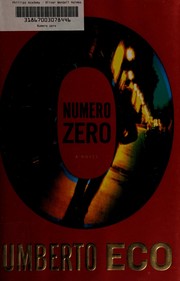
His last novel: a newspaper that will never be published, staffed by journalists inventing scandals. Short, sour and minor, but a direct descendant of Foucault's Pendulum written thirty years on and worth reading as its coda.
Eco the Essayist and Teacher
IntermediateMeet the working academic behind the fiction, and pick up the two books of his that are genuinely useful to have read regardless of whether you care about the novels.
▸ Study plan for this stage
Pace: Five to six weeks. How to Write a Thesis is short and should be read actively, with a notebook, over about a week. Six Walks in the Fictional Woods is six lectures and works beautifully at one lecture per sitting. Travels in Hyperreality is a collection and can be read in any order across a couple o
- Eco's research method in How to Write a Thesis: choosing a topic narrow enough to finish, building a bibliography before an argument, and the index-card system that predates and survives every software replacement for it
- The distinction he insists on between a thesis that says something small and true and one that gestures at something large and unfinished
- The model reader in Six Walks — the reader a text presupposes, as opposed to the person actually holding it
- Inferential walks: what a reader is licensed to guess about what happens off the page, and how a narrative controls that
- Fictional time versus reading time, and Eco's demonstration of how narrative pace is manufactured rather than reported
- Hyperreality as the copy that is more satisfying than the original — wax museums, reconstructed castles, the American appetite for the medieval
- The continuity between the essays and the novels: the Norton Lectures double as commentary on his own books, which he cheerfully admits
- What is Eco's test for a workable thesis topic, and would your own most recent piece of long writing have passed it?
- How does Six Walks define the model reader, and who is the model reader of Foucault's Pendulum on that definition?
- Eco's advice on note-taking was written for a pre-digital undergraduate. Which parts genuinely do not transfer, and which only look outdated?
- In Travels in Hyperreality, what makes a reconstruction more compelling than the thing reconstructed? Give his answer and then your own.
- Where do the lectures explain something about his novels that the novels themselves conceal?
- Apply Eco's topic test to a real question you would like to write about: narrow it three times in writing until it passes. This is the exercise the book is actually for.
- Build a working bibliography of fifteen items on any subject using his rules for what counts as a source, and note where you were tempted to cheat.
- For one of the six lectures, write a 200-word summary of its central claim and then apply it to a novel from the earlier stages. The lecture on inferential walks and Foucault's Pendulum is the obvious pairing.
- Pick three essays from the hyperreality collection and identify a present-day example of each phenomenon he describes. Note that our catalogue lists this one under an edition string; it is the essay collection on American simulacra.
Next up: With the theory stated plainly, the final volumes stop being arguments at all and become what they are — a scholar handing you his library and telling you what he noticed in it.

Written in 1977 for Italian undergraduates and now, improbably, one of the best books in print on research, note-taking and finishing a long piece of work. Almost none of it is out of date. Genuinely useful even if you never write a thesis.

The Norton Lectures, on how readers move through narrative and what an author can assume. The most accessible route into his semiotics, and it doubles as commentary on his own novels.
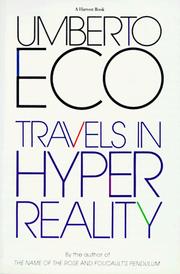
Essays on American simulacra, wax museums and medieval nostalgia, written for newspapers. The place where the theorist is funniest and least guarded.
The Illustrated Anthologies
IntermediateFinish with the late compendium volumes, which are the closest thing to Eco simply showing you his library.
▸ Study plan for this stage
Pace: Six to eight weeks, but these are the wrong books to read straight through. Twenty or thirty pages per sitting, browsing rather than advancing — each volume is an anthology of primary texts with Eco's commentary between them, so the reading rate is set by how long you look at the images.
- The anthology form itself: Eco selects and introduces rather than argues, so his position appears in what he chose to place next to what
- History of Beauty's structure by period and by category, and its implicit claim that beauty has been surprisingly consistent in what it excludes
- On Ugliness as the deliberate answer volume, and its finding that ugliness has far more variety and far more energy than its counterpart
- Juxtaposition as method — a Renaissance text beside a modern image, with the argument left for the reader to make
- The Infinity of Lists on enumeration as a form, from Homer's catalogue of ships to modern collections, and why a list can convey the uncountable where description cannot
- The library as Eco's lifelong subject, arriving here undisguised after four decades of being smuggled into fiction
- Why these are browsing books: the commentary is short and the primary texts do the work, which is the opposite of how the essays operate
- What does Eco's selection in History of Beauty exclude, and what does the exclusion suggest about the concept?
- On Ugliness is generally judged the better book. From your reading, is that because ugliness is a richer subject or because Eco is a better editor of it?
- In The Infinity of Lists, what can a list do that a description cannot? Give his answer and test it against Homer's ships.
- These volumes make their arguments by juxtaposition. Find one pairing that changed your reading of both items, and say how.
- Having finished the path, what is the through-line from the abbey library in The Name of the Rose to a book about lists? State it in two sentences.
- Pick any twenty-page span of On Ugliness and write down the argument the sequence makes without using Eco's commentary. Then read the commentary and compare.
- Assemble your own five-item list on a theme in the manner of The Infinity of Lists, with one sentence of commentary each. The difficulty of choosing is the lesson.
- Read the equivalent chapter of History of Beauty and On Ugliness on the same period side by side, and note in writing where they contradict each other.
- Return to the description of the abbey library in The Name of the Rose and read it against these three volumes. Write 300 words on what Eco had been doing with libraries all along.
Next up: This is the end of the path. The obvious next move is a reread of Foucault's Pendulum, which is a genuinely different novel once you have read the semiotics it is arguing with.
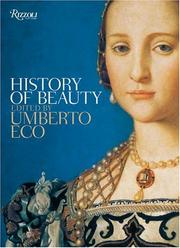
An anthology of Western texts and images on beauty, edited and introduced by Eco. Not an argument so much as a curated collection, and best used as a browsing book rather than read straight through.
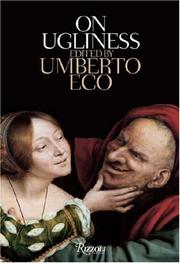
The companion volume, and the better one — ugliness turns out to have far more variety than beauty. Read it after History of Beauty, which it was designed to answer.
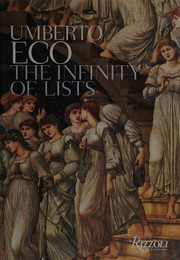
The last of the three illustrated volumes, on catalogues and enumeration from Homer's ships onward. A fitting final stop for a writer whose great subject was the library.