Start with The Name of the Rose (Helen and Kurt Wolff Books) — the catalogue record carries the imprint, the book is published as The Name of the Rose. A murder mystery in a fourteenth-century monastery, it is a genuine page-turner that happens to be built out of medieval theology and semiotics. Eco's own bet was that readers would enjoy being trusted with difficulty, and he was right.
Then read Postscript to the Name of the Rose, a short essay in which he explains what he was doing and why he opened with a hundred pages designed to filter out readers who did not want to work. It is the best short introduction to how his mind operates.
The novels, in the order that works
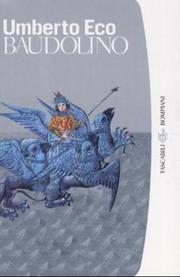
Baudolino is the most fun — a compulsive liar's account of the Fourth Crusade and the search for Prester John, in which nothing he says can be trusted. The Prague cemetery is a novel about the forgery of the Protocols of the Elders of Zion, narrated by a thoroughly repellent protagonist; it drew criticism on publication for how comfortably it inhabits that voice, and that objection is worth knowing about rather than dismissing.
The Island of the Day Before is a seventeenth-century shipwreck novel and the most conventionally beautiful thing he wrote.
Then Foucault's Pendulum, which is the one to approach carefully. Three editors invent a conspiracy theory as a private joke and are gradually consumed by people who take it seriously — a novel that anticipated the internet-conspiracy age by decades. It is also dense with occult and historical material, and it is where most abandoned Eco projects stall. Read it fifth, not first.
The Mysterious Flame of Queen Loana uses comics and sheet music and pulp covers as illustrations, and Numero Zero is a short late satire on journalism.
The non-fiction, which is where he lived
Eco was a professor for far longer than he was a novelist. How to Write a Thesis is a genuinely useful and very funny guide, written in 1977 for Italian undergraduates, and readable now by anyone who has to organise a large piece of research. Six Walks in the Fictional Woods is his Harvard lecture series on how readers actually move through narrative — the best entry to his critical thinking.
Travels in Hyperreality (Harvest Book) collects essays on American simulation and the medieval present. History Of Beauty, On Ugliness and The infinity of lists are the large illustrated volumes he assembled late in life — anthologies of image and text on a single idea, closer to a curated exhibition than a book.
Where to stop
The Name of the Rose, the Postscript, Baudolino and Six Walks in the Fictional Woods is a complete and enjoyable Eco. Add Foucault's Pendulum when you want the difficult one. The illustrated volumes are for browsing rather than reading through, and they are expensive — libraries are the sensible route.
One practical caution: Eco was translated by several hands over four decades and the quality is uneven. William Weaver, who did most of the early novels, is the benchmark.
Follow the full ordered path here: Umberto Eco: Which Book to Read First and What Comes Next.
Ready to learn something deeply?
Build a reading path — free