Treehouse Building: The Best Books to Read, in Order
Everything difficult about a treehouse comes from the fact that the foundation is alive: it sways, it grows, it adds a ring of wood every year, and it will reject a structure bolted rigidly to it. This path starts with small backyard builds where a mistake costs a weekend, moves to the attachment hardware and framing that let a full-size structure move with its host tree, and ends with design — what other people have built, and what a treehouse is for once it stops being a platform with a ladder.
A first platform
BeginnerAssess a host tree for species, health, trunk diameter and lean, then build a small braced platform with safe access and railings — and know why you never nail a beam across two trees that move independently
▸ Study plan for this stage
Pace: One or two building seasons, not a reading schedule — the books are short and the work is not. What this stage assumes before you buy anything: a suitable tree on land you control, ordinary carpentry tools plus a circular saw and a good drill, a ladder, at least one other person for anything overhea
- Assessing a host tree for species, health, trunk diameter and lean before any design work
- Why you never fix a rigid beam across two trees that move independently
- Post support as a legitimate answer rather than a failure, and when to choose it
- Bracing a small platform against lateral load
- Railing height, spacing and ladder or stair geometry as safety specifications
- Working at height with a second person, and what you will not attempt alone
- What species and what trunk diameter is your tree, and is it healthy enough to carry a structure?
- What happens to a beam fixed rigidly between two trees in a wind, and what is the alternative?
- Which parts of your site argue for post support instead of full tree support?
- What railing height and baluster spacing will you use, and where does that number come from?
- What is your access — ladder, stair or rope — and what happens if someone comes down it in a hurry?
- Walk your site and write a one-page assessment of every candidate tree — species, diameter, lean, visible defects — before drawing anything.
- Build one small braced platform low to the ground and load it deliberately, then look at every connection.
- Draw the access and railings to Schmidt's dimensions and check them against the platform you actually built.
- Leave the platform through a full season and inspect every fixing afterwards; note what moved.
Next up: Everything so far treated the tree as a fixed point; the next stage treats it as the living thing it is.
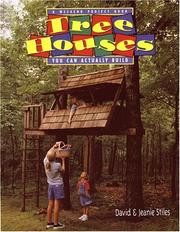
Catalogued as Tree houses you can actually build. The Stileses are the best writers on the small end of this: hand-drawn plans, ordinary lumber, and a realistic scope for one person and a weekend. Start here so your first structure is one you can afford to get wrong.
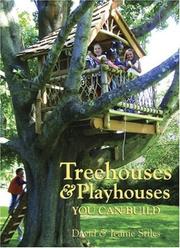
The later and broader Stiles book, including ground-supported playhouses — which matters, because for many sites the honest answer is that a partly post-supported structure is safer than a fully tree-borne one. Read it second for that comparison.

Catalogued as Black & Decker the complete guide to treehouses. The most conventional construction manual of the three — step-by-step photography, real dimensioned drawings, and proper coverage of railings, ladders and fall protection. Use it as the how-to reference while the Stiles books supply the judgement.
The tree itself
IntermediateJudge a host tree the way an arborist would — species strength, decay, included bark, root condition, growth rate — and be able to get up into the canopy safely to inspect and to work
▸ Study plan for this stage
Pace: Two to three months, and the two books are enormously unequal — 753 pages, of which 674 belong to a professional textbook. Richard W. Harris, James R. Clark and Nelda P. Matheny's Arboriculture (674 pages) is a university and industry reference on tree biology, structure, decay and response to wound
- Compartmentalisation: how a tree responds to a wound, and why it does not heal
- Decay detection — cavities, fungal fruiting bodies, included bark, poor unions
- Root condition and soil disturbance as the commonest hidden defect
- Growth rate and diameter increment, which is the reason a rigid fixing eventually fails
- Load and lever arm on a stem, and where a structure should sit relative to a union
- Climbing systems, anchor selection and inspecting the tree from within the canopy
- What does a tree do when you bore a hole through it, and how does that constrain your fixing choices?
- How much will your host tree grow in diameter over ten years, and what does the structure have to allow for?
- Which visible signs would make you reject a tree outright?
- Where on a stem should a load be placed relative to a branch union, and why?
- What climbing anchor would you choose in your tree, and what would make it unacceptable?
- Inspect your host tree from the ground using Harris's defect list, then climb it and inspect the same features from within the canopy.
- Measure the trunk diameter now and mark it, so the growth allowance in your design is based on your tree rather than a table.
- Practise ascending and descending with a competent partner before doing any work aloft.
- Write a rejection note for one tree you were considering, stating the arboricultural reason.
Next up: With the tree understood as a growing, moving structure, the hardware that lets a building sit on it finally makes sense.
Published as Arboriculture: Integrated Management of Landscape Trees, Shrubs and Vines, and the professional reference on tree biology, structure, decay and response to wounding. The book that tells you what a bolt through a trunk actually does to the tree, which no treehouse book covers properly.

Catalogued as The tree climber's companion. Rope, saddle, knots and climbing technique for working aloft, written for arborists. Placed here because the assessment in the previous book has to be done from up in the canopy, not from the lawn.
Attachment, framing and a full-size structure
IntermediateSpecify a treehouse attachment bolt and a sliding or floating bracket correctly, size beams for the load, allow for sway and for decades of trunk growth, and understand where local permits and setbacks actually apply
▸ Study plan for this stage
Pace: A full building season and probably two. Pete Nelson's Be In A Treehouse Design Construction Inspiration has no page count recorded and is the key book of this path: the most current and most technical of his books, and the one that explains treehouse attachment bolts and floating brackets properly.
- The treehouse attachment bolt: how load is carried into the stem and why the boss stands off the bark
- Floating and sliding brackets that let the tree sway and grow while the beam stays put
- Sizing beams and joists for the span and the load, including snow and occupancy
- Designing for sway: two trees moving differently, and what the connection must permit
- Decades of diameter growth as a dimension in the design, not an afterthought
- Permits, setbacks and where a treehouse becomes a structure in the eyes of a local authority
- How does an attachment bolt transfer load into the stem, and what determines how many you need?
- What must a floating bracket allow to move, in which direction, and by how much?
- What span and load are your beams carrying, and where did the sizing come from?
- How much clearance does your design leave for ten and twenty years of trunk growth?
- Does your build need a permit where you live, and what would trigger one?
- Draw your structure in plan and section with every attachment point marked, and state for each whether it is fixed or floating.
- Call or write to your local planning office and get an answer on permits in writing before you order hardware.
- Specify beam sizes for your spans from a span table, then check the figure against Nelson's built examples.
- Model the sway: push each host tree by hand and observe how far and in which direction the connection would have to travel.
Next up: With a structure that can stand for decades, the last stage asks what it should be — and shows what other people have already solved.
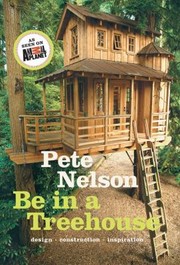
Catalogued as Be In A Treehouse Design Construction Inspiration. The most current and most technical of Nelson's books, and the one that explains treehouse attachment bolts and floating brackets properly — the hardware that made large treehouses structurally honest. This is the key book of the path.

Catalogued as Home tree home. Nelson's practical construction volume with Gerry Hadden, covering platform framing, bracing and access on real builds. Older than Be in a Treehouse and still the better narrative of how a build actually proceeds day to day.
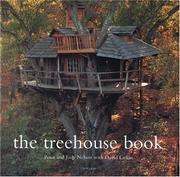
A survey of built treehouses with enough construction detail to be useful, and the volume that best shows the range of attachment solutions people have used on awkward trees. Read it for the problem-solving rather than for a method.
Design, and what has been built
IntermediateDesign a treehouse for how it will be used — light, weather, seasons, privacy, the view from below as well as from inside — and draw on the international body of built work rather than repeating the standard box on a platform
▸ Study plan for this stage
Pace: Four to six weeks, and 660 pages of which most are photographs — schedule this stage as looking, with one real read at the end. ⚠ Two different books on this path display the title Treehouses: Peter Nelson's (128 pages), his first book and the one that started the modern revival, and Paula Henderson
- Designing for use — light, weather, seasons, privacy — rather than for a photograph
- The view from below as part of the design, since a treehouse is looked at as much as looked out of
- Weathering: roof, drainage and the fact that a structure in a canopy is wetter and dirtier than a shed
- The treehouse as a building type with a documented history, which is Henderson's contribution
- Access and egress as design elements rather than afterthoughts
- What a multi-year build actually costs in time, money and revisions
- Which of the built examples solved a sway or access problem your own site has?
- What does Henderson's history show that the modern revival books present as new?
- How will your structure shed water and dry out, and what happens to it in the season you use it least?
- What does Lewis say went wrong on his build, and which of those risks applies to yours?
- Looking at your design from the ground, what does it do to the tree and the garden visually?
- Go through New Treehouses of the World and record ten specific solutions — an access, a joint, a roof, a window — with a note on where each would apply.
- Sketch your treehouse from below and from the house, not only in plan, and revise it on what you see.
- Read Lewis's account of one failure and check whether your design has the same weakness.
- Write a build schedule for your own project with a realistic season-by-season breakdown, then double the time.
Next up: The path ends here: what follows is your own build, an annual inspection of every fixing, and an arborist's eye on the tree that is carrying it.

Nelson's first book, published as Treehouses: The Art and Craft of Living Out on a Limb, and the one that started the modern revival. Note that Paula Henderson's quite different book shares this display title in the catalogue, so check the author.

The largest collection of built examples, from simple platforms to hotels and offices, photographed well. Almost entirely a picture book — read it for the range of solutions to sway, access and weather rather than for instruction.
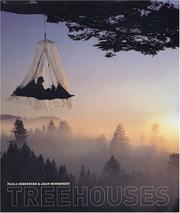
Henderson and Mornement's design and architectural history, and the only book here that treats the treehouse as a building type with a past — from Renaissance garden structures to contemporary architect-designed work. It makes the whole exercise less improvised.
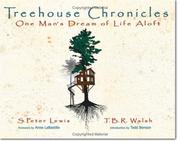
Catalogued as Treehouse chronicles. One man's account of building a single elaborate treehouse in Maine over several years, with drawings and a lot of honesty about what went wrong. The right last book: everything earlier is method, and this is what following the method for four years actually feels like.