Everything difficult about a treehouse follows from one fact: the foundation is alive. It sways in wind, it adds a ring of wood every year, and it will reject a structure bolted rigidly across two trunks that move independently. Start with the small builds, where a mistake costs a weekend, and work up.
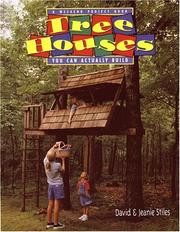
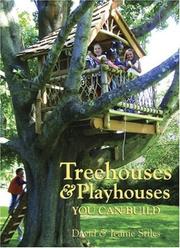
David and Jeanie Stiles are the best writers on that small end. Tree houses you can actually build, 128 pages, gives hand-drawn plans, ordinary lumber and a scope one person can finish. Treehouses and playhouses you can build is the later and broader Stiles book, and it matters for an unglamorous reason: it includes ground-supported playhouses, and for many sites the honest answer is that a partly post-supported structure is safer than a fully tree-borne one. Philip Schmidt's Black & Decker the complete guide to treehouses is the conventional construction manual of the three, with step-by-step photography, dimensioned drawings and proper coverage of railings, ladders and fall protection. Our record carries no page count.
What this first stage assumes you have: standard carpentry tools, a drill that will take long lag screws, a ladder that reaches your working height, and a helper. Nothing here needs specialist hardware.
The tree itself
This is the stage everyone skips, and it is the one that decides whether the build stands. Arboriculture, published as Arboriculture: Integrated Management of Landscape Trees, Shrubs and Vines, is the professional reference on tree biology, structure, decay and response to wounding — 674 pages in our record, and the only book here that tells you what a bolt through a trunk actually does to the tree. No treehouse book covers it properly.
Jeff Jepson's The tree climber's companion is 79 pages on rope, saddle, knots and working aloft, written for arborists. It is here because the assessment in Harris has to be done from up in the canopy, not from the lawn. Assume you will need a climbing rope, a harness and a throwline before this stage is useful, and that the technique takes practice on a low branch first. If you are not willing to buy that gear, hire an arborist for one inspection instead — that is a legitimate route through this stage.
Attachment, framing and a full-size structure
Pete Nelson's Be In A Treehouse Design Construction Inspiration — that is the display title our record carries — is the key book of the whole list. It is his most current and most technical, and it explains treehouse attachment bolts and floating or sliding brackets properly. That hardware is what made large treehouses structurally honest, by letting the tree move and grow while the structure stays put. Our record has no page count. Home tree home, 179 pages, is Nelson's practical construction volume with Gerry Hadden and remains the better narrative of how a build proceeds day to day. The Treehouse Book, 224 pages, is a survey with enough construction detail to be useful, and it shows the widest range of attachment solutions people have improvised on awkward trees.
Assume, from here: engineered attachment hardware bought rather than fabricated, beams sized for real loads, and a conversation with your local planning office. Permit rules vary enormously — some jurisdictions treat a treehouse as an accessory structure with setbacks and height limits, others ignore it entirely — and none of these books can tell you which yours is.
Design, and what has been built
Two different books display as Treehouses in our catalogue, so check the author. Peter Nelson's, 128 pages, published as Treehouses: The Art and Craft of Living Out on a Limb, is the 1994 book that started the modern revival. Paula Henderson's, 176 pages and written with Adam Mornement, is a design and architectural history — the only book here treating the treehouse as a building type with a past, from Renaissance garden structures to architect-designed contemporary work. New Treehouses of the World is the largest collection of built examples and almost entirely a picture book; read it for solutions to sway, access and weather rather than for instruction.
End with Treehouse chronicles, one man's account of building a single elaborate treehouse in Maine over several years, with drawings and a lot of honesty about what went wrong. Everything before it is method; this is what following the method for four years actually feels like.
The full staged sequence, with a plan for each stage, is at /paths/pt_ai_treehouse-building.