Travis McGee Reading Order: Where to Start
John D. MacDonald wrote twenty-one Travis McGee novels between 1964 and 1985, every one titled with a colour so that readers could tell at a glance which ones they had already bought. They are mostly self-contained cases — McGee, who lives on a houseboat in Fort Lauderdale and works as a salvage consultant recovering things the law cannot, takes a job and it goes wrong — so you can technically read them in any order. In practice publication order is right, because the recurring characters accumulate and because MacDonald's prose and his mood both change markedly across two decades. This path takes the essential sequence rather than all twenty-one, and says where to stop.
Start Here: The First Three, Published in One Year
BeginnerMeet McGee, the Busted Flush and the salvage arrangement, in the three books MacDonald wrote back to back to launch the series.
▸ Study plan for this stage
Pace: Two to three weeks for about 550 pages across three short novels. MacDonald wrote all three in 1964 and they read at that speed — most people finish one in two or three evenings. Read them consecutively rather than spacing them out; the point of this stage is to see a formula being assembled in real
- The arrangement: McGee is a salvage consultant. If something was taken from you and the law cannot get it back, he will, and he keeps half. That fee structure is what lets a private detective novel skip the client-and-retainer machinery entirely.
- The Busted Flush is a 52-foot houseboat won at poker, moored at Slip F-18, Bahia Mar, Fort Lauderdale. McGee's stated philosophy — that he is taking his retirement in instalments while young enough to enjoy it — is repeated across all twenty-one books and is the series' organising joke.
- Every title is a colour. MacDonald did that deliberately so readers could see at a glance which ones they already owned, and it makes the series unusually easy to track on a shelf.
- The books are essentially self-contained cases, which is why people say you can read them in any order. Publication order is still right, because the recurring cast accumulates and MacDonald's voice changes markedly across twenty-one years.
- State this plainly before you start: these books are from 1964 and their attitudes to women have dated badly. McGee narrates a running theory about female psychology, sorts women into types, and repeatedly restores a damaged woman to health by sleeping with her. It is presented as compassion and it
- The violence against women is also a structural engine — a woman is hurt, McGee avenges her — and the frequency of it across the run is more striking than any single instance.
- What survives all that is the prose and the rage. MacDonald writes fast, precise, unusually good sentences, and his contempt for what postwar development was doing to Florida is genuine and ahead of its time.
- The Deep Blue Good-By introduces Junior Allen, the template for MacDonald's villains: not a mastermind but a predator with patience, which is far more frightening.
- How does the salvage arrangement change what kinds of stories MacDonald can tell compared with a conventional private eye who takes a daily rate?
- What does McGee mean by taking his retirement in instalments, and how does the series test that position rather than simply endorsing it?
- Where in these three books does the narration make a general claim about women, and how much of the plot rests on that claim being true?
- What makes Junior Allen frightening in a way a more competent criminal would not be?
- By the end of the third book, what has MacDonald settled into a formula and what is he still visibly experimenting with?
- Mark the passages where McGee stops the plot to deliver a paragraph of social diagnosis. They are the series' signature and its most polarising feature; deciding early whether you enjoy them tells you whether twenty-one books is realistic.
- Note every generalisation about women as it appears in the first book. Reading with that tally running is far better than being ambushed by it in book seven, and it lets you separate MacDonald's craft from his period assumptions rather than swallowing both.
- Keep a colour list. It sounds trivial, but with twenty-one similarly titled books it is genuinely how readers track what they have read.
- Compare the opening two pages of The Deep Blue Good-By with those of A Purple Place for Dying. The improvement across one year is visible in the sentences and tells you why the mid-sixties books are the ones people rate.
Next up: You now have McGee, the boat and the salvage premise, which is exactly the point at which MacDonald starts pushing against his own formula and finally gives McGee somebody to talk to.

The first, and the right place to start even though MacDonald is still finding the voice. It establishes the whole premise in one book: a woman has been robbed of something she cannot report, McGee takes half of whatever he recovers, and the man who took it is genuinely frightening.
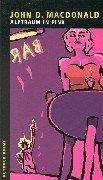
Second, and unusual for taking McGee out of Florida to New York. Read it in order — the series' habit of putting him somewhere he does not belong starts here, and so does the running commentary on American life that becomes his trademark.

Third, set in the Southwest, and the book where the plotting tightens. By the end of these three you will know whether McGee's voice — self-aware, digressive, frequently sententious — is one you want twenty more books of.
The Series at Full Strength
BeginnerRead the mid-sixties run where MacDonald has the formula and starts pushing against it, including the introduction of the series' most important supporting character.
▸ Study plan for this stage
Pace: Four to five weeks for roughly 900 pages. A Deadly Shade of Gold is the outlier at 290 pages and a more sprawling plot than the rest; allow it an extra week and do not treat a slower stretch in the middle of it as a sign you are losing interest in the series.
- Meyer arrives in A Deadly Shade of Gold and changes the books permanently. He is a hairy, gentle, internationally respected economist who lives on a boat two slips down, and he exists so that McGee has someone to be argued with by.
- Meyer's function is corrective. Left alone, McGee's monologues have no opposition; with Meyer aboard, MacDonald can put the cynicism in one mouth and the humane counter-argument in another. The books get better the moment he appears.
- A Deadly Shade of Gold is the longest of the early run and the most conventionally thrillerish, with Mexico, smuggled Aztec gold and a body count. It is also the least tidy, and readers who dislike it usually dislike exactly its sprawl.
- Bright Orange for the Shroud is where the con-artist machinery gets genuinely good — a friend of McGee's has been systematically stripped by a beautiful woman and her partner, and the reconstruction of how it was done is the pleasure of the book.
- Darker Than Amber opens with one of the best first lines in American crime fiction and then delivers MacDonald's most sustained physical menace. It is the one people recommend when they want to prove the series is not just talk.
- The dated sexual politics do not improve in this stretch — if anything the therapeutic-sex pattern is at its most explicit here. It sits alongside genuinely sharp writing about loneliness and damage, and both are the same author at the same time.
- MacDonald's Florida is now fully in view: dredged wetlands, jerry-built condominiums, land speculation. He was writing about ecological destruction in the mid-sixties in a mass-market paperback, and it remains the least dated thing about the books.
- What does Meyer allow MacDonald to do that he could not do with McGee alone? Point to a specific exchange.
- How does the con in Bright Orange for the Shroud actually work, step by step? Reconstructing it is the test of whether MacDonald played fair.
- What is the difference between how the villains in this stage are frightening and how Junior Allen was?
- Where does McGee's stated ethic — he only takes work from people the law has failed — get bent or broken in these four books?
- How does MacDonald's writing about Florida development function inside a thriller? Is it decoration, motive, or both?
- Write down the moment Meyer first appears and then, at the end of the stage, one line on how the books read differently afterwards. It is the clearest before-and-after in the series.
- Take the opening paragraph of Darker Than Amber and work out why it lands: what is withheld, and how many words it takes. It is a small masterclass in a hook.
- Pick one of the therapeutic-sex sequences and articulate what the book thinks it is doing versus what it actually does. Reading these books well means being able to hold both, not choosing one.
- Note each piece of Florida landscape MacDonald describes as being destroyed, and check what is on that site now. It converts the social commentary from period colour into something legible.
Next up: With Meyer in place and the formula fully assembled, MacDonald spends the next four books deliberately breaking it — the cases get sadder, the villains less answerable, and the commentary sharper.

A blackmail case involving a film star, and the first appearance of Meyer, the economist neighbour who becomes McGee's conscience and the reason the later books have anyone to talk to. Effectively required.
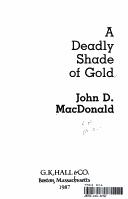
The longest and most ambitious of the early books, reaching back into McGee's past and out to Mexico. This is where the series stops being a paperback series and starts being a body of work.
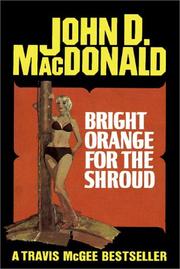
A friend ruined by a land-fraud confidence scheme, and the most sharply plotted of the run. Also the clearest early statement of MacDonald's real subject: what Florida developers were doing to Florida.
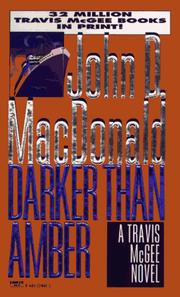
Opens with a woman thrown off a bridge into the water beside McGee's boat, and is the best-known entry point after the first. Read it in sequence, but this is the one to hand to somebody who wants a sample.
The Late Sixties Peak
IntermediateRead the stretch most readers rate highest, where the cases get sadder and the social commentary gets sharper.
▸ Study plan for this stage
Pace: Four to five weeks for about 1,050 pages. These four are longer and slower than the early run and reward being read that way — roughly 25 pages an evening rather than a book a weekend. If you read only one stretch of this series, this is the one.
- This is the run most long-time readers rate highest. The plots are less about recovering an object and more about the damage that made the theft possible, and the endings stop being clean wins.
- One Fearful Yellow Eye takes McGee out of Florida to a Chicago winter, and the change of setting strips away the beach-bum comedy. A dead man's fortune has vanished and the question is what he was being made to pay for.
- Pale Gray for Guilt is the series' most sustained piece of financial anger: a friend is destroyed by a land grab, and McGee's revenge is executed through the stock market rather than through violence. It is the book that best justifies MacDonald's reputation as a novelist who happened to write crime
- The Girl in the Plain Brown Wrapper is the darkest of the four and the one that most severely tests whether you can stay with McGee's attitudes, because its cruelty is specifically directed at women and children.
- A Tan and Sandy Silence is the hinge of the entire series. McGee is directly threatened in a way he has not been before, and it ends with him diminished rather than victorious.
- MacDonald is now openly writing about ageing. McGee is slower, more frightened and more aware that the retirement-in-instalments philosophy has an expiry date, and the books get their weight from that.
- The period attitudes are still fully present. What changes is that MacDonald starts, occasionally, to notice — the books become less certain that McGee's self-image is accurate, which is a different thing from the author disowning it.
- How does moving the story to Chicago in One Fearful Yellow Eye change what McGee can and cannot do?
- Trace the mechanism of the revenge in Pale Gray for Guilt. What exactly does McGee do, and why is it more satisfying than a shootout would have been?
- What happens to McGee in A Tan and Sandy Silence that had never happened before, and how does the narration handle it?
- Is McGee's self-image as a rescuer of damaged women supported or undercut by these four books? Cite where.
- What is the recurring economic crime across this stage, and why does MacDonald find it more disturbing than murder?
- Read the last chapter of A Tan and Sandy Silence twice. It is the tonal turn the last stage depends on, and it is easy to read past at speed.
- Track McGee's physical condition across the four books — injuries, recovery times, what he can no longer do. MacDonald is keeping a quiet ledger and it pays off in The Green Ripper.
- Write a paragraph on Pale Gray for Guilt as an argument about land, then compare it with the Florida passages you noted in the previous stage. This is the same case being built across a decade.
- Decide, at the end of this stage, whether you want the last three or whether stopping here is right for you. Plenty of readers stop at A Tan and Sandy Silence, and it is a defensible place to end.
- If The Girl in the Plain Brown Wrapper is too much, skip it. It is self-contained and nothing later depends on it, and knowing that in advance is more useful than grinding through.
Next up: McGee ends this stage damaged and aware of it, which is precisely the condition the three late books are about — and why they are worth taking instead of working through the whole remaining run.

Chicago in winter, a dead surgeon and a fortune that has vanished. A colder book in every sense, and the one that best shows how far MacDonald could push the formula geographically and tonally.
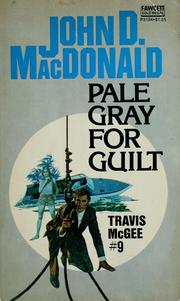
A friend's death and a land grab, answered with an elaborate financial revenge that Meyer engineers. The most satisfying plot mechanics in the series, and unusually angry.
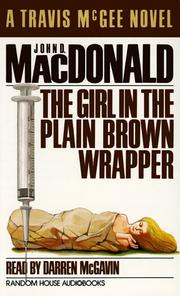
Often named the best of the twenty-one: a suicide that is not one, and a small Florida town closing ranks. Read it in place — it depends on knowing how McGee normally operates in order to show him thoroughly outmatched.
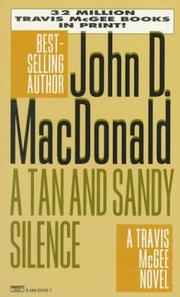
The one that nearly ends the series, and the darkest turn McGee takes. It also marks the shift into the seventies books, which are slower, more reflective and more openly disillusioned.
Where to Stop
IntermediateTake the three late books worth reading and finish the series properly rather than grinding through all twenty-one.
▸ Study plan for this stage
Pace: Three weeks for about 750 pages. Read The Dreadful Lemon Sky and The Green Ripper close together, then leave a gap before The Lonely Silver Rain — it was published six years after the one before it and is best approached as a coda rather than as the next instalment.
- There are twenty-one McGee novels and this path takes fourteen. That is the honest recommendation: the later seventies books — the ones between and around these three — are mostly MacDonald running the formula competently rather than doing anything new, and readers who insist on completeness usually
- The Dreadful Lemon Sky is the strongest of the seventies books: a woman McGee once knew leaves money with him and turns up dead, and the investigation runs on drug money and small-town corruption rather than on a con.
- The Green Ripper is the tonal outlier of the entire series and the one that won MacDonald his mainstream awards. After a personal loss McGee stops being a salvage consultant and becomes something much colder, infiltrating a cult and killing his way through it.
- The Green Ripper only works if you have read the books before it. Its power comes entirely from what McGee had allowed himself to want by then, so it is the single strongest argument against dipping into the series at random.
- The Lonely Silver Rain, published in 1985, is the last book MacDonald wrote before his death and functions as a deliberate close. Its final revelation changes McGee's situation permanently and is clearly intended as an ending rather than a pause.
- Read the ending of The Lonely Silver Rain against the philosophy stated in The Deep Blue Good-By. The twenty-one-year distance between them is the actual subject of the series.
- The dated attitudes persist to the end. McGee is a 1964 character carried into 1985 and MacDonald never revises him; what changes is that the books grow sadder about him, which is not the same as correcting him.
- If you want more after this, go sideways rather than forward: MacDonald's standalone novels, particularly the Florida crime books, are where his reputation as a serious novelist actually rests.
- What has changed in McGee between The Deep Blue Good-By and The Lonely Silver Rain, and what has stubbornly not?
- Why does The Green Ripper require the earlier books, when almost every other McGee novel stands alone?
- What does the ending of The Lonely Silver Rain give McGee, and why is it the right last note for a character built on refusing attachments?
- Having read fourteen of twenty-one, do you think the omitted books would add anything? What would you be reading them for?
- How well do MacDonald's 1960s social diagnoses hold up now — and are the ones about land and money aging differently from the ones about people?
- Reread the retirement-in-instalments passage from the first book immediately before starting The Lonely Silver Rain. The series has been arguing with that paragraph for twenty years.
- After The Green Ripper, write a paragraph on whether MacDonald earned the tonal shift or reached for it. Readers split on this, and having your own answer is the point of reading a long series rather than one book.
- Make a short list of the McGee novels you skipped and decide deliberately whether to go back. Colour titles make this easy, and choosing is better than drifting into completism.
- Write one page on what you would keep and what you would cut if you were recommending this series to someone in the present day. It is the most useful thing you can do with fourteen books of a writer this good and this dated.
Next up: This is the end of the recommended sequence — you have the best of the twenty-one and a proper ending, and anything further is MacDonald's standalone Florida novels rather than more McGee.
The strongest of the seventies novels — a dead courier, a drug-money plot, and a Florida that has finished being ruined. Good evidence that MacDonald had not lost the thread even eleven books later.
The most violent and most divisive book in the series, in which grief turns McGee into something close to an assassin. It won the National Book Award for mystery, and it is unlike everything before it.

The twenty-first and last, published the year before MacDonald died, and a genuine ending — it closes McGee's story on a quiet revelation rather than a case. Stop here; the eight books this path skips are competent but inessential, and none of them ends anything.
Discussion
Keep reading
Paths that share books, cover the same subject, or open a related topic.