Throne of Glass Reading Order: Where to Start
Throne of Glass is eight books, and the only real argument is where to put The Assassin's Blade — the prequel collection of five novellas about Celaena before her arrest. Publication order puts it fourth; a chronological order puts it first. Fourth is the right answer, and this path takes it. The novellas are about a version of Celaena the first three books deliberately withhold from you, and they end on a loss that Heir of Fire spends four hundred pages processing; read them first and you meet a warm, funny teenager before you meet the closed-off assassin, which reverses the reveal the series is built on. The other wrinkle is Tower of Dawn, which happens at the same time as Empire of Storms in a different country — read it straight after, or interleave the two chapter by chapter if you like a project.
Start Here: The Competition
BeginnerMeet Celaena in the glass castle, and get through the two books that read like a fairly conventional YA fantasy before the series changes.
▸ Study plan for this stage
Pace: 3-4 weeks for 880 pages. Throne of Glass is 432 pages and Crown of Midnight 448, and both read quickly once you are in — 40 to 60 pages a sitting is a comfortable pace. Read them back to back with no gap; book one is the slightest in the series and book two is what justifies it, so stopping in betwe
- The setup: Celaena Sardothien, eighteen, the continent's most famous assassin, is pulled out of the Endovier salt mines to compete as Prince Dorian's champion for the post of King's Champion
- The three-corner dynamic of Celaena, Dorian and Chaol, which is the entire emotional engine of these two books and will be dismantled later
- That book one reads like a fairly conventional young adult fantasy and does not resemble the later volumes stylistically — this is normal, it is the book Maas wrote first and youngest, and knowing it going in prevents a lot of premature quitting
- Nehemia Ytger and the political situation in Eyllwe, which is where the series' actual stakes live even while the plot is a tournament
- Wyrdmarks and the magic that has supposedly vanished from the continent, seeded quietly and not paid off until much later
- Celaena's vanity, appetite and love of clothes and books, which readers often mistake for authorial indulgence and which are actually characterisation with a purpose the prequels will make plain
- Book two's sharp step up in craft — tighter intrigue, real consequences, and a final fifty pages that reframe everything about book one
- The reveal at the end of Crown of Midnight, which is the reason this series has the reputation it has, and which cannot be un-spoiled
- What is Celaena hiding about herself, and where in book one can you find the clues once you know to look?
- What does the tournament plot actually accomplish for the series, given how little it matters afterwards?
- Nehemia's role in these two books is political rather than romantic. What is she trying to achieve, and what does she want from Celaena?
- Book two ends by reframing book one. Name three specific scenes from book one that read differently afterwards.
- Chaol and Dorian are both set up as love interests. What is each of them actually being used for structurally?
- Keep a running character list from the start, with allegiance and country. The cast triples by book five and starting the list late is a common regret.
- Sketch a rough map of the continent from the descriptions — Adarlan, Terrasen, Eyllwe, Endovier, Rifthold — and add to it as new places appear.
- Note every reference to magic having disappeared and every unexplained Wyrdmark. Two of these are load-bearing much later.
- After finishing Crown of Midnight, go back and reread the first two chapters of Throne of Glass. Write a paragraph on what you now see in them.
- Write down what you think Celaena wants, in one sentence, before starting book three. Compare it with your answer after book four.
Next up: Book two has told you who Celaena really is; book three is where the series stops being a court intrigue and becomes epic fantasy, and where the prequel collection finally earns its place.
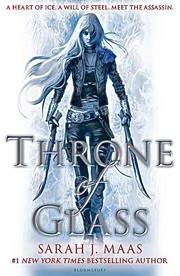
Book one and the only place to begin. An eighteen-year-old assassin is pulled out of a salt mine to compete for the post of King's Champion. It is the slightest book in the series and reads like a different author from the later ones — that is normal, and worth knowing going in.
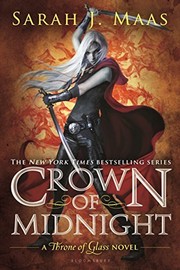
Book two, and a sharp step up. The court intrigue tightens and the last fifty pages deliver the reveal that reframes book one entirely. Second — do not read any summary of this book.
The Turn
IntermediateRead the book where the series becomes epic fantasy, then take the prequel collection at the exact point it does the most work.
▸ Study plan for this stage
Pace: 4-5 weeks for about 1,050 pages. Heir of Fire is 584 pages and is the hardest book in the series to get through in its first third — a new continent, a new cast, and a protagonist who is barely functional. Push through; almost every reader who says the series becomes good says it happened here. Give
- The structural pivot: Heir of Fire abandons the glass castle for Wendlyn, splits the point of view across several storylines, and turns a court thriller into epic fantasy
- Rowan Whitethorn and a relationship built entirely on antagonism and training rather than on attraction, which is a deliberate reset after two books of the Dorian and Chaol triangle
- Manon Blackbeak and the Ironteeth witches, introduced as a wholly separate storyline with no visible connection to the main plot — trust it, because this becomes one of the series' best arcs
- Celaena in pieces: the book spends four hundred pages on grief and refusal, which is why it is slow and why it works
- Why The Assassin's Blade goes fourth and not first: the novellas show a warm, funny, seventeen-year-old Celaena with a mentor, a best friend and a first love, and they end by taking all three away. The first three books deliberately withhold that version of her
- Sam Cortland, and the fact that reading the novellas first means meeting him as a character rather than as an absence, which reverses the reveal the whole series is built on
- Arobynn Hamel and the Assassins' Guild, whose dynamic is only legible as abuse once you have watched the adult Celaena flinch at things you have not seen yet
- That Heir of Fire spends four hundred pages processing a loss the reader has only heard about — and that finishing the novellas immediately after is the moment the ordering justifies itself
- Why does Heir of Fire remove Celaena from every relationship she had in the first two books? What could that story not do with Chaol and Dorian in the room?
- The Manon storyline appears unconnected to anything. What is Maas doing by running it in parallel, and when does the connection first become visible?
- Having read The Assassin's Blade fourth, name three things in books one to three that you now understand differently.
- What would have been lost if you had read the novellas first? Be specific about which reveals depend on the withholding.
- Arobynn's treatment of Celaena is presented without commentary. What is the collection showing you, and how does the adult Celaena's behaviour in books one to three confirm it?
- Rowan is introduced as an antagonist. At what point does the book change register with him, and does it earn the change?
- Before starting the novellas, write down everything you know about Sam Cortland from books one to three. It will be a short list. Reread it after finishing the collection.
- Add the Wendlyn and Ironteeth casts to your character list, with allegiances. It roughly doubles here.
- Write 300 words on Celaena's state at the start of Heir of Fire versus the end. The book is one long recovery arc and tracing it explicitly makes the pacing make sense.
- For each of the five novellas, note in one line what it explains about a scene in an earlier book.
- Reread the last chapter of the final novella and then the first chapter of Heir of Fire back to back. This adjacency is the entire argument for this reading order.
Next up: You now have both halves of the protagonist — the assassin and the girl who preceded her — which is exactly what the next book needs, because it is the one that pays off both.

Book three, and the pivot: a new continent, a new cast, and a protagonist who spends most of the book in pieces. Many readers call it the point the series becomes good.
The five prequel novellas, published fourth and best read fourth. After Heir of Fire you know exactly what was taken from her, so the collection lands as elegy rather than as introduction. Reading it first is the single most common way to spoil this series for yourself.
The War Begins
IntermediateFollow the series into full-scale war and the two-book split that covers two continents at once.
▸ Study plan for this stage
Pace: 6-7 weeks for about 1,375 pages. Queen of Shadows is 672 pages and Empire of Storms 704, and both are considerably denser than the earlier books. Three weeks each, with a short break in between. Do not start Empire of Storms unless you can get to the end of it reasonably promptly — it closes on the
- Queen of Shadows as the payoff volume: it collects Crown of Midnight and The Assassin's Blade at once, which is the strongest practical argument for the ordering this path uses
- Aelin rather than Celaena — the name change is the book's thesis, and the shift from assassin to queen is what the whole series has been building
- The return to Rifthold and the reckoning with Arobynn, which reads as nothing at all if you skipped the novellas and as the culmination of a hundred small moments if you did not
- Chaol's arc in Queen of Shadows, which is the most divisive material in the series and which many readers judge harshly on a first pass
- Lysandra, promoted from a walk-on in the novellas into one of the series' central characters, and the shapeshifting that becomes plot-critical
- The Manon and Ironteeth storyline converging with the main plot, and Manon's slow turn, which is the best-paced character arc Maas has written
- Empire of Storms as the largest and most consequential book: alliances, armies, the Lock and the Wyrdkeys, and the price of the magic system finally being named
- Aelin's habit of withholding her plans from the reader as well as from the cast, which is either the series' cleverest device or its most frustrating depending on the reader
- Queen of Shadows resolves threads from both book two and the novellas. Name three and say which book each came from.
- The name change from Celaena to Aelin is treated as a turning point. What exactly changes, beyond the name?
- Chaol's treatment in Queen of Shadows divides readers sharply. Set out both readings — the one that says the book is fair to him and the one that says it is not — before deciding.
- Manon's arc runs across four books. Identify the specific moment her allegiance genuinely shifts, as opposed to the moment she admits it.
- Aelin withholds her plans from the reader. Where does that produce a satisfying reveal and where does it feel like the book cheating?
- What is the cost of magic as Empire of Storms finally states it, and which earlier book first hinted at it?
- Rebuild your character list as a table before starting Empire of Storms: name, country, allegiance, current location, and what they want. The book assumes you have all of this.
- Draw the map again with armies and territories marked as of the end of Empire of Storms.
- Write half a page on the Arobynn confrontation and on what specifically from The Assassin's Blade makes it land.
- Track Lysandra across the novellas and books five and six, and write a paragraph on how the series rehabilitated a minor antagonist into a lead.
- After the cliffhanger, write down your three predictions for how it resolves. Sealing them before book seven is more entertaining than it sounds.
- Note every plot thread still open at the end of book six. The list is long and it is what the last two books have to close.
Next up: You end mid-catastrophe, and the next book deliberately does not pick it up — which is why the order of the last two matters more than anywhere else in the series.
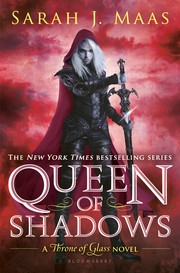
Book five, bringing the scattered cast back together in Rifthold. Fifth: it pays off both Crown of Midnight and The Assassin's Blade, which is the strongest single argument for this ordering.

Book six, the largest and most consequential, ending on the series' hardest cliffhanger. Sixth — and be aware that the next book rewinds rather than continues.
The Finish
IntermediateCover the parallel novel and the finale, and understand why the order of these two is a genuine choice.
▸ Study plan for this stage
Pace: 8-9 weeks for about 1,670 pages. Tower of Dawn is 680 pages and Kingdom of Ash is 987 — the longest book in the series by a wide margin. Give Tower of Dawn three to four weeks and Kingdom of Ash four to five, and do not attempt to sprint the finale; it is long, it is emotionally heavy in sustained b
- Tower of Dawn runs concurrently with Empire of Storms in the southern continent, which is why it feels like a rewind: no time passes relative to the cliffhanger you just read
- Chaol as the point-of-view character, following the reader most likely to have written him off after book five, which is the structural gamble the book is making
- The healing plot at the Torre Cesme and the series' most sustained treatment of disability and recovery, handled at novel length rather than as a subplot
- Yrene Towers, whose connection to the earlier books is the quiet payoff that makes readers reassess the whole detour
- Why skipping Tower of Dawn breaks Kingdom of Ash: roughly a third of the finale depends on characters, alliances and a piece of information established only here
- Kingdom of Ash as a nine-hundred-page convergence that collects threads from all seven previous books, including both prequel novellas
- The opening section of Kingdom of Ash, which is the hardest reading in the series and which several readers find genuinely distressing — know that going in
- That the series ends here, that the ending is emotionally maximalist by design, and that the payoffs are proportional to how carefully you read the early books
- Why does Tower of Dawn rewind rather than continue? What could the finale not do if this material had been folded into Empire of Storms?
- Chaol is the character most readers had written off. Does the book earn his rehabilitation, or does it simply insist on it?
- Name the three things established in Tower of Dawn without which Kingdom of Ash would not work.
- Kingdom of Ash pays off both prequel novellas. Find the two clearest instances and say which novella each comes from.
- Having finished all eight: was reading The Assassin's Blade fourth the right call for you? Argue it from specific scenes rather than from principle.
- Which book do you now think is the best in the series, and which is the one the series could least afford to lose? They may not be the same answer.
- Before starting Kingdom of Ash, write a one-page summary of where every named character stands and what they are trying to do. The book opens at full speed and assumes you know.
- Keep a running list during Kingdom of Ash of every payoff you can trace to a specific earlier book, noting which one. Aim for twenty; there are more.
- If you want the interleaved experience, build the chapter-by-chapter Tower of Dawn and Empire of Storms order from the timeline markers in each book. Do this on a reread, not the first time.
- Write 300 words on Yrene's arc across the two final books and on what it does for the series' treatment of healing versus violence.
- After finishing, reread the first chapter of Throne of Glass. It is a short exercise and it is the single most rewarding thing you can do with the last eight books.
- Write a final page on what the series was actually about, and on which of the eight books you would tell a new reader they can afford to skim. Most readers have an answer and almost none of them agree.
Next up: You finish with all eight books closed and the ordering vindicated — the prequels read as elegy rather than as introduction, and the finale collects everything the first book only hinted at.
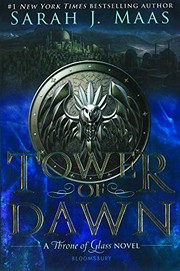
Book seven, running concurrently with Empire of Storms in the southern continent and following Chaol, the character most readers had written off. Read it seventh, straight after Empire of Storms; skipping it makes a third of Kingdom of Ash incomprehensible. Interleaving the two by chapter is a well-known alternative if you want the timelines aligned.

Book eight, nine hundred pages, and the end of everything. Eighth and last — it collects threads from all seven previous books including both prequel novellas, and it is the reason the ordering above matters.
Discussion
Keep reading
Paths that share books, cover the same subject, or open a related topic.