A Court of Thorns and Roses Reading Order: Where to Start
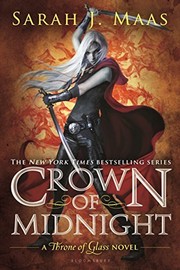
A Court of Thorns and Roses is read in publication order, one through five, and the only thing that trips people is the fourth book: A Court of Frost and Starlight is a short novella rather than a full novel, and because it is numbered 4.1 in some listings readers assume it can be skipped. It cannot, comfortably — it sets up the point-of-view shift that A Court of Silver Flames is built on. Read it in place, between the third and fifth books, and treat it as an interlude rather than an instalment. The other common question is whether Throne of Glass connects: it does not. Same author, entirely separate world, and either can be read first.
Start Here: The Bargain
BeginnerGet through the Beauty and the Beast retelling and into the book that most readers say is where the series actually starts.
▸ Study plan for this stage
Pace: 3-4 weeks for the two books. A Court of Thorns and Roses is around 450 pages and reads quickly once Feyre crosses the wall — a week to ten days. A Court of Mist and Fury is much longer and the one people finish in three days without meaning to; give it two weeks and do not start it on a work night.
- Book one is a Beauty and the Beast retelling with a Tam Lin ending grafted on — a mortal girl taken across a border in payment, a cursed household, a trial to win someone back from a fae queen. Recognising both source tales makes the plot beats feel deliberate rather than familiar
- The wall and the seven courts as the geography everything runs on: Spring, Summer, Autumn, Winter, Dawn, Day and Night, plus the human lands south of the wall. You will want these straight before book three's alliance plot
- Feyre as a first-person narrator who is not reliable about her own feelings — she reports what she is told and what she wants to believe, and book two's reversal depends on you having accepted her framing in book one
- Under the Mountain as the sequence book one is built toward and the sequence book two treats as trauma rather than triumph. The difference between those two treatments is the whole hinge of the series
- Rhysand as the series' central bet: book one presents him as a villain through Feyre's eyes and book two re-reads every one of his book-one appearances. Note his specific scenes as you read book one, because you will be sent back to them
- The mating bond as the series' governing supernatural device — not a romance convention here but a plot mechanism with rules that later books enforce
- That book one is deliberately the slightest instalment. It is setup, and readers who judge the series on it are judging a prologue
- At the end of book one, what do you believe about Tamlin and about Rhysand, and what specific scenes made you believe it? Write the answer down before starting book two
- Which fairy tale is doing the work in each half of book one — where does Beauty and the Beast stop and Tam Lin start?
- After book two, go back to your written answer. Which of Feyre's judgments were wrong, and were you given the evidence to know better at the time?
- What does book two do to the ending of book one — is it a reversal, a reinterpretation, or a retcon? Be specific about which, because readers disagree
- Why does the point-of-view choice matter so much here? What could this story not do if it were narrated in third person?
- Before opening book two, write one paragraph on what you expect the series to be about. Keep it. Nothing else in the path lands the same way if you skip this
- Sketch a map of the seven courts with the wall on it, marking which court Feyre is in during each section of book one. You will keep adding to this through book five
- As you read book two, mark every page where a book-one scene is re-explained. Then reread three of those original scenes in book one. This is the reread the series is built for, and doing it in the moment is better than doing it years later
- Keep a running list of the mating-bond rules as they are stated. They are dealt out gradually and are enforced strictly later
Next up: Book two rebuilds the premise and sets every alliance in place; book three is the war that premise was built for.

Book one and the only starting point. A human huntress kills a faerie and is taken across the wall in payment. It is a fairly straight Beauty and the Beast retelling with a Tam Lin ending, and it is the slightest book in the series — read it as setup.

Book two, and the reason the series has the readership it has: it takes the ending of book one apart and rebuilds the whole premise. Second, and it must follow book one directly — reading it alone means missing the reversal it exists to perform.
The War
BeginnerRead the war novel that closes the original trilogy and resolves Feyre's arc.
▸ Study plan for this stage
Pace: 2-3 weeks for 720 pages. A Court of Wings and Ruin is the longest of the original trilogy and the most plot-dense — 40-50 pages a night gets you through it in a fortnight. It moves in three movements (the return to Spring, the gathering of the courts, the invasion), so if you need to break, break be
- The Spring Court opening as the payoff for book two's reversal: Feyre goes back into a situation you now read completely differently from how she read it in book one, and the tension is entirely dramatic irony
- The high-lords council and the alliance plot, which is why you needed the seven courts straight. Each court's leader is characterised in this book and several of them recur
- Hybern as the external threat that forces the internal politics — the plot device that makes seven mutually hostile courts negotiate on the page
- The Cauldron and the Book of Breathings as the series' escalation from personal stakes to world stakes, and the specific rules attached to each
- The Archeron sisters, Nesta and Elain, moving from background figures to characters with their own trajectories. Watch Nesta closely in this book — her arc is what stages 3 and 4 are for
- That this was written as the end of a trilogy and reads like one: Feyre's arc closes here, and everything after has a different narrator and a different shape
- The cost accounting of the finale — who dies, who is changed, what is unresolved — because the novella in the next stage is entirely about the aftermath
- The Spring Court section works on dramatic irony. Name three scenes that would read completely differently to someone who had skipped book two
- Which high lord is best served by the alliance plot, as a character rather than as a faction? Which is thinnest?
- Feyre's arc concludes here. State in one sentence what she wanted at the start of book one and what she has at the end of book three
- What is left unresolved at the end, and for whom? Make the list — it is the table of contents for the rest of the series
- Nesta ends this book in a very particular state. What has happened to her, and how much of it does the book actually explore?
- Draw the seven courts again and mark, for each, its high lord and where it stands at the end of the war. Compare it to the map you drew in stage 1
- Keep a casualty and consequence list as you read: who dies, who changes form, who owes whom. Book four opens directly onto this list
- Track Nesta's appearances specifically — mark every scene she is in and note how much page time she gets. The count is small, and knowing that going in makes the next stage's shift legible
- Write 200 words on whether the book earns its ending. This is the point where readers most often split on the series, and having your own position written down is worth more than reading anyone else's
Next up: The trilogy is over and the war is won; the next stage is about what that costs the people who won it, and it is where a new protagonist is set up.
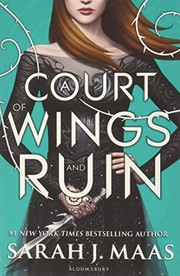
Book three, the invasion, and the end of the trilogy as originally planned. Third: it settles the Hybern plot and every court alliance the later books depend on.
After the War
IntermediateTake the interlude in its proper place and then the first of the new-narrator novels.
▸ Study plan for this stage
Pace: 5-6 weeks. A Court of Frost and Starlight is short — 259 pages, a few evenings — and should be read immediately after book three with no gap, because it is a direct aftermath. Then A Court of Silver Flames is 768 pages and much heavier going emotionally than anything before it; give it three to four
- Frost and Starlight is a novella, not an instalment — set over the Winter Solstice, doing recovery, grief and domestic aftermath rather than plot. Read it with that expectation and it works; read it expecting book four of a five-book series and it will disappoint you
- Why it cannot be skipped despite being numbered 4.1 in some listings: it is where Nesta's condition after the war is established and where the point-of-view shift is prepared. Silver Flames opens as though you have read it
- The genuine post-war material in the novella — Feyre and Rhysand's ordinary life, Cassian and Nesta's estrangement, Elain's drift — which is the series stopping to notice consequences
- Silver Flames switches to Nesta as narrator, and the switch is the point: you have spent four books seeing Nesta through Feyre's eyes, and this book shows you how wrong that view was. The same trick book two played with Rhysand, played again with a sister
- Nesta's subject matter — self-destruction, guilt, and a slow recovery through training and forced routine — handled at length rather than resolved quickly. It is a much darker register than anything earlier
- The House of Wind and the training sequences as the book's structural spine, and the Valkyrie material that gives Nesta something to build rather than only something to survive
- That this is where the reading order currently stops. Sequels have been announced and have not appeared, so book five is the end of the road for now, and it does not end on a cliffhanger of the kind that would make waiting painful
- What does Frost and Starlight establish about Nesta that Silver Flames assumes you know? Name three specifics
- The series has now performed its point-of-view reversal twice — Rhysand in book two, Nesta in book five. What does the repetition tell you about what Maas thinks first-person narration is for?
- Compare how Feyre's trauma is handled in book two with how Nesta's is handled in book five. Which does the series give more room to, and why might that be?
- Silver Flames is the longest and slowest book in the series. Is the pace a flaw or the subject? Argue it either way
- Having finished, go back to Nesta's first appearance in book one. Is she consistent across five books, or has she been retroactively deepened? Be honest — readers split on this
- Reread the Winter Solstice chapters of Frost and Starlight after finishing Silver Flames. The novella changes completely once you know what Nesta was actually doing in it
- Track Nesta's physical routine through Silver Flames — the stairs, the training, the library — and note where the book uses it as a measure of her state. It is the book's most consistent device
- Take the consequence list you built in stage 2 and mark which items the novella and book five resolve, which they deepen, and which they leave alone. What is left is what the announced sequels are for
- Write 300 words on the Rhysand reversal and the Nesta reversal as the same move performed twice. Which worked better on you, and why?
- Reread the scene in book one where Feyre first describes Nesta. Then write a paragraph on how you would describe the same woman after five books
Next up: The series stops here, so the last stage answers the question every reader has at this point: what of Maas's do you read next, and does any of it connect?
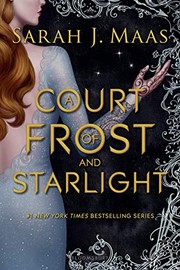
A short novella set over the Winter Solstice after the war, doing recovery rather than plot. Fourth, in place — it is where Nesta's storyline is set up, and skipping it makes the next book's opening feel unearned.

Book five, switching to Nesta as narrator and much darker in subject — trauma, self-destruction and recovery, at seven hundred pages. Fifth and the latest in the series; the sequels announced since have not appeared, so this is where the reading order currently stops.
The Rest of Maas
IntermediateAnswer the two questions every ACOTAR reader asks next, and pick the right one to start.
▸ Study plan for this stage
Pace: Open-ended, and choose rather than read both. Throne of Glass is 432 pages for the first book and eight books total — a long commitment that starts slower than ACOTAR did. House of Earth and Blood is 805 pages for one book and reads faster than its length suggests. If you only want one, read the des
- Throne of Glass is an entirely separate world with no crossover — nothing in ACOTAR requires it and nothing in it requires ACOTAR. Either can be read first, and the two series share only an author
- What Throne of Glass is: an assassin in a competition at a hostile court, opening much lighter than it ends. It is eight books and is widely agreed to take two or three of them to find its shape, which is a real barrier and worth knowing before starting
- The Throne of Glass order question, which trips people the same way ACOTAR's novella does: the prequel novellas are collected separately and there is a live argument about whether to read them before book one or after book three. Most readers who go prequel-first report the main series then opens fl
- House of Earth and Blood is urban fantasy — mobile phones, nightclubs, a modern city — and the tonal distance from the courts is the first thing every ACOTAR reader notices
- Crescent City does eventually touch the other series, which is precisely why it is the right pick now: you have finished ACOTAR, so nothing in it will be spoiled for you
- Its opening is a murder investigation rather than a romance, which makes the first hundred pages feel unlike anything in ACOTAR. Readers who bounce off it usually bounce there
- The general shape of Maas's method, now visible across three series: a protagonist introduced under someone else's framing, a mid-series reversal that re-reads the earlier books, and a supernatural bond used as a plot rule rather than as decoration
- Having read ACOTAR, what do you actually want more of — the courts and the politics, or the reversal structure and the character work? Your answer should decide which series you pick up
- Throne of Glass takes several books to find itself. Knowing that, what would make you commit to eight books, and is it worth it to you?
- Crescent City opens as a murder investigation. How does that change what the romance has to do, compared with book one of ACOTAR?
- What does Maas do the same way in all three openings, and what does she do differently? You have enough now to answer this
- If someone had read only Crescent City, what would they misunderstand about the connection to ACOTAR — and does that argue for reading it now or for waiting?
- Before starting either, write a paragraph on what you are hoping for. Comparing it to what you get after a hundred pages is the fastest way to know whether to continue
- Read the first hundred pages of both Throne of Glass and House of Earth and Blood and then commit to one. The two openings are so different in register that the choice makes itself once you have sampled both
- If you pick Throne of Glass, decide the prequel-novella question up front and write down your decision. Changing your mind partway is what actually spoils it
- Once you are fifty pages into whichever you chose, write 200 words comparing its narrator to Feyre. The comparison is the most useful thing your ACOTAR reading gives you as a reader of the others
Next up: This is the end of the path: you have read A Court of Thorns and Roses in the order it works in, novella included, and know exactly where Maas's other series stand in relation to it.
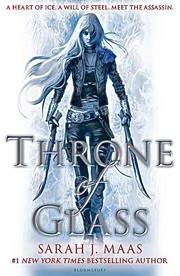
Maas's first series, and a separate world with no crossover — nothing in ACOTAR requires it and nothing in it requires ACOTAR. Start here if you want more of the same author; it is eight books and slower to warm up.
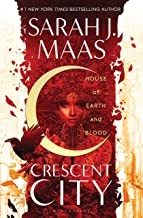
The first Crescent City book: urban fantasy with mobile phones and nightclubs rather than courts. This one does eventually touch the other series, so it is best read after finishing ACOTAR, which is exactly where you are.
Discussion
Keep reading
Paths that share books, cover the same subject, or open a related topic.