Best Books on the Titanic, in Reading Order
This curriculum takes you from a vivid, accessible introduction to the Titanic all the way through rigorous historical scholarship, survivor testimony, official inquiries, and the science of the wreck's discovery. Each stage builds on the last — first establishing the human story and basic facts, then deepening into primary sources and investigative history, and finally reaching the specialist accounts of the underwater expeditions that brought the ship back into the world's consciousness.
Foundations: The Ship, the Night, the Legend
BeginnerGain a confident, accurate overview of the Titanic — her construction, her passengers across all classes, the collision, and the sinking — told in compelling, accessible narrative prose.
▸ Study plan for this stage
Pace: 6–8 weeks total. Weeks 1–4: Read "A Night to Remember and The Night Lives On" (~30–35 pages/day, including re-reading key chapters). Weeks 5–8: Read "TITANIC AN ILLUSTRATED HISTORY" at a slower, more visual pace (~15–20 pages/day), pausing to study photographs, deck plans, and artwork in depth.
- The design, scale, and construction of RMS Titanic — her dimensions, watertight compartment system, and why she was considered 'practically unsinkable'
- The social stratification of Edwardian society as mirrored in First, Second, and Third Class accommodations, survival rates, and passenger experiences
- The sequence of events on the night of April 14–15, 1912 — from the ice warnings received during the day to the collision at 11:40 PM and the sinking at 2:20 AM
- The failures of seamanship, communication, and emergency response: the Californian's inaction, the shortage of lifeboats, the chaotic evacuation, and the role of the Marconi wireless
- Walter Lord's narrative method in 'A Night to Remember' — how he reconstructs the night from survivor testimony to create a minute-by-minute, human-scale account
- 'The Night Lives On' as a revisionist companion — the unresolved controversies Lord returns to decades later, including the Californian question, the ship's break-up, and the conduct of key figures
- Don Lynch's visual history as a documentary layer — how period photographs, Ken Marschall's paintings, deck plans, and artifacts corroborate and deepen Lord's narrative prose
- The birth of the Titanic legend: how the disaster shaped maritime law (SOLAS), lifeboat regulations, and the international ice patrol, and why the story retains its cultural grip
- According to Walter Lord's account in 'A Night to Remember,' what sequence of decisions and circumstances — from the ship's speed to the lookouts' equipment — made the iceberg collision both preventable and almost inevitable?
- How does Lord use 'The Night Lives On' to revise or complicate the conclusions of his earlier book, and which controversy does he find most unresolved?
- Using both Lord's narrative and Lynch's illustrated history, describe the experience of the Titanic disaster from the perspective of each of the three passenger classes — what did they know, when did they know it, and what options did they have?
- What does Don Lynch's visual evidence (deck plans, Marschall's paintings, period photographs) add to your understanding that Lord's prose alone cannot convey?
- What were the key regulatory and procedural failures exposed by the disaster, and what concrete changes to maritime law and safety practice resulted directly from the sinking?
- Why has the Titanic become a cultural legend rather than simply a historical maritime disaster? Draw on specific details from both books to support your answer.
- Timeline construction: Using 'A Night to Remember' as your primary source, build a detailed hour-by-hour timeline of April 14–15, 1912 — from the first ice warning at 9:00 AM to the Carpathia's arrival. Annotate each entry with the name of the survivor or witness Lord cites.
- Deck plan walk-through: Using the deck plans in Lynch's 'TITANIC AN ILLUSTRATED HISTORY,' trace the likely evacuation routes for one First Class passenger, one Second Class passenger, and one Third Class passenger. Note where their paths would have diverged and why.
- Comparative portrait: Choose one person who appears in both Lord's narrative and Lynch's illustrated history (e.g., Captain Smith, Molly Brown, or J. Bruce Ismay). Write a one-page character sketch that synthesizes what both books reveal about their actions that night.
- Controversy brief: After reading 'The Night Lives On,' pick one of Lord's unresolved controversies (the Californian, the ship's break-up, the 'mystery ship'). Write a one-page summary of the evidence on each side, then state your own tentative conclusion and why.
- Visual-to-text translation: Select one of Ken Marschall's paintings from Lynch's book and write two paragraphs describing what it depicts — then find the corresponding passage in Lord's 'A Night to Remember' and compare: what does the painting show that Lord's words imply but don't state, and vice versa?
- Legacy reflection: Draft a short essay (300–400 words) answering: 'What single change that came out of the Titanic disaster do you consider most important, and would it have been made without the scale of the tragedy?' Use specific evidence from both books.
Next up: By finishing this stage the reader has a confident factual and human-scale command of the disaster itself — the ship, the night, the people, and the immediate aftermath — which provides the essential narrative foundation needed to engage critically with deeper investigations into cause, blame, investigation, and long-term legacy in subsequent stages.

The definitive popular account and the natural starting point for any Titanic reader. Lord interviewed survivors and reconstructs the night minute-by-minute in gripping, clear prose that establishes the essential facts and cast of characters.
Read immediately after Lord to put faces and images to the names. Lynch's richly illustrated narrative covers the ship's design, the voyage, and the aftermath, giving beginners a visual and factual foundation that words alone cannot supply.
The Human Story: Passengers, Crew, and Survivors
BeginnerUnderstand the Titanic as a social world — the class divisions, the individual lives aboard, and the harrowing personal experience of survival and loss — through memoir and character-driven history.
▸ Study plan for this stage
Pace: 8–10 weeks, ~40–50 pages/day. Start with "The Night Lives On" (2–3 weeks), move to "Titanic" by Geller (2–3 weeks), then "The Loss of the S.S. Titanic" by Beesley (2–3 weeks), with 1–2 weeks for review and reflection.
- Class hierarchy and social stratification aboard the Titanic: how first-class, second-class, and steerage passengers experienced fundamentally different voyages and survival outcomes
- Individual agency and human choice during crisis: how specific passengers and crew members made decisions that determined their fates
- The eyewitness perspective: how first-hand accounts (especially Beesley's memoir) reveal the sensory and emotional reality of the disaster
- Crew responsibility and leadership: the roles of officers, stewards, and the captain in managing the evacuation and the moral weight of their decisions
- Survival and loss as personal tragedy: how the disaster fractured families, created widows and orphans, and left psychological scars on survivors
- The Titanic as a microcosm of Edwardian society: how the ship's design, passenger manifest, and evacuation reflected broader social inequalities of the era
- Memory and narrative: how survivors' accounts shape our understanding of what happened, and the gaps or contradictions between different testimonies
- How did class divisions aboard the Titanic affect passengers' access to lifeboats and their survival rates? Use specific examples from the books.
- What were the key decisions made by Captain Smith, the officers, and the crew during the evacuation, and what were the consequences of those decisions?
- How does Lawrence Beesley's first-hand account in 'The Loss of the S.S. Titanic' differ from the historical analysis in Lord's and Geller's works, and what does this tell us about the value of eyewitness testimony?
- Describe the experience of at least three individual passengers or crew members from different social classes. How did their backgrounds shape their experience of the disaster?
- What was the human and social cost of the Titanic disaster? Consider families separated, children orphaned, and the long-term impact on survivors.
- How does the Titanic disaster reflect the social hierarchies and inequalities of Edwardian society? What does the ship tell us about the world it came from?
- Create a 'passenger profile' for 5–6 individuals mentioned across the three books (e.g., Captain Smith, the Wideners, Thomas Andrews, a steerage family). Include their class, their actions during the disaster, and their outcome. Compare how different books portray the same person.
- Map the Titanic's layout and evacuation timeline using details from Beesley's account and Lord's narrative. Annotate with specific decisions (e.g., where lifeboats were launched, which areas filled with water first) and explain how geography affected survival.
- Write a 500–750 word reflection comparing Beesley's lived experience (from his memoir) with Lord's and Geller's historical analysis. What does the eyewitness account reveal that history cannot, and vice versa?
- Research and write a brief biography (300–400 words) of one survivor mentioned in the books, using the books as your primary source. Then find one additional historical source and note what new information it adds.
- Create a 'survival vs. loss' chart: list passengers and crew by class, outcome (survived/died), and key factors that determined their fate. What patterns emerge? How do the three books explain these patterns differently?
- Conduct a 'close reading' exercise: select one dramatic scene (e.g., the final moments of the ship, a lifeboat evacuation, a family separation) described in one or more of the books. Analyze the language, emotional tone, and what details the author chose to emphasize. What does this reveal about the author's purpose?
Next up: This stage grounds you in the human dimensions of the Titanic—the lives, choices, and suffering of real people—preparing you to move forward into deeper investigation of the technical causes, the maritime context, and the broader historical significance of the disaster.
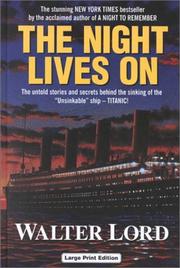
Lord's own follow-up to A Night to Remember, revisiting and correcting the record with new evidence. Reading it second deepens and complicates the picture the first book established.
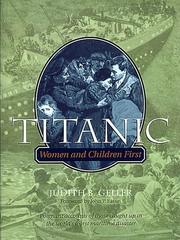
Focuses on the women and children of all three classes, humanizing the statistics of survival and loss and illuminating the gendered social codes that shaped who lived and who died.
Written by a second-class survivor just weeks after the disaster, this is the most important first-hand account in print — essential primary-source reading that no other book can replace.
The Inquiries: Blame, Politics, and Reform
IntermediateCritically examine how governments, shipping companies, and the press responded to the disaster — who was blamed, what was covered up, and what safety reforms resulted.
▸ Study plan for this stage
Pace: 4–5 weeks, ~25–30 pages/day, with 2–3 days per week dedicated to analysis and note-taking on inquiry findings and reform outcomes
- The dual inquiry structure: U.S. Senate hearings (Ismay's role, crew testimony) vs. British Board of Trade inquiry (technical focus, class disparities)
- Scapegoating and blame: how Captain Smith, Bruce Ismay, and the crew were portrayed differently by each inquiry and the press
- Corporate accountability and cover-ups: White Star Line's attempts to control the narrative and protect its reputation and assets
- Class and politics in disaster response: how wealth and social status influenced who was blamed, who testified, and whose deaths mattered in official accounts
- Press sensationalism vs. factual reporting: how newspapers shaped public perception of guilt, heroism, and responsibility
- Safety reforms that emerged: SOLAS conventions, lifeboat requirements, wireless watch protocols, and the political resistance to implementation
- International maritime governance: how the disaster exposed gaps in regulation and led to new treaties and standards
- What were the key differences in focus and findings between the U.S. Senate inquiry and the British Board of Trade inquiry, and why did they prioritize different aspects of the disaster?
- How did Bruce Ismay become a scapegoat, and what role did the press play in constructing his guilt versus the inquiries' actual findings?
- What specific safety reforms (lifeboats, wireless protocols, speed regulations) were directly recommended by the inquiries, and which ones faced resistance from shipping interests?
- How did class and social status influence the inquiries' treatment of different witnesses and victims—particularly regarding crew vs. passenger testimony?
- What evidence of cover-up or suppression of information did Wels present regarding White Star Line's actions before, during, and after the inquiries?
- How did the Titanic inquiries lead to international maritime law changes, and what gaps in regulation did they expose?
- Create a two-column comparison chart: U.S. Senate Inquiry vs. British Board of Trade Inquiry—list their stated goals, key witnesses, major findings, and recommended reforms for each
- Track Bruce Ismay's portrayal across the inquiries and press coverage: collect 3–4 direct quotes showing how he was blamed, defended, or exonerated, then analyze the discrepancies
- Map the safety reforms recommended in Wels's account: for each reform (lifeboats, wireless, speed), note who proposed it, what resistance it faced, and whether/when it was implemented
- Write a 2–3 page analysis: 'Who was really blamed and why?'—examine how class, nationality, and corporate interests shaped the inquiries' conclusions about responsibility
- Create a timeline of press coverage: select 5–6 newspaper headlines or articles from Wels's account spanning the weeks after the disaster through the inquiries, and annotate how the narrative shifted
- Research and present: choose one safety reform mentioned in Wels (e.g., SOLAS lifeboat requirements) and trace its path from inquiry recommendation to actual maritime law—what changed and why?
Next up: This stage equips you to understand how institutional power, politics, and media shaped the Titanic's legacy—preparing you to examine the disaster's long-term cultural impact, how it was memorialized, and what it revealed about early 20th-century society's values and vulnerabilities.
Provides a thorough bridge between the human narrative and the institutional aftermath, covering both the American and British inquiries in an accessible way before readers tackle more specialized analysis.
Deep Scholarship: Causes, Controversies, and New Evidence
IntermediateEngage with serious historical and technical arguments about why the Titanic sank, what went wrong in the design and operation of the ship, and how revisionist research has challenged popular myths.
▸ Study plan for this stage
Pace: 4–5 weeks, ~40–50 pages/day (approximately 280–350 pages per book)
- The role of design flaws in the Titanic's vulnerability: insufficient watertight compartments, inadequate lifeboat capacity, and the fatal reliance on the ship's 'unsinkable' reputation
- Operational and human failures: speed in ice fields, inadequate lookout protocols, delayed distress response, and the role of the ship's officers and crew in the disaster
- The competing theories of what caused the sinking: the iceberg collision, the coal fire in the bunker, and the role of the Californian's failure to respond
- How revisionist scholarship challenges the 'official' narrative: examining evidence that contradicts the 1912 inquiries and popular mythology
- The technical and structural factors that determined the ship's fate: the angle of the iceberg strike, the speed of water ingress, and the ship's breaking apart
- The social and commercial pressures that influenced the ship's design, operation, and the response to the disaster
- The evolution of maritime safety standards and regulations that emerged from the Titanic tragedy
- What specific design flaws made the Titanic particularly vulnerable to sinking, and how did the ship's reputation as 'unsinkable' contribute to these flaws?
- According to Wade and McCarty, what operational and human errors occurred on the night of the disaster, and how did they compound the ship's structural vulnerabilities?
- What is the evidence for and against the competing theories about what caused the Titanic to sink (iceberg, coal fire, the Californian's role)?
- How do Wade and McCarty's arguments challenge or revise the conclusions of the 1912 inquiries, and what new evidence do they present?
- What technical factors determined how quickly the Titanic filled with water and ultimately broke apart?
- What social, commercial, and regulatory pressures shaped the Titanic's design and operation, and what safety reforms resulted from the disaster?
- Create a detailed timeline of the disaster (April 14–15, 1912) using both books, marking key decisions, failures, and technical events; identify where different choices could have altered the outcome
- Construct a comparative chart of the design specifications Wade and McCarty highlight (watertight compartments, lifeboat capacity, speed, lookout procedures) and explain how each contributed to or could have prevented the sinking
- Write a 2–3 page analytical essay addressing one competing theory of the sinking (iceberg vs. coal fire vs. Californian's role) using evidence from both books; argue which explanation is most convincing and why
- Diagram the ship's cross-section and trace the path of water ingress as described by McCarty; annotate the diagram with the design flaws Wade identifies
- Identify 3–4 'myths' about the Titanic that you held before reading and document how Wade and McCarty's evidence contradicts or complicates each myth
- Research and summarize one post-Titanic maritime safety regulation (e.g., lifeboat requirements, radio watch protocols, ice patrol) and explain how it directly addresses a failure identified in the books
Next up: This stage equips you with the technical and historical rigor to evaluate competing scholarly interpretations and primary sources, preparing you to engage with archival evidence, survivor testimonies, and the ongoing debates in Titanic scholarship in the next stage.

A rigorous, well-researched account centered on the American Senate inquiry, drawing on full testimony transcripts to reveal the political and corporate forces at work — a major step up in analytical depth.
Presents the metallurgical and engineering case for why the hull failed so catastrophically, introducing scientific evidence and methodology that reframes the entire disaster for readers ready to think beyond narrative.
The Wreck: Discovery, Exploration, and Meaning
ExpertUnderstand the deep-sea discovery of the wreck, the technology and science behind it, the ethical debates over salvage, and what the physical evidence of the wreck has confirmed or overturned about the sinking.
▸ Study plan for this stage
Pace: 4–5 weeks, ~40–50 pages/day. "The Discovery of the Titanic" (~350 pages) in weeks 1–2; "Return to Titanic" (~400 pages) in weeks 3–5, with overlap for note-taking and reflection.
- Deep-sea exploration technology: sonar, ROVs (remotely operated vehicles), and submersibles used to locate and map the wreck at extreme depths
- The wreck's location and the search methodology: how Ballard used oceanographic data, debris field analysis, and systematic grid searches to find the Titanic
- Physical evidence from the wreck: the ship's structural condition, the separation of the bow and stern, and what the debris field reveals about the sinking sequence
- Confirmation and revision of historical accounts: how the wreck's condition contradicts or supports eyewitness testimonies and earlier theories about the collision and sinking
- Ethical and legal debates over salvage: ownership, preservation vs. exploitation, and the tension between scientific exploration and commercial interests
- The wreck as an archaeological site: the importance of treating the Titanic as a grave and cultural artifact rather than merely a source of artifacts
- Technological innovation driven by discovery: how the search for the Titanic advanced deep-sea exploration capabilities and oceanographic science
- What specific technologies and methods did Robert Ballard use to locate the Titanic, and why were these innovations necessary for deep-sea exploration?
- How did the physical condition and layout of the wreck—particularly the separation of the bow and stern—either confirm or contradict earlier theories about how the Titanic sank?
- What does the debris field surrounding the wreck tell us about the sinking sequence and the forces involved in the ship's destruction?
- What are the major ethical arguments for and against salvaging artifacts from the Titanic wreck, and what is Ballard's position on this debate?
- How has the direct examination of the wreck changed our understanding of the Titanic disaster compared to what survivors and investigators reported in 1912?
- What role does the Titanic wreck play as an archaeological and cultural site, and why does Ballard emphasize treating it as a grave?
- Create a detailed timeline of the search expeditions described in both books, noting the technology used, obstacles encountered, and key discoveries at each stage.
- Draw or annotate a map of the wreck site showing the debris field, the positions of the bow and stern sections, and the major structural damage visible in photographs from the books.
- Write a 2–3 page analysis comparing one eyewitness account from the 1912 inquiries with the physical evidence Ballard found; explain what the wreck confirms or contradicts.
- Research and summarize the legal and ownership disputes over the Titanic wreck mentioned in the books; create a pros/cons chart for salvage vs. preservation.
- Examine the photographs and sonar images in both books; write captions explaining what each image reveals about the ship's condition and the forces that destroyed it.
- Conduct a mock debate: assign yourself and a partner opposing positions on whether artifacts should be removed from the Titanic wreck, using evidence from Ballard's books to support your arguments.
Next up: This stage grounds you in the material reality of the wreck and the scientific methods used to study it, preparing you to evaluate competing interpretations of the disaster and to understand how modern evidence reshapes historical narratives about the Titanic.
Ballard led the 1985 expedition that found the wreck; this is his own authoritative account of the search, the technology, and the emotional experience of seeing the ship on the ocean floor for the first time.
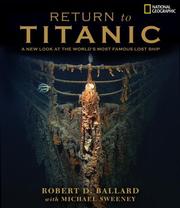
Ballard's later return voyage incorporates new photographic surveys and updated scientific analysis of the wreck's deterioration, bringing the physical story of the Titanic fully up to date and closing the curriculum on the ship herself.
Discussion
Keep reading
Paths that share books, cover the same subject, or open a related topic.