The Titanic literature has a specific problem: saturation. Roughly two and a half hours of events have generated thousands of books, and a great many of them recycle the same survivor testimony without adding evidence. Reading order here is mostly about avoiding repetition and getting to the books that actually contribute — the eyewitness account, the inquiry analysis, the materials science, and the wreck.
It also matters that the evidence base changed twice. The 1912 British and American inquiries established the official account; the discovery of the wreck in 1985 and the subsequent metallurgical work revised parts of it, including the long-assumed 300-foot gash, which turned out to be a series of separated plate seams. Books written before 1985 are not wrong, but they are working from less.
Start with the classic and its sequel
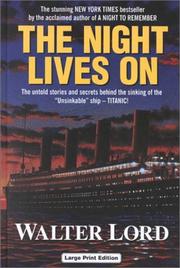
A Night to Remember and The Night Lives On pairs Walter Lord's 1955 minute-by-minute reconstruction with his later follow-up. The first is still the best-written narrative of the sinking, built on interviews with more than sixty survivors who were alive to talk in the 1950s — an evidentiary window no later author has. The sequel revisits open questions decades on.
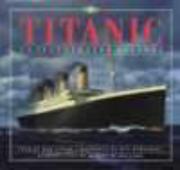
If you find that edition only as separate volumes, Lord's The Night Lives on is the same follow-up book; there is no need to buy both the combined and the standalone version. Alongside Lord, Titanic: An Illustrated History by Don Lynch, with Ken Marschall's paintings, is the standard visual reference — the deck-by-deck reconstructions do work that prose cannot.
Then the people and a first-hand account
Titanic by Judith Geller focuses on the passengers themselves, and is where the ship stops being a machine and becomes roughly 2,200 individual decisions. The Loss of the S.S. Titanic is Lawrence Beesley's own account, written by a surviving second-class passenger within weeks of the sinking and published in 1912. It is the primary source on this path, and its restraint is striking against a century of dramatization.
Susan Wels's Titanic is a well-produced photographic history covering the ship's construction and the wreck. Note that it shares a title with Geller's book but is a different work with a different focus; if you already have Lynch's illustrated volume, this one is optional.
Get the inquiries and the physical evidence
The Titanic, end of a dream by Wyn Craig Wade is the best book on the American inquiry and the Edwardian social world the disaster exposed — Senator Smith's much-mocked hearings turn out to have been considerably more effective than their reputation. Follow it with What really sank the Titanic by Jennifer Hooper McCarty and Tim Foecke, the metallurgical study of the wrought-iron rivets recovered from the wreck. It is the most technically rigorous book here and it revises the popular explanation directly.
Close with Robert Ballard. The discovery of the Titanic is his account of the 1985 expedition that found the wreck; Return to Titanic covers the later visits and the deterioration of the site, and makes the case for treating it as a grave rather than a salvage opportunity.
Read them in this order and you get the night, the testimony, the inquiry, the physics, and the wreck without wading through the duplicates. Follow the full path to keep the sequence — and use /create if you want to build a shorter variant.
Follow the full ordered path here: The Best Titanic Books to Read First.
Ready to learn something deeply?
Build a reading path — free