The Sword of Truth Reading Order: Where to Start
The Sword of Truth is one continuous story told across eleven novels, and the only correct order is the order Terry Goodkind published them in — there is no chronological alternative worth arguing about here. What a reading guide can do is tell you where the series changes character, because it does so twice: around the fifth and sixth books it becomes explicitly a novel of ideas, and around the eighth it starts a three-book arc that only resolves at the end. The eleventh book, Confessor, is a real ending; everything after it is a separate later sequence you can take or leave.
Start Here: The First Three
BeginnerGet through the opening arc and decide honestly whether this series is for you before committing to eleven books.
▸ Study plan for this stage
Pace: 8-10 weeks. These are very long books, roughly 800 pages each in mass-market paperback, at around 50 pages a day. Do not commit to the series until you have finished Wizard's First Rule; it is a fair sample of everything that follows.
- A content warning that belongs before the recommendation, not after it. Wizard's First Rule contains an extended sequence of torture, running to many chapters, in which the protagonist is captured, systematically broken and sexually assaulted by a torturer named Denna. It is graphic and it is not br
- The plot of Wizard's First Rule is a straightforward quest with a hidden-heritage protagonist, a wizard mentor and a magic-boxes deadline. Goodkind's variations are in the magic system's rules and in the extremity of the set pieces, not in the shape.
- The title convention is doing real work: each book is named after a Wizard's Rule, a stated principle that the plot then demonstrates. The Rules are the series' argumentative backbone and the first sign that these are novels of ideas as well as adventure.
- Richard Rahl and Kahlan Amnell are the whole series. Nearly every plot turn from here to book eleven is a version of separating them and reuniting them.
- Stone of Tears introduces the Sisters of the Light and the Palace of the Prophets, which shifts the series from quest fantasy to a much larger institutional and prophetic framework.
- Blood of the Fold is generally considered the weakest of the opening three and is largely consolidation. Push through it; the next stage is where most readers say the series peaks.
- Publication order is the only order. There is no chronological alternative worth arguing about, and the eleven books are one continuous story rather than linked cases.
- What is the Wizard's First Rule, and does the novel actually demonstrate it or merely assert it?
- The torture sequence in book one takes up a large share of the novel. What is it doing structurally, and would the book work if it were a quarter of the length?
- How do the magic system's constraints, Additive and Subtractive, function as plot devices rather than as physics?
- What changes when the Sisters of the Light arrive in Stone of Tears, and what does the Palace of the Prophets let Goodkind write about that the first book could not?
- By the end of Blood of the Fold, what is the series' recurring conflict, stated as a proposition rather than a plot?
- Are you enjoying this? Ask it directly at the end of book three; eight more very long books is the alternative.
- Read the first hundred pages of Wizard's First Rule before buying anything else in the series. Everything the series does, at both its best and its worst, is legible from that sample.
- Write down each Wizard's Rule as it is named. Tracking the list is the clearest way to follow the argument Goodkind is building across eleven books.
- Decide in advance how you will handle the torture chapters. Skimming them costs almost no plot; the consequences are restated repeatedly afterwards.
- At the end of Blood of the Fold, make an explicit decision to continue or stop. Reader drop-off is heavy here and continuing by default is how people end up resenting a nine-thousand-page commitment.
Next up: You now know the register, the extremity and the Rules device, all of which the next three books escalate as the series turns openly into an argument.
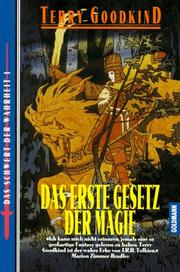
The only place to begin. A woods guide meets a woman being hunted through his forest and discovers what he is; the book was a phenomenon in 1994 and still moves fast. Fair warning: there is a long torture sequence in the back third that a lot of readers do not expect.
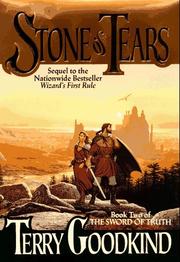
Second, and the book that turns a self-contained novel into a series — the Sisters of the Light, the Palace of the Prophets, and the prophecy machinery the next nine books run on. Longer and slower than the first; this is the real test of your patience.
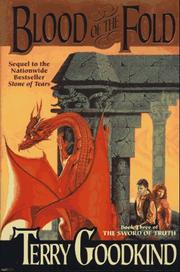
Closes the opening movement and establishes the Imperial Order as the enemy for the rest of the series. If you have reached the end of this book and are not enjoying yourself, stop — the series does not get less like itself from here.
The Strongest Stretch
IntermediateRead the three books most fans rate highest, and meet the political argument that increasingly drives the plot.
▸ Study plan for this stage
Pace: 9-10 weeks. Temple of the Winds, Soul of the Fire and Faith of the Fallen are each 700-800 pages. Faith of the Fallen is the one to give proper attention; the other two can be read at pace.
- Temple of the Winds is the most tightly plotted book in the series, built around a plague and a prophecy with a genuinely nasty cost to the protagonists. Many readers rate it the best of the eleven on craft grounds.
- Soul of the Fire is the most disliked of this stretch and the point where the series' political commentary becomes explicit. The Anderith storyline is an extended argument about voting, appeasement and self-deception, and it is not subtle.
- Faith of the Fallen is the book to understand this series by, and it should be described accurately. It is an explicitly Objectivist novel: Richard, held captive in a collectivist society, defeats it not by force but by demonstrating the moral superiority of individual achievement, and the climax is
- Opinion on Faith of the Fallen splits sharply and both positions are honest. A large share of the fanbase rates it the best book in the series; a comparable share finds it a political tract with a fantasy plot attached. You will know which camp you are in within a hundred pages of the Old World sect
- The Imperial Order is not a generic dark army. It is a specific ideological opponent, an altruist-collectivist theocracy, constructed so that the series' argument has something to argue against.
- The romance plot and the political plot begin to converge: the threats to Richard and Kahlan are increasingly ideological rather than physical.
- From here the Rules stop being cute aphorisms and start being the series' thesis statements. Track them.
- Temple of the Winds is built on a cost the protagonists cannot avoid. What does that constraint do for a series that usually solves problems by escalation?
- In Soul of the Fire, what is the Anderith storyline arguing, and is it arguing or demonstrating?
- Faith of the Fallen makes an explicit political case. State it in your own words in two sentences, as fairly as you can.
- Does the Objectivist argument strengthen the novel as a novel, or does the plot bend to accommodate it? Point to a scene either way.
- The Imperial Order is designed to lose the argument. Does Goodkind give it a case worth answering?
- Which of these three would you keep if you could keep only one, and on what criteria?
- Read Faith of the Fallen's Old World chapters attentively and the escape-and-siege chapters at pace. The book's ambitions are all in the former.
- Write the Imperial Order's position as its own adherents would state it. If you cannot make it coherent, that tells you something about how the novel is built.
- Add Temple of the Winds, Soul of the Fire and Faith of the Fallen to your list of Rules, then look at the six Rules so far as a single argument. The through-line is clearer than any one book makes it.
- If Faith of the Fallen loses you, stop here rather than at the next stage. It is the series' clearest statement of intent, and the books after it are more of the same argument with less craft.
Next up: With the political argument now explicit rather than implied, the middle books can be read for what they are, a long ideological siege, which is exactly why they lose so many readers.
A plague, an impossible bargain, and the tightest plotting in the series. Fourth in order and the point at which the world-scale stakes finally feel earned rather than announced.
Fifth, and the most divisive of the early books — it leaves the main characters largely sidelined for a long stretch. Read it anyway: the chimes released here matter to the magic system for the rest of the run.
Widely considered the peak, and the book where Goodkind's Objectivist convictions move from subtext to the actual plot — Richard tries to defeat an empire by building a statue. If you only ever read past book three for one novel, it is this one.
The Long Middle
IntermediateGet through the stretch where the series most often loses readers, and into the final arc.
▸ Study plan for this stage
Pace: 9-10 weeks, and the hardest stretch to sustain. These are the books readers abandon; plan a break between Naked Empire and Chainfire rather than grinding.
- The Pillars of Creation is the series' biggest structural gamble: it moves almost entirely to new point-of-view characters and leaves Richard and Kahlan offstage for long stretches. Many readers find it the point where the series lost them.
- Naked Empire contains the most direct political speechifying in the eleven books, including an extended argument against pacifism delivered to a society of pacifists. Whether you find that bracing or intrusive is the single best predictor of whether you finish the series, and both reactions are comm
- The intrusiveness complaint is worth stating factually rather than dismissing: from Soul of the Fire onward, characters stop to deliver the author's political position at length, and a substantial part of the readership finds this breaks the fiction. It is the most frequently cited reason for abando
- Chainfire begins the final three-book arc and changes the series' mode entirely, into something closer to a mystery, with Richard insisting on a truth nobody else can perceive.
- The Chainfire premise, that a magical event has erased a person from everyone's memory, is the series' best single idea and the strongest argument for pushing through the two books before it.
- The scale problem is real by this point: threats escalate faster than the plot can resolve them, and Goodkind increasingly reaches for new magic to match.
- If you are going to abandon the series, abandon it here rather than after Phantom. Chainfire is the start of a three-book unit and stopping inside it is the worst possible place to leave.
- Why does The Pillars of Creation shift protagonists, and what does it gain in exchange for what it plainly loses?
- In Naked Empire, is the argument against pacifism made by the plot or spoken by characters? Does the distinction matter to you as a reader?
- Where exactly does the political material stop serving the story and start interrupting it, in your reading? Name a page-level example.
- What does the Chainfire premise let Goodkind do that ordinary plotting could not?
- Chainfire asks the reader to trust a protagonist against all evidence. How does the book make that sustainable for hundreds of pages?
- Read a chapter of Naked Empire's speeches and summarise the argument in three sentences. If you can, you will find the rest less irritating; if you cannot, that is information too.
- Keep reading The Pillars of Creation to the point where its new characters connect to the main plot before judging it. Its structure is back-loaded.
- Take a deliberate break before Chainfire rather than after it. The last three books are one unit and read far better in a concentrated run.
- Write down what you think has been erased in Chainfire and how, then check at the end of Confessor. The series plays fair on this and it is satisfying to have guessed.
Next up: Chainfire opens a three-book endgame, so the next stage is not more of the same series but the resolution the previous ten books were arranged to reach.

Seventh, and structurally odd: it follows an almost entirely new cast, with Richard and Kahlan barely present. Many readers stall here. Push through — the characters introduced pay off in the final books.
Eighth, returning to Richard and carrying the series' longest speeches about pacifism and moral clarity. Read it for continuity; it is the connective tissue between the detour and the endgame.

Ninth, and the start of a single three-book arc — Kahlan has been erased from everyone's memory but Richard's. Do not stop after this one; Chainfire, Phantom and Confessor are one novel in three volumes.
Finishing the Core Arc
IntermediateComplete the eleven-book story Goodkind actually planned, and stop at a genuine ending.
▸ Study plan for this stage
Pace: 6-7 weeks for Phantom and Confessor, both around 600-700 pages. Read them consecutively with no gap; they are the second and third acts of one story that began in Chainfire.
- Phantom and Confessor complete the Chainfire arc and, with it, the eleven-book story Goodkind planned. Everything from Wizard's First Rule converges here.
- Confessor is a real ending. The central conflict resolves, the Imperial Order question is settled, and the relationship the series was built on reaches its conclusion. It was written and published as the end.
- The recommendation of this path is to stop at Confessor. That is not a hedge: eleven books is the complete story, and the material after it is a separate later sequence begun years afterwards.
- The resolution is ideological as well as narrative. How the final conflict is won restates the argument of Faith of the Fallen at series scale, and whether that reads as a triumphant synthesis or an authorial thumb on the scales is the last question the series poses.
- The Rules land here. Reading the full list of Wizard's Rules in order at the end is the clearest way to see the design across eleven books.
- Confessor's climax is deliberately unconventional for epic fantasy and will either strike you as the series' boldest move or as a cheat. Both readings are widely held.
- Loose ends from the middle books do get gathered, including material from The Pillars of Creation that seemed disconnected at the time.
- How does the Chainfire mystery resolve, and was the solution available to an attentive reader?
- Does Confessor's climax follow from the series' rules, or does it introduce something new to finish the job?
- Read your list of Wizard's Rules end to end. What single proposition do they add up to?
- Is the ending earned by the plotting, or by the argument the series has been making since book six?
- Having finished eleven books, what would you tell someone considering the series, including the warnings you would give up front?
- Read Phantom and Confessor back to back. Splitting them is the commonest way readers lose the thread of a plot that depends on precise memory of who knows what.
- Write the full Rules list out in order and mark which book demonstrates each. It is the most concrete artefact you can take from the series.
- Before deciding about the later books, write down whether Confessor felt finished to you. That answer, not completism, should decide the next stage.
- Compose the honest three-line recommendation, including the content warning, that you would give a friend. Getting the warnings and the appeal into three lines is harder and more useful than a review.
Next up: Confessor closes the story Goodkind planned, so anything after it is a decision to start something new rather than to finish something begun.
The middle of the Chainfire trilogy, and the darkest book in the series. It ends mid-crisis by design, so only start it when you have the next one to hand.
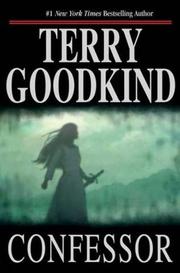
The eleventh book and the real conclusion — every thread from Wizard's First Rule onward is closed here. This is where the Sword of Truth ends, and stopping here is the choice most readers should make.
Optional: The Later Sequels
IntermediateDecide whether to continue into the post-Confessor books, knowing they are a continuation rather than part of the original arc.
▸ Study plan for this stage
Pace: 1-2 weeks, and genuinely optional. The Omen Machine is around 500 pages and reads quickly. Read it as a sample of the later sequence rather than as a commitment to it.
- The Omen Machine begins a separate later sequence, published years after Confessor, that continues with Richard and Kahlan rather than continuing the original arc. It is a new start, not a twelfth chapter.
- It picks up shortly after Confessor and depends on you having read the eleven, so it is not an entry point, but it does not complete anything either.
- The critical and fan reception of the later books is markedly worse than that of the original eleven, and this is not a minority view. Common complaints are thinner plotting, heavier repetition and a shift toward horror set pieces.
- Nothing in The Omen Machine retroactively changes the original series. Stopping at Confessor costs you no understanding of the eleven books you have read.
- The reason to read it is curiosity about where Goodkind took the characters afterwards, which is a legitimate reason but a different one from finishing a story.
- Read the first fifty pages and decide. If the voice and pacing feel like a step down, that impression is generally accurate and the rest of the later sequence does not recover it.
- Does The Omen Machine open a new conflict or recycle the resolved one?
- How does the prose and pacing compare with the strongest stretch of the original series, book for book?
- What does the book assume you remember, and does it earn that assumption?
- Would you recommend this to someone who loved Confessor, and how would you frame it?
- Is there a version of the Sword of Truth story that ends here rather than at Confessor? Argue against yourself.
- Read fifty pages, then decide whether to finish it at all. Treating this as a trial rather than an obligation is the whole point of the stage being marked optional.
- Compare the opening chapter with the opening chapter of Confessor for pace, density and how much the reader is told versus shown.
- Write one sentence on whether the original eleven were improved, unchanged or diminished by what you have read. Most readers answer unchanged, which is the argument for stopping at Confessor.
Next up: This closes the path: the eleven-book arc read in order, and an informed decision about the continuation rather than a default one.
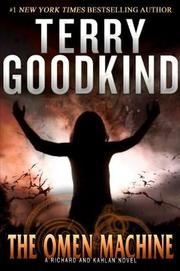
The first book of the Richard and Kahlan sequence, published four years after Confessor and much less well regarded. Read it purely as a test: if it does not work for you, you have lost nothing, because the story you came for already finished.
Discussion
Keep reading
Paths that share books, cover the same subject, or open a related topic.