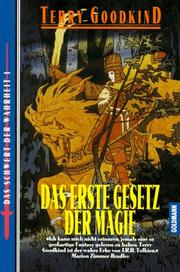
Start with Wizard's First Rule. Publication order is the only order here — the eleven core books are one continuous story rather than linked cases, and there is no chronological alternative worth arguing about. Do not commit to the series until you have finished that first book, because it is a fair sample of everything that comes after, in register and in extremity.
Which brings the warning before the recommendation rather than after it. Wizard's First Rule contains an extended sequence of torture, running to many chapters, in which the protagonist is captured, systematically broken and sexually assaulted by a torturer named Denna. It is graphic and it is not brief. The novel also contains a scene of child sexual abuse and several other depictions of sexual violence. This is not incidental to the book, so a reader who would not choose that should not begin the series.
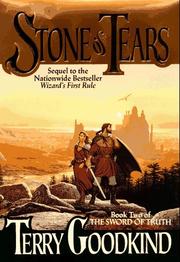
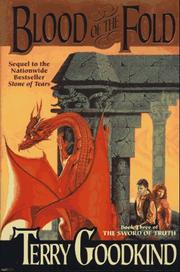
The first three
The plot of Wizard's First Rule is a straightforward quest with a hidden-heritage protagonist, a wizard mentor and a magic-boxes deadline. Goodkind's variations are in the magic system's rules and in the extremity of the set pieces rather than in the shape. The title convention is doing real work: each book is named after a Wizard's Rule, a stated principle the plot then demonstrates, and the Rules are the argumentative backbone of the whole series.
Stone of Tears introduces the Sisters of the Light and the Palace of the Prophets, shifting the series from quest fantasy to a far larger institutional and prophetic framework. Blood of the Fold is generally considered the weakest of the opening three and is largely consolidation — push through it.
The strongest stretch
Temple of the Winds is the most tightly plotted book of the eleven, built around a plague and a prophecy with a genuinely nasty cost, and many readers rate it the best on craft grounds. Soul of the Fire is where the political commentary becomes explicit; the Anderith storyline is an extended argument about voting, appeasement and self-deception, and it is not subtle.
Faith of the Fallen is the book to understand this series by, and it should be described accurately. It is an explicitly Objectivist novel: Richard, held captive in a collectivist society, defeats it not by force but by demonstrating the moral superiority of individual achievement, and the climax is a statue and a speech. The debt to Ayn Rand is direct and acknowledged rather than a critical inference. A large share of the fanbase rates it the best book in the series; a comparable share finds it a political tract with a fantasy plot attached. You will know which camp you are in within a hundred pages.
The long middle, and where readers quit
This is the hardest stretch to sustain. The Pillars of Creation is the series' biggest structural gamble, moving almost entirely to new point-of-view characters and leaving Richard and Kahlan offstage for long stretches. Naked empire contains the most direct speechifying in the eleven books, including an extended argument against pacifism delivered to a society of pacifists.
State the intrusiveness complaint factually rather than dismissing it: from Soul of the Fire onward, characters stop to deliver the author's political position at length, and a substantial part of the readership finds this breaks the fiction. It is the most frequently cited reason for abandoning the series, and it is a defensible reaction.
Chainfire changes mode entirely, into something closer to a mystery, with Richard insisting on a truth nobody else can perceive. The premise — a magical event has erased a person from everyone's memory — is the series' best single idea and the strongest argument for pushing through the two books before it. If you are going to quit, quit before Chainfire rather than inside it; it opens a three-book unit.
Finishing, and where to stop
Phantom and Confessor complete that arc and with it the eleven-book story Goodkind planned. Read them consecutively with no gap. Confessor is a real ending, written and published as one: the central conflict resolves, the Imperial Order question is settled, and loose ends from the middle books are gathered, including material from The Pillars of Creation that seemed disconnected at the time. Its climax is deliberately unconventional for epic fantasy and will strike you as either the series' boldest move or as a cheat; both readings are widely held.
Stop there. That is the recommendation rather than a hedge. The Omen Machine begins a separate sequence published years later — a new start, not a twelfth chapter — and its reception is markedly worse than the original eleven, with common complaints of thinner plotting and heavier repetition. Nothing in it changes what the eleven books mean. Read fifty pages out of curiosity if you like; if the voice feels like a step down, that impression is generally accurate. More epic fantasy is on Discover.
Follow the full ordered path here: The Sword of Truth Reading Order: Where to Start.