The Spanish Armada: books to read, in order
In 1588 Philip II sent 130 ships to escort an invasion army to England, and roughly half of them never came home. This path is built for a reader starting cold: the campaign told straight, then Philip's strategy from the Spanish side, then the English court and captains who have taken most of the credit, and finally the archaeology and naval history that have quietly dismantled the patriotic version. By the end you should be able to say how much of the English victory was seamanship, how much was Spanish logistics, and how much was weather.
The Campaign, Told Straight
BeginnerLearn what actually happened between May and October 1588 — the sailing from Lisbon, the running fight up the Channel, the fireships at Calais, Gravelines, and the voyage home around Scotland and Ireland
▸ Study plan for this stage
Pace: 3 weeks. Barratt's ARMADA 1588 is under 200 pages of illustrated campaign study — read it in two evenings and keep its maps beside you for everything that follows. Mattingly's The Armada then gets a fortnight at 25-30 pages a day; it is 1959 prose and rewards being read slowly. Hanson's The Confiden
- The actual sequence: Lisbon in May, the Channel running fight from Plymouth to the Isle of Wight, the anchorage at Calais, the fireships on 7 August, Gravelines the next day, and the long voyage home round Scotland and the Irish coast
- Why the Armada's crescent formation was so hard to break, and what that tells you about the tactical problem the English fleet faced for a week
- The plan's structural dependency: the fleet was an escort, and its purpose was to bring Parma's army across from the Netherlands — a rendezvous with no deep-water port available for it
- Mattingly's wider frame: 1588 as a European event embedded in the French wars of religion and the Dutch revolt, not an Anglo-Spanish duel
- Hanson's insistence on the aftermath — the disease, hunger and non-payment that killed English sailors after the victory, and the state's abandonment of them
- The gap between what the campaign decided and what the campaign is remembered as deciding
- At what point in the campaign was the invasion of England actually made impossible, and what specific event made it so?
- Barratt gets you the sequence in an evening; Mattingly takes a book. What does Mattingly's length actually buy, and what would you not know if you had only read Barratt?
- What happened to the English seamen after Gravelines, and why does Hanson think this belongs in the story of a famous victory?
- Mattingly wrote in 1959, before the wreck excavations. Where in his account can you already feel him reasoning from documents in the absence of physical evidence?
- Summarise, in your own words and before reading further, why the Armada failed. You will be asked to defend or abandon this in the final stage
- Follow the Channel running fight day by day on Barratt's maps while reading Mattingly's narrative of the same week, marking each engagement's position. The exercise is to find where the prose and the geography stop agreeing
- Mattingly and Hanson both narrate the fireship attack at Calais. Write each author's account of why it worked in a single sentence, then identify which of the two is making a claim about Spanish seamanship and which about Spanish anchorage
- List every casualty figure the three books give for the campaign — Spanish ships lost, Spanish dead, English dead — and note which number each author sources and which he simply states
- Write one paragraph making the case that 1588 was a decisive English victory, and one making the case that it was an indecisive campaign in a war that continued for fifteen more years, using only these three books
Next up: With the campaign fixed in sequence, you can go behind it to the man who ordered it and ask what he thought he was doing.
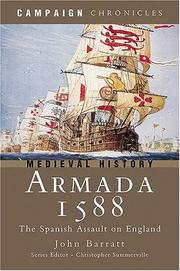
A short illustrated campaign study that gets the sequence, the ships and the geography into your head in an evening. Deliberately first: everything else in the path assumes you already know which week Gravelines happened in.
The 1959 classic, still the best-written book on the subject and a landmark of narrative history. Some of its detail has been superseded by the wreck archaeology in the last stage, which is exactly why you read it before that stage and not after.
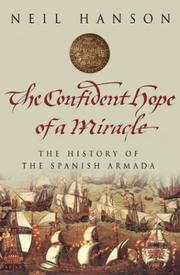
A modern popular narrative that gives full weight to the horrific voyage home and to the English sailors left to die of disease and neglect after the victory. It supplies the aftermath Mattingly's account moves past quickly.
Why Philip Sent It
BeginnerUnderstand the Enterprise of England from Madrid — Philip II's aims, the impossible plan to rendezvous with Parma's army, and how Spanish decision-making actually worked
▸ Study plan for this stage
Pace: 4 weeks. Parker's Imprudent King is a full biography — two weeks at 30 pages a day. The Grand Strategy of Philip II is denser and more analytical; give it ten days and take notes on the decision-making chapters. Howarth's Voyage of the Armada is short and narrative and closes the stage in under a we
- Parker's method: the argument rests on Philip's own marginal annotations on state papers, which means you are reading a king's working mind rather than a reconstruction of it
- The Enterprise of England as one item in a portfolio — Spain simultaneously fighting in the Netherlands, intervening in France, and holding an Atlantic and Pacific empire
- The messianic strand in Philip's strategy: the conviction that God would supply what the plan lacked, and Parker's argument about what that did to risk assessment
- The rendezvous problem in operational terms — Medina Sidonia could not reach Parma, Parma could not embark without the fleet, and neither had the authority or the communications to resolve it
- Spanish intelligence gathering and its failure modes: good information, slow transmission, and a decision process that ran through one desk
- Howarth's contribution: the campaign narrated from Spanish sources and survivors, so the fleet stops being an antagonist and becomes a set of ships with crews on them
- What did Philip believe would happen after the Armada landed Parma's army, and which part of that belief does Parker consider the least defensible?
- Parker's two books make an argument about systematic overreach. What specific features of Spanish decision-making does he identify as producing it, and does the Armada fit the pattern or break it?
- Medina Sidonia is traditionally blamed for the failure. On Parker's and Howarth's evidence, what was actually within his authority to decide?
- How did Philip's marginal notes change what a historian can claim about his intentions, compared with what could be argued before the archive was worked through?
- Reading Howarth after two books of strategy, what does the Spanish experience of the campaign look like that the English-centred account in stage one did not show?
- Find two of Philip's marginal annotations that Parker quotes and reconstruct, from the annotation alone, what question the king was answering. Then check Parker's reading against yours
- Take Parker's claim about strategic overreach in The Grand Strategy of Philip II and test it against a non-Armada case he discusses — the intervention in France is the usable one. Write a paragraph on whether the Armada is the strongest or the weakest example of his thesis
- Draw the intended rendezvous as an operational diagram: fleet, army, embarkation point, timing, and the communication links between them. Mark every point at which the plan required something no one had the means to guarantee
- Howarth and Mattingly both narrate the voyage home around Scotland and Ireland. Compare their death tolls and their explanations, and note which author is working from Spanish survivor accounts and which from English records
Next up: Having Philip's side, you can now read the English court and its captains without accepting their own account of how the victory was won.

Parker's biography of Philip II, built on decades in the Spanish archives including the king's own marginal notes. The Armada was one decision by a man who made many like it, and this is where you learn how he made them.

The analytical companion to the biography: how Spain set objectives, gathered intelligence and consistently overreached. It contains the clearest demonstration that the Armada plan had no workable mechanism for joining fleet to army.

Subtitled 'The Spanish Story' and written from Spanish sources and survivors' accounts. Placed here because after two books of strategy you need the campaign again from the deck of a Spanish ship.
The English Side
IntermediateUnderstand Elizabeth's court, its finances and intelligence, and the captains — Drake, Howard, Hawkins — whose reputations the Armada made
▸ Study plan for this stage
Pace: 5 weeks. Somerset's Elizabeth I is long — two weeks, and you can read the pre-1588 political chapters selectively. Sugden's Sir Francis Drake is the scholarly biography and deserves ten days. Bicheno's Elizabeth's Sea Dogs and Hutchinson's Elizabeth's Spy Master are both shorter; a week each.
- Elizabeth's actual policy before 1588: two decades of avoiding open war with Spain, and the reluctance with which she funded the fleet that fought it
- The financing of the English defence — how close the crown was to being unable to pay, and how that constrained what the fleet could do after Gravelines
- Drake as raider and slaver as well as seaman: Sugden's unsentimental reading against the schoolroom version, and what Drake's Cadiz raid in 1587 actually achieved
- The privateering system Bicheno describes — state-licensed piracy as naval policy, and where the ships and crews of 1588 came from
- Walsingham's intelligence network: what it correctly established about Spanish preparations and the one thing it could not determine, which was where the fleet would land
- Command relations in the English fleet — Howard as Lord Admiral, Drake as subordinate, and the gap between the two men's instincts
- How the Armada was converted into a reputational asset for individual captains in the decades that followed
- What did Walsingham's network know about the Armada before it sailed, and why was accurate intelligence insufficient for the decision Elizabeth actually had to make?
- Sugden's Drake and the popular Drake diverge sharply. Name three specific claims about Drake that Sugden shows to be later invention or exaggeration, and say what each was doing for whom
- Bicheno argues that English naval capability in 1588 was built by privateering rather than by the state. What evidence does he offer, and what would the counter-case be?
- How constrained was Elizabeth by money, and can you point to a decision during the campaign that money visibly determined?
- After four books on the English side, whose contribution to the outcome do you now think has been most overstated?
- Take one claim about Drake's role at Gravelines and trace it through Sugden, Mattingly and Barratt. Write down which author makes the claim, which repeats it, and which sources it
- Reconstruct Walsingham's intelligence picture as of May 1588 from Hutchinson: what was known, what was suspected, what was wrong. Then write the one-paragraph brief you would have given Elizabeth on that basis
- Somerset and Bicheno disagree in emphasis about how prepared England was. Find a passage in each on the state of the fleet's supplies and munitions, and decide which is better evidenced
- Write the opposing case in a paragraph: that the English commanders' reputations are deserved and the revisionist reading understates them. Use Sugden's own evidence against his framing
Next up: You now have both nations' versions of why the campaign went the way it did, which is exactly the point at which the physical evidence becomes worth weighing.
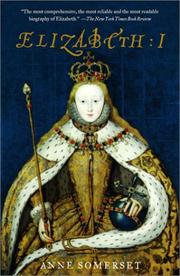
A full, readable biography that puts 1588 in the context of a reign spent avoiding exactly this war. Essential for understanding how close the English defence came to failing for lack of money and powder.
The standard scholarly biography, and unsentimental about a man who was a raider and slaver as well as a superb seaman. Read it as the corrective to the schoolroom Drake of the bowls-on-Plymouth-Hoe story.

On the wider privateering war that the Armada campaign interrupted, and on how state-sponsored piracy became English naval policy. It explains where England's fighting captains came from.

Walsingham's intelligence network, which knew a great deal about Spanish preparations and still could not tell Elizabeth where the fleet would land. A useful check on hindsight about how much anyone knew in advance.
Wrecks, Guns and the Long Verdict
IntermediateWeigh the physical evidence — excavated wrecks, gun founding, shot analysis — and reach a defensible answer on why the Armada failed
▸ Study plan for this stage
Pace: 4 weeks. Read Martin and Parker's The Spanish Armada first — two weeks, it is the argument. Then Martin's Full Fathom Five, a week, as the excavation account that produced the evidence. Rodger's The Safeguard of the Sea is a large naval history; read the sixteenth-century sections closely over the f
- What the wreck excavations off Ireland and Scotland physically recovered: guns, gun carriages, shot, and the condition of both
- The gun-carriage argument — that Spanish ordnance was mounted on carriages unsuited to rapid reloading at sea, so the Armada's theoretical firepower could not be delivered at the rate the English achieved
- Shot analysis as evidence: what the composition and calibre of recovered shot shows about Spanish gun founding and procurement
- Why a revised edition of Martin and Parker appeared in 2022 under the title Armada, and what a thirty-year gap in an argument's evidence base looks like
- The distinction between explanations of failure — weather, seamanship, gunnery, plan, provisioning — and the discipline of deciding which ones the physical evidence can actually adjudicate
- Rodger's deflation: 1588 as one episode in six centuries of British maritime development, not a founding moment, and his case that the Royal Navy's real emergence came much later
- What specifically does the excavated gun-carriage evidence establish, and what does it merely make plausible? Be precise about the boundary
- The 'Protestant wind' explanation attributes the outcome to weather. Which parts of the campaign does the weather explain well, and at which point does it stop being sufficient?
- Rodger argues 1588 is not the founding moment of British sea power. What is his positive account of when and how that power was actually built?
- Martin and Parker's conclusion rests on archaeology; Mattingly's, from stage one, rests on documents. Where do the two methods reach different answers rather than the same answer by different routes?
- You wrote a one-paragraph explanation of the Armada's failure at the end of stage one. Which parts of it now survive, and which were repeating a national story?
- Go back to the explanation you wrote at the end of stage one, mark every clause that the physical evidence in this stage supports, contradicts, or cannot address, and rewrite it. Keep both versions
- Take the gun-carriage claim and follow it from Full Fathom Five, where it is a find on a seabed, to The Spanish Armada, where it is an argument. Write two sentences on what had to be added to turn one into the other
- Rodger and Mattingly are making incompatible claims about the significance of 1588. Set their two positions side by side in your own words, then write which you would defend and what evidence would move you
- Check one statistic — the number of Armada ships lost, or the number that returned to Spain — against each of the four books that gives one, including from earlier stages. Note where the figures come from and whether any author is citing another
- Write the case for the traditional English account of 1588 in a paragraph, as strongly as the evidence in this path permits. If it cannot be made strongly, say exactly which evidence defeats it
Next up: This is the final stage: with the archaeology weighed against the narratives, you can hold a defensible position on 1588 and know which parts of it rest on evidence and which on story.
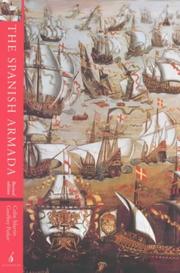
Written with Geoffrey Parker and built on Martin's underwater excavation of Armada wrecks; a revised edition appeared in 2022 under the title 'Armada'. Its findings about Spanish gun carriages and defective shot changed the explanation of the battle.
Martin's own account of the wreck excavations off Ireland and Scotland that produced that evidence. Read it after the argument so you can see how the archaeology was actually recovered and what it can and cannot support.
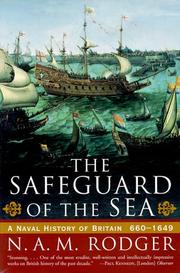
The first volume of the standard naval history of Britain, which places 1588 in six centuries of maritime development and firmly deflates it as a founding moment. The best final word: England did not become a naval power in 1588.
Discussion
Keep reading
Paths that share books, cover the same subject, or open a related topic.