Almost everyone arrives at 1588 already holding a story: a small English fleet, a vast Spanish one, fireships, a providential gale. Most of that is Elizabethan propaganda that hardened into national memory, and the interesting work of the last sixty years has been taking it apart — first from the Spanish archives, then, remarkably, from underwater excavation of the wrecks themselves.
So the order matters more than usual. Get a clear narrative first, then the strategic view from Madrid rather than London, then the England the fleet was aimed at, and only then the archaeology, which is where the received account actually breaks.
Get the story straight
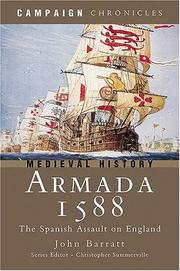
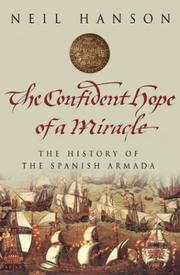
Armada 1588 by John Barratt is a short, plain campaign account and a sensible way to fix the sequence of events before anyone starts arguing about them. Then read The Armada by Garrett Mattingly, published in 1959 and still the finest piece of writing on the subject — Mattingly treats the campaign as a European diplomatic crisis rather than an English adventure, and the prose is why the book has never gone out of print. Its scholarship is now over sixty years old, which is precisely why the later books on this path matter. The confident hope of a miracle by Neil Hanson is the modern full-length narrative, notably harder on the English command and much more attentive to what happened to ordinary sailors on both sides after the fighting stopped.
The two states
The Armada makes no sense as an English story alone. Geoffrey Parker's Imprudent King is the biography of Philip II, and The grand strategy of Philip II is the deeper study of how he actually made decisions — the paperwork, the theology, the fatal habit of micro-managing a fleet from a desk a thousand miles away. Parker's central charge is that the plan was incoherent before a single ship sailed. Voyage of the Armada by David Howarth takes the Spanish side at sea and asks what the campaign looked like to the men sailing it.
On the English side, Elizabeth I by Anne Somerset is the standing biography and puts the invasion scare in the context of a reign that had been braced for it for a decade. Sir Francis Drake by John Sugden is the serious life of the most mythologised man in the story and is usefully deflating. Elizabeth's Sea Dogs by Hugh Bicheno covers the wider privateering war, which is the context in which Spain concluded that England had to be dealt with. Elizabeth's Spy Master by Robert Hutchinson covers Walsingham and the intelligence war — the part of 1588 that was won well before the fleet appeared.
Where the received account breaks
The archaeology is the payoff. The Spanish Armada by Colin Martin, written with Geoffrey Parker, is the book that fused archive work with the excavated wrecks and showed, among other things, that Spanish gun carriages and shot were defective in ways no document had recorded. One thing to be clear about: that book first appeared in 1988 and was substantially rewritten and reissued in 2022 under a different title (Armada, from Yale), incorporating three further decades of wreck evidence. They are not the same book, and a citation to one is not a citation to the other. Full fathom five by Colin Martin is his earlier account of the excavations themselves, and reads as field narrative — this is what it was like to find these ships.
Close with The safeguard of the sea by N. A. M. Rodger, the naval history of Britain to 1649, which places 1588 inside the long institutional story and quietly punctures the idea that it was a turning point.
Follow the full path and the Protestant wind evaporates: what you get instead is a badly designed operation, defeated as much by logistics and gunnery as by weather. If you want to see how other national myths look under the same treatment, browse the other history paths.
Follow the full ordered path here: How to Learn About the Spanish Armada from Books, in Order.
Ready to learn something deeply?
Build a reading path — free