Best Books on the Salem Witch Trials, in Order
This curriculum moves from vivid narrative introductions to rigorous primary-source scholarship, tracing the Salem witch trials from their Puritan roots through the 1692 accusations, the courtroom drama, and the long aftermath. Each stage builds the historical vocabulary and contextual depth needed to tackle the more demanding works that follow, so readers arrive at advanced scholarship already fluent in the people, places, and debates.
Foundations: Puritan New England & the Crisis of 1692
BeginnerGain a vivid, accessible narrative of what happened in Salem, who the key figures were, and what kind of society produced the trials — building the essential vocabulary and cast of characters for everything that follows.
▸ Study plan for this stage
Pace: 8–10 weeks, ~40–50 pages/day (Norton first: 4–5 weeks; Schiff second: 4–5 weeks). Allocate 2–3 days per week for review, note-taking, and exercises.
- The King Philip's War (1675–78) as the traumatic backdrop: refugee crisis, violence, and psychological terror that shaped Salem's anxieties
- Puritan theology and worldview: covenant theology, the doctrine of predestination, and the belief in Satan's active warfare against God's chosen people
- The social and economic tensions in 1690s Massachusetts: land disputes, merchant wealth vs. farming decline, and the instability of colonial governance
- The afflicted girls and their symptoms: the medical/supernatural ambiguity that drove the trials, and how their testimony was interpreted as evidence of witchcraft
- Key accused witches and their profiles: Sarah Good, Rebecca Nurse, Bridget Bishop, and others—understanding who was targeted and why (gender, age, property, reputation)
- The mechanics of accusation and confession: how spectral evidence worked, how the magistrates conducted examinations, and why some accused confessed while others maintained innocence
- The role of authority figures: Governor Phips, Chief Judge William Stoughton, and the ministers' evolving skepticism about spectral evidence
- The cultural logic of witchcraft: how Puritans understood maleficium, the Devil's covenant, and the signs of a witch in their theological framework
- How did King Philip's War (1675–78) directly contribute to the psychological and social conditions that made Salem vulnerable to witch-trial hysteria?
- What was the Puritan covenant theology, and how did the belief that Massachusetts was God's chosen people shape their interpretation of the afflictions in 1692?
- Who were the main accused witches in Salem, and what social or economic characteristics did many of them share? Why were certain people more vulnerable to accusation?
- What were the 'afflictions' experienced by the girls, and why did Puritan magistrates and ministers initially interpret them as evidence of witchcraft rather than natural illness?
- How did the legal process of witch examination work in Salem, and what role did 'spectral evidence' (testimony that the accused's spirit was tormenting the afflicted) play in convictions?
- Why did Governor Phips eventually halt the trials and pardon the condemned, and what role did ministers' skepticism about spectral evidence play in this decision?
- Create a timeline of King Philip's War and the Salem trials: mark major battles, refugee movements, and trial dates to visualize the 14-year gap and the lingering trauma.
- Build a character map of 10–15 key figures (afflicted girls, accused witches, magistrates, ministers) with notes on their social position, age, gender, and role in the trials.
- Read and annotate one full examination transcript (e.g., Sarah Good's or Rebecca Nurse's) from Norton or Schiff, marking moments of accusation, spectral evidence claims, and the accused's responses.
- Write a 2–3 page character study of one accused witch (e.g., Rebecca Nurse or Bridget Bishop), using evidence from both books to explain her vulnerability to accusation and her response.
- Create a Venn diagram comparing Puritan theology (covenant, predestination, Satan's warfare) with the witchcraft accusations—how did theological beliefs shape the trials?
- Debate exercise: divide into two groups and argue whether the afflicted girls were genuinely experiencing supernatural torment (as Puritans believed) or suffering from a natural illness (as modern readers might suspect), using textual evidence from both books.
Next up: This stage establishes the vivid human drama and historical context of Salem, equipping you with the narrative arc and key players; the next stage will deepen your analysis by examining the trials through specific interpretive lenses—medical, psychological, social, and legal—to understand *why* this happened and what it reveals about Puritan society.
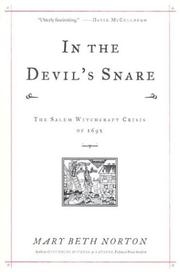
A gripping, authoritative narrative of the 1692 crisis written for a general audience; it introduces the accusers, the accused, and the political context in a way that makes the whole episode immediately comprehensible.

A Pulitzer Prize–winning journalist's deeply researched, beautifully written account that brings the personalities and atmosphere of Salem to life — ideal for cementing the narrative before moving to analytical works.
Puritan Society: The World That Made Salem Possible
BeginnerUnderstand the theology, social structure, and anxieties of Puritan New England so that the trials feel like an inevitable product of their world rather than an inexplicable outbreak of madness.
▸ Study plan for this stage
Pace: 6–7 weeks, ~25–30 pages/day. Start with "The Puritan Dilemma" (3–4 weeks, ~20 pages/day), then move to "Entertaining Satan" (3 weeks, ~30 pages/day). Build in 3–4 days for review and synthesis between books.
- The Puritan covenant theology and the concept of a 'city upon a hill'—how Puritans saw themselves as God's chosen people with a sacred mission
- The tension between individual election/predestination and communal responsibility in Puritan theology
- Puritan social hierarchy and the role of magistrates, ministers, and households in enforcing moral discipline
- The Puritan understanding of sin, the Devil, and spiritual warfare as literal, present dangers in everyday life
- How Puritan anxiety about declension (spiritual and moral decline) created a culture of suspicion and introspection
- The role of women in Puritan society and their vulnerability to accusations of witchcraft
- The overlap between folk magic, cunning practices, and demonic activity in Puritan worldviews
- How economic and social instability in late 17th-century New England amplified existing theological anxieties
- What did Puritans mean by a 'covenant' with God, and how did this shape their understanding of community responsibility?
- How did Puritan theology about predestination and election create psychological and social pressure on individuals?
- What role did magistrates and ministers play in maintaining moral order in Puritan communities, and what gave them authority?
- How did Puritans understand the Devil's presence in New England, and what made them believe witchcraft was a real threat?
- What kinds of behaviors and people did Puritans view as suspicious or potentially demonic, and why?
- How did gender, age, and social status influence who was vulnerable to witchcraft accusations in Puritan New England?
- Create a visual diagram mapping Puritan theology (covenant, election, sin, the Devil) and explain how each element connects to their fear of witchcraft.
- Write a character sketch of a typical Puritan magistrate or minister based on Morgan's account, detailing their responsibilities and worldview.
- Analyze 2–3 specific case studies from 'Entertaining Satan' and identify the social, economic, or personal tensions that preceded witchcraft accusations.
- Construct a timeline of Puritan New England from settlement (~1630) to the Salem trials (1692), marking key moments of spiritual anxiety, economic change, or conflict.
- Compare and contrast Puritan theology about the Devil with modern secular explanations for the same behaviors—what did Puritans see as demonic that we might diagnose differently?
- Write a short reflection: 'If I had been a Puritan in 1680, what aspects of my life would have made me anxious about witchcraft and moral decline?'
Next up: This stage establishes the theological, social, and psychological foundation that made Salem not a random hysteria but a predictable eruption of existing Puritan anxieties—preparing you to understand how specific local tensions in Salem Village in 1692 triggered the trials within this framework.

A classic, concise introduction to Puritan thought and the tension between godly ideals and worldly reality — essential background for understanding why witchcraft accusations made sense to 17th-century New Englanders.
Demos examines witchcraft accusations across colonial New England over a century, showing Salem as the culmination of deep social patterns rather than an isolated event — best read after Morgan's theological grounding.
The Accusations, the Court & the Confessions
IntermediateAnalyze the legal machinery of the trials, the logic of confession and accusation, and the specific social dynamics — gender, power, and community conflict — that drove the crisis to its deadly peak.
▸ Study plan for this stage
Pace: 6–7 weeks, ~40–50 pages/day. Start with Boyer's "Salem Possessed" (weeks 1–3, ~350 pages), then move to Karlsen's "The Devil in the Shape of a Woman" (weeks 4–7, ~400 pages). Build in 3–4 days for review and synthesis between books.
- Social factionalism and property disputes in Salem Village as root causes of accusations (Boyer's thesis)
- The role of gender in witchcraft accusations: why women were disproportionately targeted and how female economic independence threatened patriarchal structures (Karlsen)
- The mechanics of confession: how accusation, interrogation, and courtroom procedure created a self-reinforcing cycle of guilt
- The accused witches' social profiles: their marginality, conflict history, and deviation from community norms
- How the legal framework (magistrate examination, spectral evidence, touch test) legitimized accusations and made conviction inevitable
- The psychology of mass accusation: how initial accusations by afflicted girls spread through social contagion and community anxiety
- Gender, inheritance, and economic threat: how women who inherited property or lived outside male protection became vulnerable to accusation
- The distinction between confession and resistance: how some accused confessed to save their lives while others maintained innocence and went to execution
- According to Boyer, what specific property disputes and factional conflicts in Salem Village created the social conditions for the witch trials?
- How does Karlsen explain the gendered nature of witchcraft accusations, and what economic factors made older women particularly vulnerable?
- What was the role of the afflicted girls' testimony in the trials, and how did the legal system validate their claims?
- How did the confession process work, and why did some accused witches confess while others maintained their innocence despite execution?
- What social profiles did the accused witches share (age, gender, marital status, economic position, prior conflicts)?
- How did the legal machinery of examination and trial—including the touch test and spectral evidence—create a self-perpetuating cycle of conviction?
- Create a detailed timeline of accusations in Boyer's account, mapping which families accused whom and identifying patterns of prior conflict or property disputes.
- Build a demographic profile table of the accused witches using both books: age, gender, marital status, economic position, prior disputes with accusers. Identify commonalities.
- Analyze 2–3 specific confession narratives from the trials (referenced in both books). Write a 2-page analysis of what the confessions reveal about the accused person's social position and the pressure they faced.
- Map the factional divisions in Salem Village using Boyer's evidence. Create a visual diagram showing the Porter and Putnam families, their allies, and their property holdings.
- Write a comparative essay (3–4 pages) on how Boyer's economic/social explanation and Karlsen's gender analysis together explain why the trials happened when and where they did.
- Conduct a close reading of the legal procedures described in both books (examination, trial, evidence rules). Write a brief memo explaining how these procedures made conviction nearly inevitable.
Next up: This stage equips you to understand the trials not as supernatural panic but as a collision of economic anxiety, gender threat, and legal machinery—preparing you to examine the trials' aftermath, the recantations, the legal reversals, and how communities reckoned with the executions they had authorized.
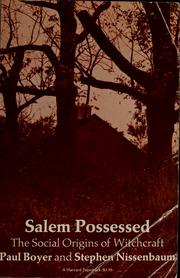
A landmark social history that maps the accusations onto real community fault lines — land disputes, family rivalries, and economic tensions — giving the reader a structural explanation for who accused whom.
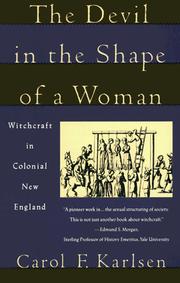
Focuses on gender and the specific vulnerability of women to witchcraft charges, adding an indispensable feminist lens that deepens the analysis begun in Boyer and Norton.
Primary Voices: Documents & the Ministers
IntermediateEngage directly with the words of participants — ministers, judges, and survivors — to understand how contemporaries justified, challenged, and ultimately repudiated the trials.
▸ Study plan for this stage
Pace: 4–5 weeks, ~25–30 pages/day (alternating between Mather and Calef, with reflection days)
- Cotton Mather's theological justification for the trials: how he framed witchcraft as a real, demonic threat requiring aggressive prosecution
- Mather's rhetorical strategies: use of eyewitness testimony, spectral evidence, and 'touch tests' to build credibility for the trials
- Robert Calef's systematic deconstruction of Mather's evidence: how he exposed logical fallacies, alternative explanations, and the dangers of spectral evidence
- The shift from justification to repudiation: how Calef's direct refutation of Mather marks the turning point in contemporary opinion about the trials
- The role of ministerial authority in the trials: how Mather's endorsement legitimized the proceedings, and how Calef's challenge undermined that authority
- Eyewitness accounts and their unreliability: comparing how Mather uses testimony versus how Calef interrogates the same testimony
- The language of certainty versus doubt: how Mather's confident assertions contrast with Calef's skeptical questioning
- What specific theological arguments does Cotton Mather use in 'The Wonders of the Invisible World' to justify the trials, and how does he connect witchcraft to broader spiritual warfare?
- How does Mather use eyewitness testimony and 'touch tests' to establish the reality of witchcraft, and what are the logical weaknesses in these methods?
- What is Robert Calef's central critique of Mather's evidence in 'More Wonders of the Invisible World,' and how does he systematically dismantle Mather's justifications?
- How do Mather and Calef differ in their treatment of the same events or testimonies, and what does this reveal about their underlying assumptions?
- What alternative explanations does Calef propose for the afflictions attributed to witchcraft, and how do these challenge Mather's supernatural interpretation?
- How does the debate between Mather and Calef reflect broader questions about ministerial authority, evidence, and the limits of prosecution in early American society?
- Create a two-column chart: list Mather's key claims from 'The Wonders of the Invisible World' in one column and Calef's direct refutations from 'More Wonders' in the other; annotate where they agree or diverge most sharply
- Select one specific case (e.g., George Burroughs or Bridget Bishop) as described by Mather, then find Calef's account of the same case; write a 500-word analysis of how their narratives differ and what those differences reveal
- Analyze Mather's use of the 'touch test' (where the accused witch's touch allegedly stopped the afflictions): write a critical essay explaining why this evidence is unreliable, using Calef's arguments and modern understanding of psychology
- Transcribe and annotate 2–3 key passages from Mather showing his rhetorical strategies (appeals to authority, emotional language, logical leaps); then annotate the same passages with Calef's likely objections
- Create a timeline of the trials as Mather presents them versus as Calef presents them; note where Calef adds context, corrects facts, or reinterprets events to undermine Mather's narrative
- Write a letter from Robert Calef to Cotton Mather responding to one specific argument in 'The Wonders of the Invisible World'; ground it in actual textual evidence from both works
Next up: This stage establishes the contemporary debate over the trials' legitimacy, positioning you to examine how later historians, legal scholars, and communities grappled with the trials' legacy and what they reveal about justice, evidence, and power in early America.
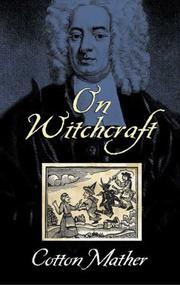
The most important contemporary defense of the trials by the era's most influential minister; reading Mather in his own words reveals the theological logic that made the executions possible.
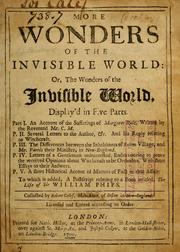
Calef's contemporary rebuttal to Mather is the first major critique of the trials, showing that dissent existed even in 1692 — a crucial counterpoint that sets up the study of the aftermath.
Aftermath, Memory & Interpretation
ExpertTrace how Salem was remembered, reinterpreted, and mythologized from the 18th century to the present, and engage with the sharpest historiographical debates about what the trials ultimately mean.
▸ Study plan for this stage
Pace: 6–7 weeks, ~25–30 pages/day (with reflection days built in)
- How 19th-century Romantic historians (like Starkey) constructed Salem as a cautionary tale of mass hysteria and emotional excess, shaping popular memory for generations
- The distinction between historical events and historical narratives: how interpretations of Salem shifted based on the anxieties and preoccupations of each era
- Starkey's psychoanalytic and sociological lens—viewing the trials through the framework of adolescent psychology, social tension, and collective delusion
- Rosenthal's archival revisionism: how close reading of original documents challenges the 'hysteria' narrative and reveals economic, political, and personal motives
- The role of myth-making in American identity: how Salem became a metaphor for McCarthyism, social persecution, and the dangers of ideology
- The historiographical debate between psychological/social explanations (Starkey) and documentary-based skepticism toward supernatural or purely psychological causes (Rosenthal)
- How later interpreters (playwrights, novelists, scholars) weaponized Salem to comment on their own historical moments, obscuring the actual 1692 context
- The ethical responsibility of historians: balancing narrative coherence with fidelity to evidence, and acknowledging what we cannot know about the trials
- How does Starkey's *The Devil in Massachusetts* reflect the intellectual preoccupations of mid-20th-century America, and what does this tell us about how each generation rewrites history?
- What is Rosenthal's central critique of the 'hysteria' interpretation, and what alternative explanations does he propose based on his archival evidence?
- How did the trials become a symbol for McCarthyism and other 20th-century moral panics, and what does this appropriation reveal about the relationship between history and myth?
- What are the key differences between Starkey's and Rosenthal's methodologies, and how do these differences lead to fundamentally different conclusions about what happened in Salem?
- How have literary and theatrical adaptations of Salem (referenced in both books) shaped public memory in ways that diverge from historical evidence?
- What does the historiographical debate about Salem teach us about the limits of historical knowledge and the dangers of over-interpretation?
- Create a timeline mapping how Salem was interpreted across three distinct periods (1692–1750s, 1800s–1920s, 1950s–present), noting which historical explanations dominated each era and why
- Read a selection of primary documents cited in both Starkey and Rosenthal (trial testimony, confessions, petitions) and write a 2–3 page analysis of how each author uses the same evidence differently
- Compare Starkey's psychological profile of the afflicted girls with Rosenthal's skepticism toward that framework—list the assumptions each historian makes and evaluate which are grounded in evidence
- Write a historiographical essay (4–5 pages) arguing for or against the proposition that 'Salem tells us more about the era that interprets it than about 1692 itself'
- Identify 3–4 moments in each book where the author acknowledges uncertainty or gaps in evidence, and reflect on how honest these acknowledgments are versus how much the author fills gaps with interpretation
- Create a visual argument map showing the logical chain in Rosenthal's critique of hysteria theory—what assumptions must be true for his alternative explanation to hold?
Next up: This stage equips you to recognize how historical narratives are constructed and contested, preparing you to either synthesize these competing interpretations into a nuanced personal understanding of Salem, or to move into specialized topics (legal history, gender studies, regional history) with sophisticated awareness of historiographical stakes.
A mid-20th-century narrative that shaped popular memory of Salem and influenced Arthur Miller; reading it here reveals how historical interpretation itself becomes part of the story.

A rigorous, skeptical reassessment of the primary sources that dismantles many myths and misreadings accumulated over centuries — the ideal capstone for a reader now equipped to evaluate competing claims.
Discussion
Keep reading
Paths that share books, cover the same subject, or open a related topic.