Salem is a small event with an outsized interpretive literature. Nineteen people were hanged, one was pressed to death, and the whole crisis burned out inside a year — and there are at least six serious scholarly explanations for why, ranging from frontier trauma to village factionalism to the legal status of women who inherited property. If you read a theory first, you will spend the rest of your reading fitting evidence to it.
It also matters that Salem was a legal proceeding, not a mob. Magistrates took depositions, defendants were examined, and the fatal question was evidentiary: whether spectral evidence — testimony that an accuser saw the defendant's apparition — could convict. When the Massachusetts authorities finally excluded it, the trials collapsed almost immediately. Keep that pivot in view throughout.
Start with the modern narratives
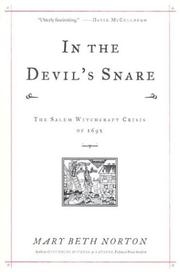
In the Devil's Snare by Mary Beth Norton is the strongest single account. Her argument is that the Second Indian War on the Maine frontier — where several accusers and their families had come from as refugees — supplied both the terror and the specific imagery of the accusations. It is meticulous, chronological, and makes 1692 comprehensible without making it inevitable.
The witches: Salem, 1692 by Stacy Schiff is the more literary telling, richer on texture and personality and more cautious about single explanations. Read it alongside Norton for atmosphere, not instead of it.
Get the Puritan world right
Edmund Morgan's The Puritan dilemma, built around John Winthrop, is the short book that explains what these people actually believed and what "a city upon a hill" was meant to obligate them to. Without it, the theology in the trial records reads as noise.
John Demos's Entertaining Satan widens the lens to witchcraft accusations across seventeenth-century New England — most of which never became a panic. It is the book that shows Salem was an outlier in scale, not in kind, and it does careful work on the demographic profile of the accused.
Then the interpretive classics
Salem possessed, by Paul Boyer and Stephen Nissenbaum, is the famous social-history reading: accusations tracked the fault line between the commercial east of Salem Town and the agrarian west of the Village. Later scholars, Norton included, have qualified it, but it remains the argument everything else responds to.
Carol Karlsen's The devil in the shape of a woman asks why the accused were overwhelmingly women, and finds a pattern in women who stood to inherit property in the absence of male heirs. It is the other indispensable interpretive book.
Finish with the sources
The wonders of the invisible world is Cotton Mather's own defense of the trials, written while they were fresh — the primary document for how a leading minister justified what happened. Set against it, More wonders of the invisible world is Robert Calef's contemporary attack on Mather, and reading them back to back is the best possible lesson in how quickly the events became contested.
Marion Starkey's The Devil in Massachusetts is the mid-century popular history that shaped public memory and influenced Arthur Miller; read it as historiography now rather than as current scholarship, and skip it if you are short on time. Bernard Rosenthal's Salem story is the better closer — a source-critical dismantling of accumulated myths, including several that appear in Starkey.
Follow the full path to keep these in order, and browse /discover if you want the wider early-American reading.
Follow the full ordered path here: The Salem Witch Trials: Best Books to Read, in Order.