Best Books on the Norman Conquest, in Reading Order
1066 is the most familiar date in English history and the least well understood: most people can name the battle and almost nobody can say what changed afterwards, which is where the real argument lies. This path starts with the year itself, then goes backwards into the Anglo-Saxon kingdom that was destroyed, then to the two men who claimed the throne, then to what the conquest did to the people already living there — the part historians disagree about most sharply. It ends with the Domesday survey and the primary sources, so you can see the evidence the whole argument rests on.
The Year Itself
BeginnerGet 1066 straight: the succession crisis, Stamford Bridge, Hastings, and the campaign that followed the battle.
▸ Study plan for this stage
Pace: Three weeks. Read Howarth's 1066: The Year of the Conquest first and fast — 216 pages, one or two evenings, deliberately consumed as story before you know enough to argue with it. Then Morris's The Norman Conquest, 440 pages over two to three weeks at 25 pages a day, with the Howarth version still i
- Four claimants to a childless king's throne, each appealing to a different kind of legitimacy: Harold Godwinson by deathbed nomination and the assent of the English magnates, William by an alleged promise and Harold's oath, Harald Hardrada by an inherited Scandinavian agreement, and Edgar the Ætheli
- The compression of the autumn: Fulford, then Stamford Bridge, then a landing at Pevensey days later, then Hastings — Harold fought two full battles at opposite ends of the kingdom inside three weeks
- The shield wall as a tactical system and the competing explanations for its failure: feigned retreat, exhaustion, the loss of the command group, or simple duration
- The arrow in the eye as a case study in how a story becomes a fact — the Bayeux Tapestry image is ambiguous and the earliest written sources do not say it
- That Hastings did not end the war: the circling march on London, the submission at Berkhamsted, the Christmas Day coronation, and then five years of revolt
- The narrow and partisan source base — William of Poitiers was William's own chaplain, the Anglo-Saxon Chronicle survives in versions that disagree, and Orderic Vitalis wrote two generations later with an English mother
- Morris's methodological insistence, which is the real lesson of this stage: nearly every confident sentence about 1066 rests on one text with an interest in the outcome
- Set out all four claims to the throne and say what kind of legitimacy each appealed to. Which was strongest by the standards of 1066, as opposed to ours?
- What did Stamford Bridge cost Harold at Hastings, and how much of the traditional answer is supported rather than assumed?
- Why did the shield wall break? Give the competing explanations and the evidence for each, and say which Morris favours
- What is the actual evidence for the arrow in the eye? What does the story's persistence tell you about the source situation generally?
- Name the four or five sources everything rests on, and for each say who wrote it, when, and for whom
- Build a day-by-day calendar of 1066 from Edward's death in January to the coronation on Christmas Day. Mark which dates are firm and which are inferred — the second category is larger than you expect
- Take one episode Howarth narrates vividly and set it against Morris's treatment, listing every point where Howarth supplies motive, dialogue or feeling that the sources do not. This is the most useful hour on the whole path
- Draw the Hastings battlefield from Morris's description, with the phases of the day marked and the timings he gives
- Write 200 words on why William sat on the Norman coast for weeks before sailing, and what the delay cost and gained him
- Make a source card for each of William of Poitiers, the Anglo-Saxon Chronicle versions D and E, the Bayeux Tapestry and Orderic Vitalis: author, date, patron, purpose, known bias. Keep the cards — every later stage uses them
Next up: You now know what happened in 1066 and how little of it is securely known — the next stage supplies the kingdom that was on the receiving end, which the narrative accounts largely take for granted.

A short, vivid month-by-month account written for general readers and still the most enjoyable introduction to the year. Take it as narrative rather than as scholarship — Howarth speculates freely — and read it in an evening or two.

The best modern single-volume history, covering the decades either side of the battle and unusually clear about how thin and partisan the sources are. This is the book the rest of the path hangs off.
The England That Was Conquered
BeginnerUnderstand late Anglo-Saxon England — a wealthy, literate, well-governed kingdom — so that the conquest registers as the destruction of something rather than the arrival of civilisation.
▸ Study plan for this stage
Pace: Four weeks. The Anglo-Saxons: The Making of England is 452 pages across six centuries, so it moves quickly; three weeks at a comfortable pace, and it is fine to read the pre-Alfredian chapters faster than the tenth and eleventh century ones, which is where the conquest's stakes are set. The Godwins
- Late Anglo-Saxon England as a sophisticated state rather than a backwater: shires and hundreds, a periodically recoined national currency, the writ as an instrument of royal command, and a national land tax that actually got collected
- A vernacular written culture with no real parallel in western Europe — administration, law and literature in English rather than only Latin — which is precisely what the conquest interrupted
- The Danish conquest of 1016 as the immediate precedent: England had already been taken by a foreign king within living memory, and the machinery of government survived it intact
- The rise of the house of Godwine under Cnut, and the accumulation of earldoms that made one family a rival power to the crown
- Edward the Confessor's Norman connections and household, which is where William's claim to a promise comes from and why the Norman version was plausible to contemporaries
- The 1051–52 crisis, the Godwins' exile and return, and what a king unable to keep his greatest subject out of the country tells you about royal authority
- The Northumbrian rising of 1065 and Harold's decision to abandon Tostig — the event that supplied Hardrada with an ally and demonstrated the limits of Harold's power inside England
- The framing that makes the rest of the path work: 1066 is not the arrival of government in England, and any account that treats it that way is repeating Norman propaganda
- Name three concrete instruments of Anglo-Saxon government and explain what each actually did. Which of them did the Normans keep?
- Cnut conquered England in 1016 and the state carried on. What makes 1066 different — and is the difference in the conquest or in the historiography?
- Trace the rise of the Godwin family and say what it did to the authority of the crown. Was Harold's accession a usurpation, a coup, or the normal working of an aristocratic kingdom?
- In 1065 Harold sided against his own brother. What does that episode show about where power actually sat in England?
- After Morris's account of the Anglo-Saxon kingdom, is the conquest better described as the destruction of something, the replacement of something, or the continuation of something under new management?
- Draw the Godwin family tree from Barlow, with marriages and the earldoms each member held. Harold's siblings matter for the whole of 1066 and the names are easy to confuse
- List the instruments of Anglo-Saxon government from Morris and leave a blank column headed 'in 1086'. You will fill it in during the fourth and fifth stages
- Write 300 words comparing Cnut's conquest with William's on three axes: violence, change of landholding, change of personnel. The comparison is the single best argument-starter on this subject
- Sketch a map of the English earldoms as they stood at the end of 1065, with the holder of each. Then mark the same map for 1070
- Find where Morris describes the writ and write a paragraph on why a short sealed document in the vernacular is evidence of a strong state
Next up: With the kingdom and its politics in place you can finally judge the two men who claimed it, rather than taking either side's account of them on trust.

Morris's companion volume on the six centuries before 1066, from the end of Roman Britain to Edward the Confessor. Read it second, not first: it lands better once you know what happens to this kingdom.
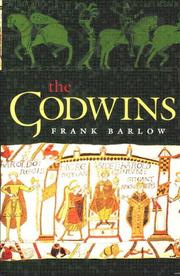
The family that dominated English politics for thirty years before the conquest and produced its last king. The essential background to the succession dispute, and a reminder that England had its own bitter internal politics before the Normans arrived.
The Two Claimants
IntermediateWeigh Harold's and William's claims and characters through full biographies, and judge how much of the traditional account comes from Norman propaganda.
▸ Study plan for this stage
Pace: Four weeks. Harold: The Last Anglo-Saxon King is 273 pages and openly revisionist; two weeks, and read it first precisely because everything else you will ever encounter gives you William's version. Bates's William the Conqueror is 272 pages but considerably denser — it is built on charter evidence
- Harold's actual record before 1066: earl of Wessex, and the commander of the successful Welsh campaigns of 1063 against Gruffudd ap Llywelyn, which is where his military reputation came from
- The 1064 journey to Normandy and the oath — the reason for the trip is unrecorded, every account of the oath comes from a source with an interest, and the whole Norman legal case rests on it
- Walker's rehabilitation project and its hazards: correcting for a millennium of winners' sources is legitimate, but the corrective can outrun the evidence, and you should mark where it does
- William's survival of a minority as an illegitimate duke, Val-ès-Dunes, and the conquest of Maine — the record that made 1066 possible and is usually skipped
- The papal banner and the presentation of the invasion as a licensed correction of a perjurer, which turns a land grab into a legal action
- Bates's method: charters establish itineraries, patronage and the working of authority, and are far harder to bend than chronicles — this is the most transferable thing in the stage
- William's rule after 1066 as a cross-Channel operation, with long absences in Normandy, and the 1087 division of the inheritance that split the two territories again
- What is the evidence for Harold's oath, who supplies each piece of it, and what did each source stand to gain from the story?
- Where does Walker's rehabilitation of Harold go beyond what the evidence supports? Be specific rather than general
- What can a charter establish that a chronicle cannot, and what can it never establish? Give an example of each from Bates
- Was William's claim legally credible by eleventh-century standards, or does it only look credible because it succeeded?
- Compare Walker's method with Bates's. Which do you trust more, and is the answer about the historians or about the surviving evidence for each man?
- Build a two-column comparison of Harold and William as of 1 January 1066: resources, allies, military record, and claim. Do it before you finish either book and revise it after
- Write out the oath episode as each separate source gives it, side by side, then a paragraph on what can actually be established. Use the source cards from the first stage
- From Bates, reconstruct William's movements across a single year from the charter evidence, and mark the gaps. The gaps are the honest part
- Write 250 words arguing that Harold would have been the better king, then 250 arguing the opposite, using only these two books
- Take three claims about Harold that appear in Howarth and check each against Walker and Bates. Note which survive
Next up: Having weighed the two men, you can turn to the question that actually matters and that historians genuinely disagree about — what the conquest did to everyone who was not a claimant.
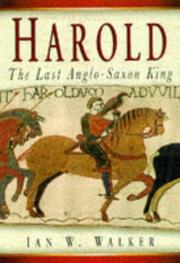
A rehabilitation of Harold Godwinson against a millennium of writing dominated by the winners' sources. Read it first here — you will get William's version everywhere else.
The standard scholarly biography by the leading authority on Norman England, careful about what the charters can and cannot tell us. Denser than Walker and far more authoritative; this is the serious life of the man.
What the Conquest Did
IntermediateTake on the central historiographical dispute — catastrophe or continuity — including the harrying of the north and the fate of the English aristocracy.
▸ Study plan for this stage
Pace: Five weeks. Read The English and the Norman Conquest first, 264 pages over two weeks, taking notes on the mechanisms of survival she identifies. Then The Death of Anglo-Saxon England, 234 pages over a fortnight, read deliberately as the opposing case — these two books are the debate and reading them
- The tenurial revolution as the hardest single fact: within twenty years, effectively the entire top layer of English lay landholding was Norman, and Domesday shows almost no English names among the greatest tenants-in-chief
- Williams's counter-emphasis: below that top layer, survival, intermarriage, service and accommodation were common, and English families persisted in ways the catastrophe narrative misses
- Higham's case for extinction: the harrying of the north, the destruction of the native aristocracy, and the displacement of English as a language of record and of high culture
- That the two historians largely share a source base and differ on weighting and on which question is being asked — which is what a real historiographical dispute usually looks like
- Castles as the physical instrument of a small occupying elite, and the visible change they made to the English landscape
- The Bayeux Tapestry as an object with a maker, a patron and an audience: probably embroidered in England, probably for Odo of Bayeux, and therefore a Norman account produced by English hands
- The tapestry's ambiguities — the Ælfgyva panel that nobody can explain, and the lost ending — and the fact that its captions are terser than its images
- Its later career as a national symbol, from rediscovery through Napoleon to its wartime attention, which is Hicks's argument that a source's afterlife shapes how it is read
- State the catastrophe case and the continuity case in their strongest forms. What evidence does each lean on hardest?
- Williams and Higham use much the same material. Is the disagreement about evidence, about weighting, or about which question counts as the important one?
- What do we actually know about the harrying of the north? Name the sources, the scale claimed, and the grounds for doubting or accepting it
- Who was the Bayeux Tapestry made for, and how does the answer change the way you read its account of Harold's oath and death?
- What survived 1066? Answer separately for law, language, administration, the church, and landholding — the honest answer differs by category
- Return to your table of Anglo-Saxon institutions from the second stage and fill in the 1086 column, using Williams and Higham. Where they disagree, put both
- Assemble every source statement about the harrying of the north on one page, with attribution and date, and then write a paragraph assessing the scale claim
- Look at the Bayeux Tapestry image by image alongside Hicks and find three places where the picture is ambiguous and the Latin caption is not. Write what each ambiguity might be concealing
- Write 400 words adjudicating between Williams and Higham, and take a side. Adjudicating without deciding is the one wrong answer here
- Read Hicks on the Ælfgyva panel, then write your own paragraph on why an unexplained scene is useful evidence about the object as a whole
Next up: The dispute you have just read turns almost entirely on one document and a handful of chronicles — the final stage goes to those sources directly, and puts England into the wider Norman world.
What happened to English landholders, churchmen and thegns after 1066, traced through the charter and Domesday evidence. Williams finds more survival and accommodation than the catastrophe reading allows; read it first in this stage.

The opposite emphasis: the conquest as the extinction of a political and cultural order, argued hard. Set directly against Williams, these two books are the debate in miniature, and this path does not settle it for you.
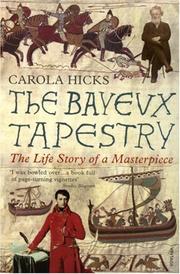
The life story of the object itself — who made it, for whom, and what its ambiguities conceal — plus its later career as a national symbol. The best way into the conquest's single most important visual source.
The New Order and the Sources
BeginnerUnderstand the Domesday survey and the Norman settlement, and read the chronicles that everything else is built from.
▸ Study plan for this stage
Pace: Eight weeks, the longest stage by a distance, and it need not be read in strict order. Harvey's Domesday is 360 pages and takes two to three weeks; Chibnall's The Normans is 200 pages and takes one; Carpenter's The Struggle for Mastery is 628 pages covering two centuries and takes three, and can be
- What the Domesday survey physically was: commissioners riding circuits in 1086, a fixed list of questions, values recorded for the time of King Edward and the present day, and two surviving volumes of different character
- The competing answers to what it was for — a reassessment of the land tax, a record of who held what from whom, or a settlement of the conquest's landholding disputes — and Harvey's own case
- What Domesday's figures do and do not measure: it is not a census, it undercounts and omits by category, and almost every popular use of its numbers asks more of it than it can bear
- The Chronicle's own bitter description of the survey, which is a contemporary reaction to being counted and worth more than any modern summary of what it felt like
- Chibnall's frame: Normans in Normandy, England, southern Italy, Sicily and the crusader states — a mobile military aristocracy rather than a nation, which reframes 1066 as one venture among several
- Carpenter's long view to 1284: the Angevin state, the crisis that produced Magna Carta, and the conquest of Wales — the Norman settlement's actual output, two centuries downstream
- The Anglo-Saxon Chronicle as a set of manuscripts rather than a book, with the Peterborough version continuing to 1154 and giving you an English monastic voice across the whole period
- How to read an annalist: the omissions, the choice of what merits an entry, and the moments when a compiler's control of his tone visibly slips
- What was Domesday for? Give the competing answers, Harvey's own, and the evidence that distinguishes them
- Which questions can Domesday's figures answer, and which are routinely asked of them that they cannot? Give an example of a misuse
- What does putting England beside Sicily and Antioch show that an English-only account of the conquest cannot?
- By Carpenter's account, what did the Norman settlement eventually produce — and at what point does 1066 stop being the explanation for anything?
- Read the Chronicle for 1066, 1069–70, 1085–86 and 1087. What are the compilers not saying, and how can you tell?
- Take one Domesday entry for a place you know and translate it into plain English, defining every technical term. One manor properly understood is worth a chapter of commentary
- From Harvey, list the questions the commissioners were instructed to ask, and beside each write what it was for. Then say which questions you would have added if the purpose were tax and which if it were lordship
- Chart the Norman ventures Chibnall covers: place, date, leading family, outcome. Note how many succeeded and how many left no trace
- Read the Peterborough Chronicle's account of William's death and character under 1087, and write 300 words on it as evidence — who is writing, what he praises, what he condemns, and what the balance is designed to do
- Write the closing essay: 1,500 words on what actually changed in England because of 1066, citing a book from every stage, and naming explicitly where Williams and where Higham would each object to your answer
Next up: This closes the path; the natural continuations are the Anglo-Norman realm to 1154 and the Anarchy, the twelfth-century chroniclers such as Orderic Vitalis and William of Malmesbury in translation, and the Normans in Sicily as a conquest that went differently.

What the 1086 survey was actually for, how it was compiled, and what its figures do and do not measure. The most important document in English administrative history, explained by a scholar who has worked on it for decades.

The Normans as a European phenomenon — Normandy, England, southern Italy, Sicily, the crusader states — which is the frame that shows England as one conquest among several. Read it to stop thinking of 1066 as an English event.
Britain from 1066 to 1284 in the New Penguin History of Britain series, taking the conquest's consequences forward across two centuries. The answer to what the Norman settlement eventually produced.

The English annals themselves, including the entries written by monks living through the conquest and its aftermath. Kept for last, when you know enough to hear what the compilers are not saying.
Discussion
Keep reading
Paths that share books, cover the same subject, or open a related topic.