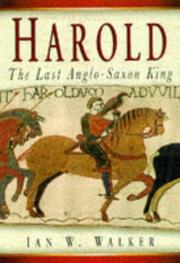
Harold the Last Anglo Saxon King
Ian W. Walker · 1997 · 273 pages
As an Amazon Associate we earn from qualifying purchases. Some book links are affiliate links; you pay the same price and we may earn a small commission.
About this book
King Harold Godwineson (c. 1022-66) is one of history's shadowy figures, known mainly for his defeat and death at the battle of Hastings. His true status and achievements have been overshadowed by the events of October 1066 and by the bias imposed by the Norman victory. In reality, he deserves to be recalled as one of England's greatest rulers. Harold: The Last Anglo-Saxon King sets out to correct this distorted image by presenting Harold's life in its proper context, offering the first full-length critical study of his career in the years leading up to 1066. The book begins with an account of how Harold's father, Earl Godwine, rose to power amidst the confusion of Cnut's conquest of England and how he managed to retain that power despite a period of exile following a rebellion against Edward the Confessor in 1051-2.^ Like his father, Harold rose to power through royal service, successfully overcoming the problems arising from his father's rebellion to secure a position of power and influence as first deputy to the king. The childless Edward increasingly relied on Harold's diplomatic and military skills in establishing his rule, helping to secure the succession in the person of Edgar Atheling, putting down a long-standing threat from Fruffydd of Wales, and convincing the king to exile his own brother Tosti in the wider interests of the realm. Harold's reward came, when in the face of the threat from William of Normandy, Edward designated Harold as his successor rather than Ed
Appears in these reading paths


Best Books on the Norman Conquest, in Reading Order
Related reading guides
Reader reviews
Ratings and notes from readers — tagged with how deep into the subject they were.
Loading reviews…