The Locked Tomb Reading Order: Where to Start
The Locked Tomb is a dense, genre-defying series best experienced in publication order, where each novel recontextualizes everything before it — going in blind is essential because Muir weaponizes reader assumptions. This curriculum starts with the four main novels in sequence, then deepens appreciation through the short fiction and supplementary material Muir has released, letting the full architecture of the series reveal itself naturally.
The Tomb, Opened
IntermediateExperience the first two novels in publication order, establishing the world, voice, and central mysteries exactly as Muir intended — with no spoilers and no foreknowledge.
▸ Study plan for this stage
Pace: 8–10 weeks total: Weeks 1–4 for Gideon the Ninth (~25–30 pages/day, allowing time to savour the voice and take notes); Weeks 5–10 for Harrow the Ninth (~20–25 pages/day, slower pace to track the layered timelines, unreliable narration, and second-person shifts without outside spoilers)
- The Nine Houses cosmology: understanding the necromantic hierarchy, the role of each House, and the relationship between necromancer and cavalier as a paired, codependent unit
- Voice as worldbuilding: Gideon Nav's anachronistic, pop-culture-saturated first-person narration is not mere style — it is characterisation, unreliable framing, and tonal contrast to the gothic setting all at once
- The Lyctoral secret: what it means to become a Lyctor, why the Emperor needs them, and how the revelation at the end of Gideon recontextualises every prior scene of necromantic study in Canaan House
- Grief, devotion, and the cavalier bond: the novels interrogate what it means to serve, to be consumed, and to love someone whose power literally requires your sacrifice
- Unreliable and fractured narration in Harrow the Ninth: the second-person present-tense sections, the 'wrong' memory sequences, and the redacted/replaced figures demand active reading to reconstruct what actually happened
- The Emperor (God) and the Resurrection Beasts: the cosmological stakes expand from a locked-room murder mystery to a war against entities born from the deaths of entire planets
- Intertextual and genre layering: Muir fuses sword-and-sorcery, gothic horror, locked-room mystery, and space opera — tracking which genre register is active at any moment illuminates theme and plot
- The role of the Tomb itself: from rumour and prohibition in Gideon to its centrality in Harrow, the Tomb functions as the series' moral and narrative fulcrum
- By the end of Gideon the Ninth, what is the true mechanism of Lyctorhood, and how does Muir foreshadow it through the trials and the theorica texts the necromancers study in Canaan House?
- How does Gideon Nav's narrative voice shape your trust in her account — what does she notice, what does she miss, and what does she refuse to say directly?
- In Harrow the Ninth, what is the function of the second-person narration and the 'incorrect' memory sequences — what has been changed, by whom, and why?
- How do the paired relationships (necromancer/cavalier) across both novels comment on themes of consent, sacrifice, and the ethics of power?
- What do the Resurrection Beasts represent thematically, and how does their existence reframe the Emperor's project of resurrection and immortality?
- After reading both novels, how has your understanding of the Tomb — its occupant, its prohibition, and Harrow's secret relationship to it — evolved from the first page of Gideon to the last page of Harrow?
- Cavalier/Necromancer relationship map: after finishing Gideon, draw a diagram of all four surviving House pairs who arrive at Canaan House, annotating each bond with its power dynamic, emotional texture, and ultimate fate — then revisit the diagram after Harrow to see what was hidden
- Voice journal: while reading Gideon, keep a running log of 8–10 Gideon-isms (jokes, references, asides) that initially read as pure comedy — then write a short paragraph for each explaining what the joke is actually doing emotionally or narratively
- Harrow timeline reconstruction: Harrow the Ninth presents events out of order and with deliberate falsification — create a written timeline of what you believe actually happened (in the 'real' past, the River sequences, and the present-tense plot) and annotate where you are uncertain and why
- Genre-mode tracking: select one chapter from each novel and annotate it in the margins (or a notebook) for genre register — mark sentences or passages as gothic horror, locked-room mystery, sword-and-sorcery, or space opera, then reflect on how Muir transitions between them within a single scene
- The Lyctoral re-read: after finishing Gideon, re-read the chapter in which the theorica texts are first studied and the chapter of the final revelation — write a one-page close reading of how the language of the earlier scene contains the answer in plain sight
- Letter in character: write a one-page letter from Harrowhark to Gideon set at any point during Gideon the Ninth, using only what Harrow would have known and felt at that moment — this forces you to hold both perspectives simultaneously and surfaces dramatic irony you may have missed on a single read-through
Next up: Having lived inside Muir's voice, absorbed the shock of Lyctorhood's true cost, and wrestled with Harrow's fractured reality, the reader is now equipped — and emotionally primed — to enter the next stage with the full weight of what has been lost and what remains unresolved, ready to see the series' world from an entirely new vantage point.
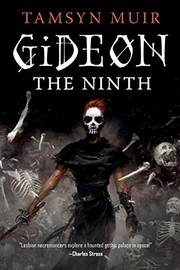
The entry point and the series' tonal anchor: a necromancer-and-cavalier murder mystery drenched in sword-fighting and millennial humor. Read this first, cold — the genre disguise is the point.
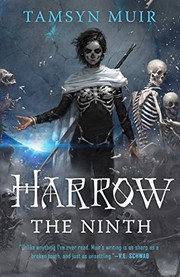
Immediately follows Gideon and radically reframes it through an unreliable narrator and experimental structure; reading it second, without knowing what to expect, delivers the full intended shock.
The Empire, Revealed
IntermediateComplete the currently published main-series novels, expanding the scope from a single house to the entire Resurrection Beast war and the political machinery of the Resurrection.
▸ Study plan for this stage
Pace: 3–4 weeks, ~25–30 pages/day — Nona the Ninth is dense with layered POVs, unreliable narration, and lore payoffs that reward slow, annotated reading; budget extra time for the final act
- The Resurrection Beast War: understanding the scale and stakes of the conflict between the Resurrection Beasts (Lyctors' consumed souls made monstrous) and the Empire's remaining forces, as depicted through Nona's fragmented perspective
- Nona as an unreliable and layered narrator: Nona is not who she appears to be, and tracking the gap between her innocent self-perception and the truth she embodies is the novel's central dramatic irony
- The Body and identity: the recurring figure of 'the Body' (Alecto) and what her appearances signal about the nature of the Resurrection, John's original sin, and the soul ecology of the Locked Tomb universe
- John Gaius unmasked — the Resurrection letters: the epistolary sections reveal John's pre-Resurrection humanity, his grief, his hubris, and the exact mechanism by which he became God, recontextualizing everything in the prior books
- The Blood of Eden and the non-necromantic world: Nona's street-level life in a besieged city introduces the perspective of ordinary people and political resistance movements who exist entirely outside the necromantic power structure
- Camilla and Palamedes (Cam/Pal): their merged survival and the ethical weight of Palamedes continuing to exist inside Camilla's body deepens the series' ongoing meditation on identity, sacrifice, and what it means to be a person
- Lyctorhood and its costs revisited: Nona's story forces a re-examination of what was sacrificed in Gideon the Ninth and Harrow the Ninth — the true price of the Lyctoral process is made viscerally concrete
- Scope expansion — from House to Empire to planet: the novel deliberately shifts scale from the claustrophobic single-location horror of earlier books to a war-torn city, a dying planet, and a cosmic conflict, signaling the series' final-act ambitions
- Who is Nona, really — what soul or entity inhabits her body, and what textual clues in the novel confirm this reading by the final act?
- What do John's letters reveal about the pre-Resurrection world, his motivations, and the specific act that created the Resurrection Beasts? How does this change your interpretation of him as an antagonist?
- How does the Blood of Eden function as a political and ideological counterweight to the Necromantic Empire, and what does Nona's affection for her found family in the city suggest about the novel's moral sympathies?
- What is the significance of 'the Body' appearing to Nona, and how does this connect to the mythology of Alecto and the Locked Tomb established in earlier stages?
- How does the Cam/Pal dynamic in Nona the Ninth complicate or extend the series' themes of sacrifice and identity that were introduced through Gideon and Harrow's relationships?
- By the end of Nona the Ninth, what is the state of the Empire, the war, and the central cast — and what unresolved questions does the novel deliberately leave open for the series' conclusion?
- Maintain a 'Nona vs. Reality' dual-column journal: in the left column, record what Nona believes or understands about herself and her world; in the right column, record what the reader can infer is actually true. Review the gap at the end of each reading session.
- Annotate every appearance of 'the Body' with a timestamp and a note on context — what is happening in the plot, what Nona is feeling, and what the Body does or says. At the end of the book, write a one-paragraph theory of what these appearances mean.
- Read all of John's letters in sequence, in isolation, as if they were a standalone epistolary short story. Write a brief character sketch of John-before-Resurrection: what kind of person was he, and is he sympathetic? Compare this sketch to your view of him from the earlier books.
- Draw or diagram the factions present in the besieged city (Blood of Eden cells, Imperial remnants, Nona's household, etc.) and map each named character to their faction, loyalties, and what they want. Use this to track how Nona's innocence makes her a uniquely unreliable guide to the political situation.
- Write a 300–500 word in-universe document — a Blood of Eden recruitment pamphlet, a field report, or a letter — from the perspective of a non-necromantic character who has lived through the events of the novel. This forces engagement with the 'ordinary world' perspective the novel foregrounds.
- After finishing, re-read the novel's opening chapter with full knowledge of the ending. Annotate every line that reads differently now that you know who Nona is. Reflect in writing on how Muir constructed the dramatic irony from page one.
Next up: Nona the Ninth ends on a precipice — identities revealed, the war at a breaking point, and John's true history fully exposed — leaving the reader primed to confront the series' ultimate reckoning with godhood, sacrifice, and the cost of the Resurrection in whatever concluding volume follows.

Originally part of Alecto the Ninth, this novel stands alone as a quieter, character-driven pivot; reading it third lets the deliberate change of pace land as a meaningful structural choice rather than a surprise detour.
The Margins, Explored
ExpertRead Muir's officially published short fiction set in or adjacent to the Locked Tomb universe to catch details, character backstory, and world-building that enrich a re-read of the novels.
▸ Study plan for this stage
Pace: 2–3 weeks; both pieces are short fiction, so aim for one careful read-through per piece (1–2 sittings each), followed by a dedicated annotation/re-read session. Spend roughly the first week on "As Yet Unsent," the second week on "The Mysterious Study of Doctor Sex," and reserve the third week for co
- Epistolary voice and unreliable self-presentation: 'As Yet Unsent' is structured as unsent correspondence, so the reader must distinguish what the writer says from what the subtext reveals about their true emotional and psychological state.
- Pre-novel character interiority: both stories grant access to characters' inner lives at moments the novels either skip or only gesture toward, making them primary sources for backstory and motivation.
- Necromantic and cavalier relational dynamics outside crisis: the short fiction shows these partnerships in lower-stakes, quieter moments, illuminating the affective texture the novels compress or elide.
- World-building through the mundane: details about daily life in the Nine Houses — food, bureaucracy, social ritual, humor — appear here in ways the plot-driven novels rarely pause to deliver.
- Tonal range of the Locked Tomb universe: Muir deploys absurdist comedy ('The Mysterious Study of Doctor Sex') alongside raw emotional vulnerability ('As Yet Unsent'), demonstrating that the universe's register is not fixed.
- Dramatic irony for the re-reader: knowing the novels' outcomes transforms every line of these stories; tracking where dramatic irony is sharpest is central to the advanced reader's task.
- Canonical versus supplementary status: understanding how officially published short fiction sits in relation to the novels — confirming, complicating, or quietly contradicting them — is itself a critical skill.
- Thematic continuity — love, duty, and the cost of devotion: both pieces, despite their tonal differences, return to the universe's core preoccupation with what people sacrifice for those they are bound to.
- In 'As Yet Unsent,' what does the choice of the unsent-letter format reveal about the writer's relationship to honesty, self-deception, and the intended (but never reached) recipient — and how does this reframe your understanding of that character in the novels?
- What specific world-building details in either story (social customs, House culture, necromantic practice, humor) are absent or only implied in the novels, and how do they change your mental model of the universe?
- Where is dramatic irony most acute in each piece — that is, which lines land completely differently once you know how the novels end — and what effect does Muir seem to be engineering with that irony?
- How does 'The Mysterious Study of Doctor Sex' use comedy and genre-parody to make serious points about the characters or the universe, and what would be lost if the same content were delivered in a straight dramatic register?
- Both stories center on relationships defined by asymmetric power, devotion, or knowledge. How does each story complicate or deepen the reader's understanding of those relational dynamics beyond what the novels show?
- Taken together, do these two stories feel tonally and canonically consistent with the novels, or do they introduce tensions? Cite specific moments from each text to support your answer.
- Annotation pass for dramatic irony: Re-read each story with the novels fresh in mind and physically mark (highlight, sticky note, or digital comment) every line that reads differently because of what you know. Write a one-sentence gloss on each marked moment explaining the irony.
- Character voice comparison: Choose one character who appears in both the short fiction and the novels. Write a one-page close-reading comparing their diction, emotional register, and self-presentation across the two contexts. Where is the voice consistent? Where does it shift, and why might that be?
- World-building inventory: Create a two-column list — one column for each story — cataloguing every concrete world-building detail (a food, a social practice, a bureaucratic title, a piece of slang) that does not appear in the novels. Then write a short paragraph on which details feel most significant for a re-read.
- Unsent letter response: Write a one-page 'reply' to the letter in 'As Yet Unsent' in the voice of its intended recipient, using only what the novels establish about that character's personality and knowledge. This forces you to hold both texts in mind simultaneously.
- Tonal analysis side-by-side: Draft a one-paragraph summary of each story's dominant tone, then write a third paragraph arguing how both tones are actually expressions of the same underlying thematic concern. Use at least two direct quotations from each story.
- Re-read trigger list: Before moving on, compile a bullet-point list of at least ten specific moments in the novels that you now want to revisit in light of these stories. For each bullet, note which story prompted the re-examination and what question you are bringing back to the novel.
Next up: By excavating the emotional and world-building subtext that the novels compress, this stage equips the reader with a richer, more irony-aware lens — making any subsequent deep-dive re-read of the novels themselves far more rewarding and analytically precise.

A canonical short story released by Tor that fills in crucial backstory for Harrowhark; best read after all four novels so its revelations deepen rather than spoil the main arc.
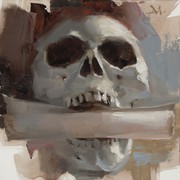
A short comedic piece Muir released that illuminates character voice and the series' tonal range; reading it post-series lets you appreciate how deliberately Muir modulates register across the whole work.
Discussion
Keep reading
Paths that share books, cover the same subject, or open a related topic.