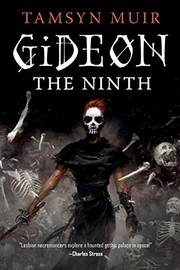
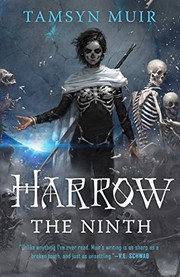
Start with Gideon the Ninth. There is no alternative and no order dispute — the series is four books, published in sequence, and each one is comprehensible only after the last. What this guide can actually help with is the second book, which is where a very large number of readers stop, and it is worth knowing in advance why.
Gideon the Ninth itself is straightforward: necromancers and their sworn swordsmen are summoned to a decaying gothic house to compete for a form of immortality, people start dying, and the whole thing is narrated by a foul-mouthed teenager who would rather be reading dirty magazines. It is a locked-room mystery in a haunted mansion, with jokes. The premise sells itself.
The order
- Gideon the Ninth
- Harrow the Ninth
- Nona the Ninth
- Alecto the Ninth, the concluding novel, which is not yet in our catalogue
Two shorter pieces sit alongside them:
- As Yet Unsent, a short epistolary piece best read after Harrow the Ninth
- The Mysterious Study of Doctor Sex, a comic short set among the characters and best read after Nona the Ninth
Both are entirely optional and neither is required to follow the plot.
The Harrow the Ninth warning
This is the important part. Harrow the Ninth is narrated largely in the second person, by a point-of-view character whose mind has been deliberately altered, and roughly half the book recounts the events of Gideon the Ninth incorrectly. Characters who died are alive. Characters who were present are absent. Nothing is explained for a very long time.
Readers routinely conclude that they have forgotten book one, or that the author has made errors, or that they have somehow skipped a volume. None of these is true. The contradictions are the plot. Muir is doing something structurally that requires you to sit in confusion for several hundred pages, and the explanation, when it arrives, retroactively justifies it.
The practical advice: do not reread book one to check. Do not go looking for a wiki, which will spoil the reveal outright. Keep going, tolerate not knowing, and let the book resolve itself. If you find you genuinely cannot enjoy a novel you do not understand while reading it, this is the series to stop after book one, and stopping after book one is not a disgrace — Gideon the Ninth has a complete, devastating ending.
Nona the Ninth is a different kind of adjustment. It was split off from the final volume during writing, and it is smaller, slower and far more domestic than either predecessor: a story about a strange young woman going to school and loving a dog, in a city on the edge of war. Some readers find it the most emotionally effective book in the series. Others find it a delay before the finale. Both are fair.
Rereading
This is one of the few series where an immediate reread of book one after book two is genuinely worthwhile rather than a fan indulgence. Gideon the Ninth is constructed so that a second pass, with the knowledge Harrow the Ninth supplies, reads as a substantially different novel. If you enjoyed book two at all, go back.
Where to stop
After Gideon the Ninth if the structural games are not for you. Otherwise, wait for the finale — three books in, there is no sensible exit, and Nona the Ninth ends on a straightforward setup for the conclusion. Browse Discover if you want something with comparable formal ambition in the meantime.
Follow the full ordered path here: The Locked Tomb Reading Order: Where to Start.