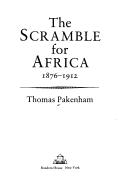
The history of Belgium: books to read, in order
Belgium was invented in 1830 on top of a language border that predates it by a thousand years, and most of its history since has been a negotiation between the two halves and an argument about what was done in its name overseas. This path assembles the state from the Burgundian and Habsburg Netherlands forward, works through the Flemish-Walloon fault line and federalisation, gives a full stage to Leopold II's Congo Free State and the fight over how to describe it, and ends with the two occupations and the decolonisation that Belgium handled worse than almost anyone.
Before there was a Belgium
BeginnerUnderstand that the territory was one of the richest and most urbanised corners of medieval Europe long before it was a country, and that the decisive event in its history is a split: the northern provinces broke away in the Dutch Revolt and the southern ones stayed Catholic and Habsburg. Belgium is the residue of that separation, and none of 1830 makes sense without it.
▸ Study plan for this stage
Pace: Three to four weeks, and do not be alarmed by the arithmetic. Cook's Belgium (205 pages) is the short single-volume survey from the Roman period to the late twentieth century and should be read first and quickly; it is the chronology the rest of the path hangs on, and the catalogue files it under th
- The southern Netherlands as one of the richest and most urbanised regions of medieval Europe, with the city rather than the crown as the unit of power
- The Burgundian project of welding separate provinces into a single polity, and how far it got
- The Dutch Revolt as the decisive split, with the north breaking away and the south remaining Catholic and Habsburg
- Belgium as the residue of that separation rather than as a nation seeking a state
- The commercial consequence of the split: the closure of the Scheldt and the transfer of Antwerp's role to Amsterdam
- The intellectual consequence: what the Counter-Reformation south lost that the Republic gained
- Why did the southern provinces stay with Spain when the northern ones did not, and how contingent was that outcome?
- What did the Burgundian dukes actually centralise, and what did the cities keep?
- What happened to Antwerp after the split, and who benefited?
- On Israel's evidence, what did the south lose intellectually and religiously that the Republic gained?
- In what sense is Belgium's identity defined by a negative, and does Cook's narrative accept that framing?
- Build a timeline from Cook from the Burgundian period to 1830, then annotate it with the specific chapters of Prevenier and Blockmans and of Israel that cover each stretch.
- Take one city, Bruges or Ghent or Antwerp, and follow it from Burgundian prosperity through the Revolt using both books, writing down what changed for it and when.
- Read Israel's chapters on the Revolt and write a one-page account of the split as a northern historian tells it, then note what Cook's Belgian-facing survey emphasises differently.
- Write a paragraph defining what the southern Netherlands was as of 1600, using no anachronistic national terms at all. The difficulty is the point.
Next up: You now know that Belgium is the part that stayed, which is exactly what the next stage needs, because a state invented in 1830 on top of an older language border has to be explained by what preceded it rather than by what it claimed about itself.
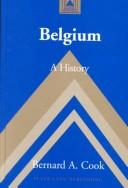
The most straightforward English single-volume survey, from the Roman period to the late twentieth century. Read it first for the chronology; the catalogue lists it under the bare title Belgium.

Prevenier and Wim Blockmans on the fifteenth-century Burgundian state — Bruges, Ghent, Van Eyck, and the first serious attempt to weld these provinces into one polity. The origin of the idea that later became Belgium.
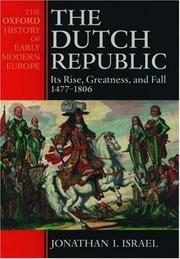
Israel's enormous history of the north is here for the split it describes from the other side: why the southern provinces stayed with Spain, and what that cost them commercially and intellectually. Use the chapters on the Revolt rather than reading it cover to cover.
1830, and the fault line the state was built on
IntermediateFollow the revolution against Dutch rule, the invention of a constitutional monarchy in a country nobody had asked for, and then the slow century in which a French-speaking elite governing a Flemish-speaking majority produced the language laws, the linguistic border of 1962 and the six state reforms that turned a unitary kingdom into a federation. Come out able to explain what Belgium's federal structure is actually for.
▸ Study plan for this stage
Pace: Four weeks for 772 pages, and this is a two-book stage with a clear division of labour. Humes's Belgium (256 pages) is organised around the union-and-division theme and is the clearest narrative of how the linguistic communities were institutionalised rather than reconciled; read it first, in about
- The 1830 revolution against Dutch rule, and a constitutional monarchy invented for a country nobody had asked for
- A French-speaking elite governing a Flemish-speaking majority, and the language laws that slowly reversed it
- The linguistic border fixed in 1962 as an administrative boundary with permanent political consequences
- The six state reforms as a sequence, and what each transferred and to whom
- Communities and regions as two overlapping federal structures rather than one
- The splitting of national parties into Flemish and Francophone counterparts, and what that did to national politics
- Institutionalisation rather than reconciliation as the deliberate Belgian strategy for managing division
- What did the 1830 revolutionaries want, and how much of what they got was decided by the great powers rather than by them?
- How did the language laws change who could hold office and be educated, and over what timescale?
- Why does Belgium have both communities and regions, and what does each control?
- What is the federal structure actually for, stated as a problem it was designed to solve?
- Where does Witte's position as a Flemish historian show in her account, and does she make it explicit?
- Draw the Belgian federal structure as it now stands, with communities and regions on separate layers, and check it against Witte. Almost everyone gets this wrong on the first attempt.
- List the six state reforms with a one-line note on what each transferred, then ask for each whether it settled anything or postponed it.
- Take one contested municipality on the linguistic border and follow its treatment through Humes and Witte, noting what the 1962 line did to it.
- Write half a page arguing that Belgian federalism has been a success, then half a page arguing it has been a slow partition, using Witte's evidence for both.
Next up: This stage explains the argument Belgians have with each other; the next explains the argument the rest of the world has with Belgium, over what was done in its name in the Congo.

Organised precisely around the union-and-division theme, and the clearest narrative of how the linguistic communities were institutionalised rather than reconciled. Also filed in the catalogue as simply Belgium — a different book from Cook's.

The standard scholarly account from 1830 onward, by a Flemish historian, and much the best treatment of federalisation and the communal parties. Denser than Humes and worth the effort here.
The Congo Free State
IntermediateLeopold II held the Congo as personal property from 1885 to 1908, and the rubber regime there killed on a scale that is documented and still argued about. Hochschild's figure of roughly ten million deaths follows Jan Vansina's demographic estimates and is disputed by other historians — over the arithmetic, over how much of it was disease rather than killing, and over whether genocide is the right word for a system whose aim was extraction rather than extermination. Read the contemporary campaign
▸ Study plan for this stage
Pace: Four to five weeks for 1,229 pages, and the reading order is deliberate because this stage is a dispute rather than a topic. Leopold II held the Congo as personal property from 1885 to 1908, and the rubber regime killed on a scale that is documented and still argued about: Hochschild's figure of rou
- The Free State as personal property of a monarch rather than a colony of a state, and what that distinction permitted
- The rubber regime: quotas, hostage-taking and mutilation as an extraction system with an internal logic
- The disputed death toll, and the difference between a demographic estimate and a count
- The specific points of disagreement: the arithmetic, the share attributable to disease, and the applicability of the term genocide
- Morel's method of reasoning from trade statistics, and campaigning as a form of evidence-gathering
- The 1908 transfer to Belgian state control and what did and did not change with it
- Vanthemsche's reversal of the question: what the colony did to the metropole, politically and economically
- What exactly is the basis of the ten million figure, and which step in that reasoning is most contested?
- How did Morel infer forced labour from cargo manifests, and what makes the inference strong?
- What did the 1908 handover change on the ground, and how quickly?
- Does the aim of a system determine whether genocide is the right description of its effects, and how do these authors differ on that?
- Who in Belgium profited, on Vanthemsche's account, and how does that alter the story of national complicity?
- Where does Hochschild's narrative construction do argumentative work that his evidence does not?
- Reconstruct the demographic estimate as a chain of steps, marking at each step what is measured and what is inferred. Then write down which step you would attack if you wanted to lower the number and which if you wanted to raise it.
- Take one of Morel's arguments from trade figures and check whether Hochschild reproduces it, adds to it or replaces it with testimony.
- Read Emerson's account of Leopold's motives against Hochschild's characterisation of the same decisions and write out where a biography and an indictment diverge on the same evidence.
- Using Vanthemsche, list who in Belgium benefited financially and who did not, and then write a paragraph on what that does to the phrase done in Belgium's name.
- State in one paragraph what you now believe the evidence supports about the scale, and name the specific finding that would change your view.
Next up: Having seen an atrocity established through documents and still argued about, you are equipped for the next stage, which contains a case where exactly that kind of documentary work settled a dispute that had run for eighty years.

A biography of the king himself, needed before the Congo material so that you meet him as a European monarch with a specific problem rather than only as a villain. Older and drier than what follows, and the necessary ballast.
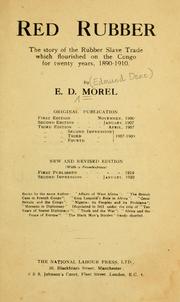
The 1905 indictment by the shipping clerk who worked out from the cargo manifests that nothing was being paid for the rubber coming out, and then ran the campaign that ended Leopold's rule. A primary document of the first modern human-rights movement.
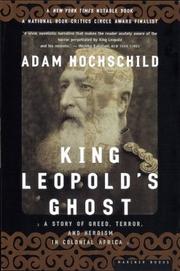
The book that put this history back into general circulation, built around Morel, Roger Casement and George Washington Williams. Superb narrative history; its casualty estimate is the most contested claim in this stage and should be read as a position in a debate, not a settled number.

The sober scholarly counterweight, and the only book here that asks what the colony did to Belgium rather than the reverse — the economics, the domestic politics and how little of the profit actually reached ordinary Belgians. Read it last in the stage.
Two occupations
IntermediateBelgium was invaded twice in thirty years and both occupations are historiographically loaded. The 1914 atrocities were denied for decades as Allied propaganda before Horne and Kramer established from German sources that they happened; the 1940-44 occupation produced a collaboration problem, particularly in Flanders, that the country prosecuted hard and then argued about for the rest of the century. Note that Conway's book is about the reckoning as much as the occupation.
▸ Study plan for this stage
Pace: Five weeks for 1,362 pages, and one book dominates. Zuckerman's The Rape of Belgium (339 pages) opens the stage with the 1914 to 1918 occupation as an experience rather than a slogan, covering deportations, forced labour, requisition and hunger, and it also shows how quickly the Allies dropped the s
- The 1914 atrocities as a claim that was dismissed as propaganda for decades and then established from the perpetrators' own records
- The method Horne and Kramer use, and why German sources were the only ones capable of ending the argument
- Occupation as an economic system: requisition, deportation for labour, and engineered scarcity
- The 1940 to 1944 occupation and the collaboration problem, particularly acute in Flanders
- The postwar prosecutions and the long political argument about their fairness and their scale
- The Royal Question over Leopold III's wartime conduct as a constitutional crisis in its own right
- How a small state metabolises its own occupation, and what the reckoning was for
- What did Horne and Kramer establish, and what specifically had made the question unresolvable before them?
- Why did the Allies stop talking about the 1914 occupation, and what did that silence cost afterwards?
- What made Flemish collaboration different in character and in scale from Francophone collaboration?
- How did the collaboration trials shape postwar Flemish politics, on Conway's account?
- What was actually at stake in the Royal Question, beyond the king's personal conduct?
- Take one incident from German Atrocities and write out the evidential chain the authors build for it, from source to conclusion. Then compare that chain with the demographic reasoning you unpicked in the previous stage.
- Write down what the 1914 atrocity story looked like in Allied wartime publicity, using Zuckerman, and then what Horne and Kramer establish, and mark exactly where the two diverge and where they agree.
- Trace the numbers prosecuted after 1944 in Conway by community and write a paragraph on how those numbers were later used politically.
- Set the Royal Question beside the federalisation story from stage two and note whether the same fault line is doing the work.
Next up: The country that emerges from this stage is a democracy that has just examined itself over collaboration, and within fifteen years it will be examined over what it did in the Congo at independence, which is where the path ends.
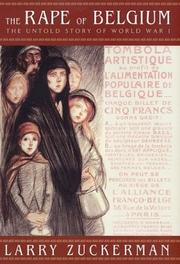
The 1914-18 occupation as an experience rather than a slogan — deportations, forced labour, requisition and hunger — and how quickly the Allies dropped the subject once it stopped being useful.
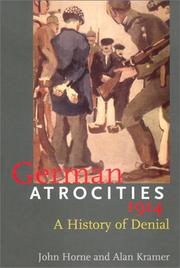
Horne and Alan Kramer's forensic reconstruction, from German military records, of the killings of some six thousand Belgian and French civilians. The book that closed the propaganda question, and the model for how to settle an atrocity dispute with evidence.
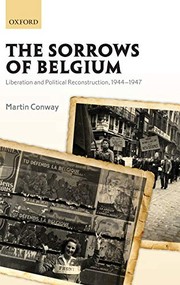
The post-1944 reckoning: collaboration trials, the Royal Question over Leopold III's conduct, and the reconstruction of a democracy that had nearly come apart. The best account of how a small state metabolises its own occupation.
Decolonisation and after
IntermediateBelgium granted the Congo independence in 1960 with almost no preparation, and within months the prime minister was dead. De Witte's book alleged direct Belgian responsibility for Lumumba's killing and prompted a parliamentary inquiry that in 2001 found Belgium bore moral responsibility — an unusual case of a history book producing a formal state finding. Read it alongside Van Reybrouck's Congolese-voiced history and note whose testimony each relies on.
▸ Study plan for this stage
Pace: Four weeks for 922 pages, split very unevenly. De Witte's The Assassination of Lumumba (226 pages) is short, tightly argued and should be read first: a documentary reconstruction of the killing of Patrice Lumumba and of the Belgian officials and officers involved, and it is the reason the official r
- Independence granted in 1960 with almost no administrative or educational preparation, and what that guaranteed
- The sequence from independence to secession to the killing of the prime minister within months
- De Witte's documentary method, and what he establishes about Belgian officials and officers rather than about Belgian policy in the abstract
- A parliamentary commission finding moral responsibility, and the difference between moral, legal and political responsibility
- Van Reybrouck's use of Congolese oral testimony as a primary source across a century and a half
- Whose voices each of these two books rests on, and what each method can establish that the other cannot
- The long afterlife of the Free State in Congolese memory as against Belgian memory
- What did Belgium do and fail to do in the years before 1960 that made the collapse predictable?
- What precisely does De Witte establish about Belgian involvement, and what does he infer?
- Why did a book prompt a parliamentary inquiry, and what does the commission's language of moral responsibility deliberately avoid?
- What does Van Reybrouck's interview method capture that De Witte's documentary method cannot, and where is it weaker?
- Having read the whole path, whose account of the Congo would you now trust on a contested point, and on what grounds?
- Lay out De Witte's evidence for Belgian involvement as a numbered chain and mark which links rest on documents, which on testimony and which on inference.
- Find the Belgian parliamentary commission's stated conclusion, read it against De Witte's claims, and write a paragraph on the gap between what he alleged and what the state accepted.
- Take a period covered in both Hochschild and Van Reybrouck and compare a Belgian archival narrative with Congolese testimony about the same years, noting what each records that the other does not.
- Write a final page on Belgium using only the fourteen books on this path, marking every point where your sources disagreed. The Free State death toll should be the largest mark, and the 1914 atrocities the clearest example of a dispute that evidence actually closed.
Next up: This ends the path: from the Burgundian provinces and the split that left Belgium behind, through an invented state on an old language border, the Free State and its unresolved arithmetic, two occupations and their reckonings, to independence in the Congo and the killing that Belgium eventually admitted a share of.
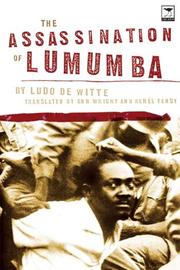
The Belgian sociologist's documentary reconstruction of the killing of Patrice Lumumba in January 1961 and of the Belgian officials and officers involved. It triggered the 1999-2001 Belgian parliamentary commission and is the reason the official record now reads as it does.

A century and a half of Congolese history built substantially on interviews with Congolese people, including some old enough to remember the Free State. The right end to the path because it hands the narration to the people the earlier stages describe.
Discussion
Keep reading
Paths that share books, cover the same subject, or open a related topic.