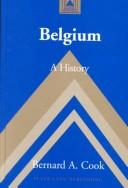
Start with Bernard Cook's Belgium, the most straightforward English single-volume survey of the country, running from the Roman period to the late twentieth century in 205 pages. Read it for the chronology and little else; nearly everything that follows assumes you already have it.
Then slow down for the Congo Free State stage. That is where this path puts its weight, and where its central claim is still argued over by working historians. Belgium was invented in 1830 on top of a language border a thousand years older than the state, and most of its history since has been two arguments running in parallel: one at home about which language governs, and one abroad about what was done in the country's name.
Before there was a Belgium
The Burgundian Netherlands is Walter Prevenier and Wim Blockmans on the fifteenth-century Burgundian state — Bruges, Ghent, Van Eyck, and the first serious attempt to weld these provinces into one polity. It is the origin of the idea that later became Belgium.
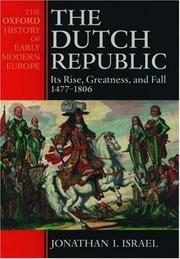
Jonathan Israel's The Dutch Republic is here for the other side of the split; use its chapters on the Revolt rather than reading it through. What you want is why the southern provinces stayed Catholic and Habsburg while the north broke away, and what that cost them commercially and intellectually.
1830, and the fault line the state was built on
Samuel Humes wrote the second book on this path that our catalogue also files simply as Belgium — a different book from Cook's, and the clearest narrative of how the linguistic communities were institutionalised rather than reconciled. Check the author name rather than the title when you buy either one.
Els Witte's Political history of Belgium is the standard scholarly account from 1830 onward, by a Flemish historian, and much the best treatment of federalisation and the communal parties. It is denser than Humes and worth the effort, because it is the book that actually explains what the federal structure is for.
The Congo Free State, and the dispute over the number
Leopold II held the Congo as personal property from 1885 to 1908. Read Barbara Emerson's Leopold II of the Belgians first — an older, drier biography, useful because you meet him as a European monarch with a specific problem rather than only as a villain.
Red rubber is E. D. Morel's 1905 indictment, written by the shipping clerk who worked out from the cargo manifests that nothing was being paid for the rubber coming out, and who then ran the campaign that ended Leopold's rule. It is a primary document of the first modern human-rights movement rather than a neutral account.
Adam Hochschild's King Leopold's ghost is the book that put this history back into general circulation, built around Morel, Roger Casement and George Washington Williams. It is superb narrative history. Its estimate of roughly ten million deaths follows the demographic work of the historian Jan Vansina, whose own studies are not in our catalogue, and it is the most contested claim in the stage: other historians dispute the arithmetic, dispute how much of the mortality was disease rather than killing, and dispute whether genocide is the right word for a system whose purpose was extraction rather than extermination. Read the figure as a position in a live scholarly argument, not as a settled number.
Guy Vanthemsche's Belgium and the Congo, 1885-1980 is the sober counterweight and belongs last in the stage: markedly more cautious than Hochschild, and the only book here that asks what the colony did to Belgium rather than the reverse — the economics, the domestic politics, and how little of the profit reached ordinary Belgians.
Two occupations
Larry Zuckerman's The rape of Belgium takes 1914-18 as an experience rather than a slogan: deportations, forced labour, requisition, hunger, and how quickly the Allies dropped the subject once it stopped being useful. John Horne and Alan Kramer's German atrocities, 1914 then reconstructs the killings of some six thousand Belgian and French civilians from German military records — the book that settled with evidence a dispute long dismissed as Allied propaganda. Martin Conway's The sorrows of Belgium is about the reckoning as much as the occupation: collaboration trials, the Royal Question over Leopold III's conduct, and the rebuilding of a democracy that had nearly come apart.
Decolonisation, and one warning before you buy
Ludo de Witte's The Assassination of Lumumba reconstructed the killing of Patrice Lumumba in January 1961 and the Belgian officials and officers involved. It triggered a Belgian parliamentary commission that in 2001 found the country bore moral responsibility, which is an unusual case of a history book producing a formal state finding.
Close with David van Reybrouck's Congo, a century and a half of Congolese history built substantially on interviews with Congolese people, some old enough to remember the Free State. One caution: the record we hold is a French edition from Actes Sud sitting behind an English title, so check the language of any listing before you order. The full ordered path, with the stage goals and study plans, is at /paths/pt_ai_the-history-of-belgium.